


Overview
Industrial thermoregulation plays a critical role in maintaining optimal temperatures within various manufacturing and production environments. This specialized field focuses on precise industrial temperature control to ensure that processes run efficiently, safely, and with minimal downtime. As industries grow increasingly complex, the demand for advanced thermoregulation technology has surged, making temperature management a cornerstone of modern production efficiency.
Thermoregulation in industry involves the use of sophisticated systems designed to monitor, regulate, and maintain temperatures within strict parameters. This is essential in sectors ranging from chemical manufacturing to plastics, metalworking, and food processing, where temperature deviations can lead to defects, safety hazards, or costly equipment failures.
Innovations in industrial thermoregulation have transformed traditional temperature control approaches into highly automated, energy-efficient, and environmentally friendly solutions. These advancements not only improve product quality but also contribute significantly to reducing energy consumption and operational costs.
At the heart of industrial thermoregulation is the integration of cutting-edge sensors, control units, and cooling technologies that adapt dynamically to changing process conditions. The synergy between these components enables seamless cooling system integration and enhances overall production line performance.
“Effective industrial thermoregulation is more than just temperature control; it’s about optimizing the entire production ecosystem to boost performance, reliability, and sustainability.”
In this article, we explore the latest innovations in thermoregulation technology, their benefits to industrial processes, how they integrate with cooling systems, relevant case studies, and future trends shaping the industry.
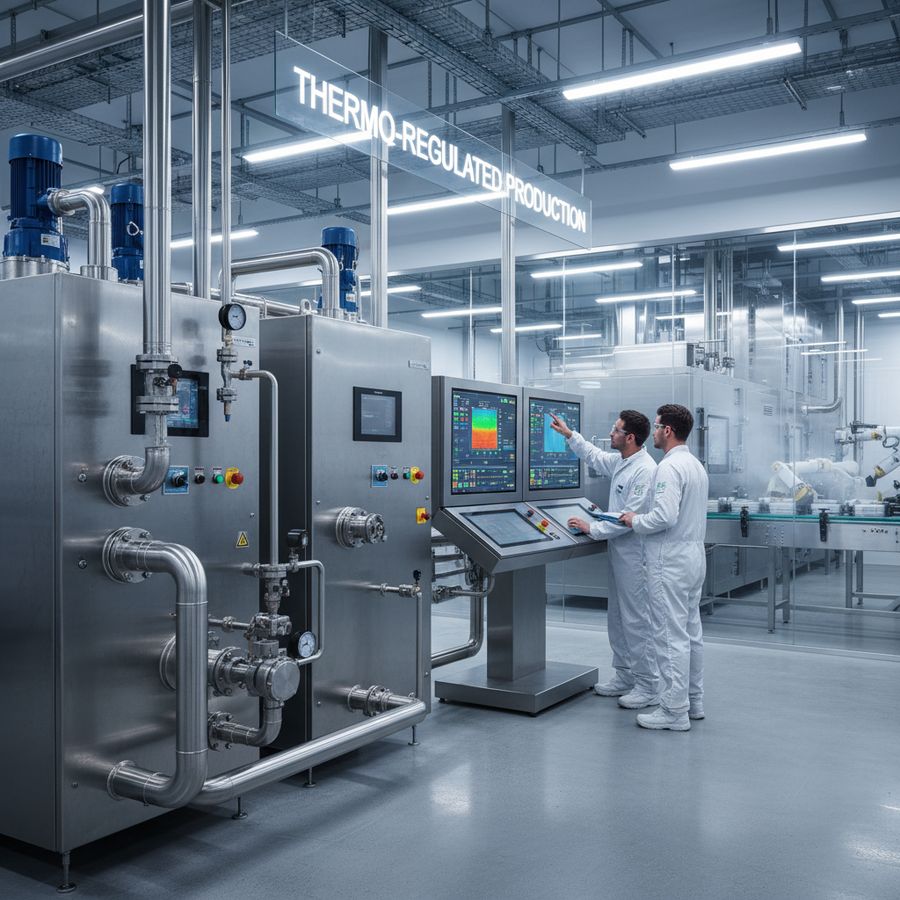
Latest Thermoregulation Technologies
The field of industrial thermoregulation has witnessed remarkable technological advancements that redefine how manufacturers control temperature. Modern thermoregulation technology leverages intelligent automation, smart sensors, and eco-friendly cooling methods to meet stringent industrial demands.
One of the prominent advancements is the adoption of microprocessor-based temperature controllers that provide precise, real-time monitoring and adjustments. These controllers facilitate programmable settings tailored to specific production requirements, ensuring consistent temperature stability even under variable load conditions.
Another breakthrough is the integration of variable refrigerant flow (VRF) systems and advanced chillers that optimize energy usage by adjusting cooling capacity in response to real-time thermal loads. These systems significantly enhance energy efficiency by preventing overcooling or overheating.
Innovative cooling technologies such as free cooling and adiabatic cooling have gained traction for their ability to reduce reliance on traditional refrigeration cycles. By utilizing ambient air or evaporative cooling techniques, these solutions lower energy consumption and environmental impact.
Moreover, the rise of IoT-enabled thermoregulation devices empowers industries to implement predictive maintenance and remote system management. This connectivity enables immediate response to temperature anomalies, minimizing downtime and protecting sensitive equipment.
-
Programmable microprocessor temperature controllers for enhanced precision
-
Variable refrigerant flow (VRF) and adaptive chillers for energy optimization
-
Free cooling and adiabatic cooling techniques reducing environmental footprint
-
IoT-enabled sensors and remote monitoring for predictive maintenance
“The latest thermoregulation technologies blend precision control with smart energy management, setting new standards in industrial temperature regulation.”
Benefits to Industrial Processes
Implementing advanced industrial thermoregulation systems delivers a multitude of benefits that directly enhance production efficiency and product quality. Precise temperature control is fundamental to maintaining optimal process conditions, which translates into consistent output and reduced waste.
One of the primary advantages is the minimization of thermal fluctuations, which are often responsible for defects in manufactured goods. By stabilizing temperatures within tight tolerances, industries ensure that their products meet rigorous quality standards and comply with regulatory requirements.
Furthermore, effective thermoregulation contributes to the longevity of machinery and equipment. Maintaining appropriate operating temperatures prevents overheating, corrosion, and mechanical wear, thus lowering maintenance costs and extending asset lifespans.
Energy efficiency is another significant benefit. Modern thermoregulation technology optimizes cooling and heating cycles, reducing energy consumption and lowering operational expenses. This is increasingly important as companies strive to meet sustainability goals and reduce their carbon footprint.
Operational reliability is also enhanced by the integration of automated temperature control systems that rapidly adjust to process variations. This reduces unexpected downtime and improves throughput, enabling manufacturers to meet tight production schedules.
-
Consistent product quality through minimized thermal variability
-
Extended equipment lifespan by preventing overheating and wear
-
Reduced energy consumption and operational costs
-
Improved process reliability and minimized downtime
“Advanced thermoregulation technology not only safeguards product integrity but also drives significant cost savings and operational excellence.”
Integration with Cooling Systems
Seamless cooling system integration is a cornerstone of effective industrial thermoregulation. Combining temperature control units with advanced cooling technologies creates comprehensive solutions capable of meeting diverse industrial demands.
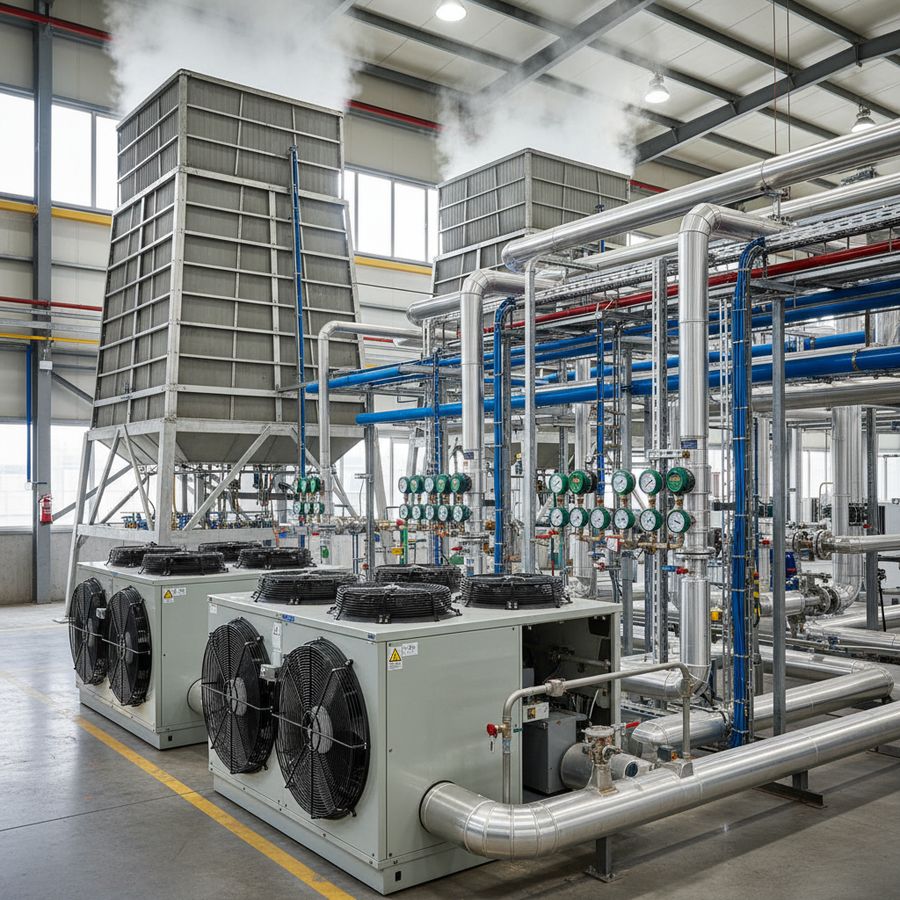
Industrial processes frequently require tailored cooling systems, including air chillers, refrigeration units with condensation air or water condensation, and cooling towers. Integrating these with thermoregulation controllers ensures synchronized operation, optimizing overall system performance.
Modern integration involves smart control interfaces that communicate between thermoregulation devices and cooling equipment. This interoperability allows for dynamic adjustment of cooling loads based on real-time temperature readings, enhancing energy efficiency and process stability.
Environmental considerations are also paramount. Integration with free cooling systems enables the use of ambient air when conditions permit, significantly reducing the need for mechanical refrigeration. This approach aligns with global sustainability efforts and results in lower operational costs.
Additionally, pressure and temperature regulators can be combined with cooling systems to maintain precise fluid temperatures in processes such as chemical reactions, plastics manufacturing, and metalworking.
-
Smart communication between thermoregulation controllers and cooling equipment
-
Use of tailored cooling units: air chillers, water condensation units, cooling towers
-
Incorporation of free cooling to leverage ambient temperature and reduce energy
-
Pressure and temperature regulation for fluid temperature control
“Effective integration of thermoregulation and cooling systems is key to achieving unparalleled industrial temperature control and production efficiency.”
Case Studies
Examining real-world applications of industrial thermoregulation reveals the tangible benefits and versatility of these technologies across sectors.
In the plastics manufacturing industry, precise thermoregulation ensures the integrity of molded components by maintaining stable temperatures during material extrusion and cooling phases. One leading facility integrated advanced temperature control units with free cooling systems, resulting in a 20% reduction in energy consumption and improved product uniformity.
The chemical sector benefits significantly from thermoregulation technology by maintaining controlled environments for sensitive reactions. A chemical plant equipped with IoT-enabled temperature regulators and chillers achieved enhanced safety and process consistency, reducing production downtime by 15%.
In metalworking and diecasting, cooling system integration with thermoregulation ensures rapid heat dissipation from molds, minimizing cycle times and improving surface finishes. An automotive parts manufacturer reported a 30% increase in throughput after implementing a comprehensive thermoregulation and cooling solution.
These case studies underscore how tailored solutions in thermoregulation technology not only elevate production efficiency but also contribute to sustainability and cost savings across industries.
“Industry leaders adopting innovative thermoregulation solutions consistently experience measurable improvements in quality, efficiency, and environmental impact.”
Future Trends
The future of industrial thermoregulation is poised for transformative growth driven by emerging technologies and sustainability imperatives.
Artificial intelligence (AI) and machine learning are set to revolutionize temperature control by enabling systems to predict thermal behavior and optimize settings proactively. This will lead to enhanced precision, reduced energy use, and predictive maintenance capabilities that prevent costly failures before they happen.
Advancements in materials science will also influence thermoregulation technology, with the development of high-performance thermal insulators and phase-change materials that improve heat retention and dissipation efficiency.
Moreover, the integration of renewable energy sources with cooling and thermoregulation systems will reduce industrial carbon footprints. Hybrid systems combining solar power with advanced chillers and free cooling techniques will become increasingly common.
Finally, greater adoption of modular and scalable thermoregulation solutions will allow industries to customize systems easily, adapting to changing production needs and expanding capacity without significant infrastructure changes.
-
AI-driven predictive temperature control and optimization
-
Innovative thermal materials enhancing energy efficiency
-
Renewable energy integration with cooling and thermoregulation systems
-
Modular, scalable thermoregulation solutions for flexible production
“The next generation of industrial thermoregulation will blend intelligence, sustainability, and flexibility to redefine production efficiency.”
Conclusion
Innovations in industrial thermoregulation are reshaping how industries manage temperature control, directly impacting production efficiency, product quality, and operational sustainability. By leveraging the latest thermoregulation technology and integrating it seamlessly with advanced cooling systems, manufacturers can achieve unprecedented control over their processes.
The advantages of precise temperature regulation—such as energy savings, minimized downtime, and extended equipment lifespan—highlight the necessity of investing in these technologies. Real-world case studies show that customized thermoregulation solutions yield significant improvements across various sectors, demonstrating the value of ongoing innovation. For more insights, explore Frimec’s offerings.
Looking ahead, the fusion of AI, smart sensors, renewable energy, and novel materials will propel industrial thermoregulation into a new era of efficiency and environmental stewardship. For companies committed to maintaining competitive production capabilities, embracing these advancements is essential.
Industrial thermoregulation is not merely a technical necessity but a strategic asset that drives excellence in manufacturing performance and sustainability.
