


Overview
Industrial refrigeration plays a crucial role in maintaining optimal temperatures across various manufacturing and processing sectors. Among the key solutions available, water-cooled refrigeration and air-cooled refrigeration units stand out due to their widespread use and distinct operational characteristics. Understanding these two cooling methods is fundamental for industries seeking to optimize performance, reduce energy consumption, and ensure reliable temperature control.
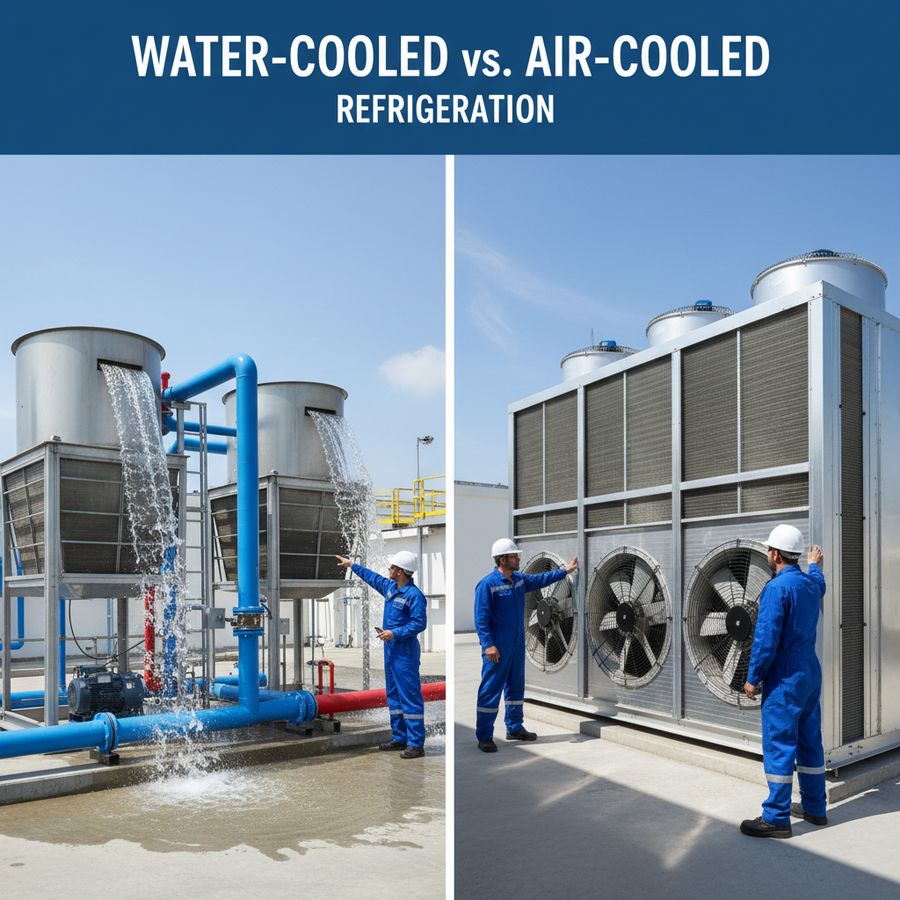
Water-cooled refrigeration units typically utilize water as the primary medium to dissipate heat from the refrigeration cycle. These systems often integrate with cooling towers or water loops to efficiently transfer heat away from the refrigerant. Conversely, air-cooled refrigeration units rely on ambient air to absorb and expel heat using finned coils and powerful fans, making them more self-contained and simpler in design.
The choice between these systems depends on multiple factors, including installation environment, operational costs, energy efficiency goals, and maintenance preferences. Industrial cooling needs vary greatly across sectors such as plastics manufacturing, chemical processing, food production, and more, necessitating tailored solutions.
Industrial refrigeration solutions, including water-cooled and air-cooled units, are indispensable for large-scale production facilities, ensuring product quality and process stability.
For over 55 years, companies like Frimec have advanced the technology behind these refrigeration systems, delivering environmentally friendly and innovative temperature control solutions that meet the rigorous demands of modern industry.
Differences Between Water and Air Cooling
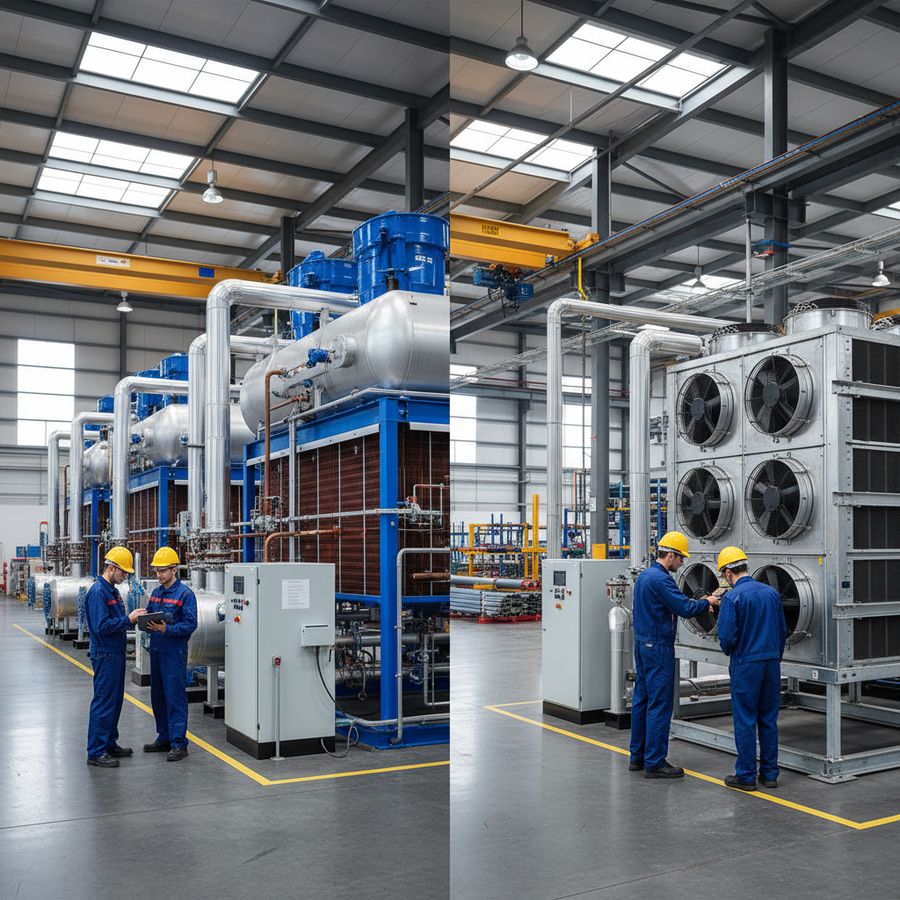
The fundamental difference between water-cooled refrigeration and air-cooled refrigeration lies in their heat rejection methods. Water-cooled units expel heat through a water medium, often connected to a cooling tower or a water circuit, while air-cooled units dissipate heat directly into the surrounding air using fans and finned coils.
Water-cooled refrigeration systems generally involve a more complex infrastructure. They require water supply, pumps, and cooling towers, making them ideal for facilities with ample water availability and space for auxiliary equipment. These systems operate efficiently in hot climates or environments with limited airflow because water’s higher thermal conductivity allows for better heat transfer.
In contrast, air-cooled refrigeration units are more compact and easier to install since they do not depend on an external water source. They are suited for locations where water is scarce or where environmental regulations limit water usage. However, they may be less effective in extremely hot or dusty environments, where airflow can be compromised.
-
Heat transfer medium: Water (water-cooled) vs. air (air-cooled)
-
Installation complexity: More involved for water-cooled due to auxiliary equipment
-
Environmental dependencies: Water availability and quality vs. ambient air conditions
-
Space requirements: Larger footprint for water-cooled systems
Choosing between these systems requires a careful evaluation of site conditions, climate, and operational priorities to ensure the most effective industrial cooling strategy.
Advantages and Disadvantages
Both water-cooled refrigeration and air-cooled refrigeration units come with distinct advantages and disadvantages that impact their suitability for various industrial applications.
Advantages of Water-Cooled Refrigeration:
-
Higher energy efficiency: Water’s superior heat transfer capabilities allow for better condenser performance and lower compressor work.
-
Quieter operation: Since fans are smaller or fewer, noise levels tend to be lower compared to air-cooled units.
-
Longer equipment lifespan: Stable operating temperatures reduce mechanical stress and wear.
-
Better performance in hot climates: Water cooling maintains efficiency where ambient air temperatures are high.
Disadvantages of Water-Cooled Refrigeration:
-
Higher initial cost: Installation of cooling towers and water circuits can be expensive.
-
Water consumption and treatment: Requires a reliable water source and ongoing treatment to prevent scaling and corrosion.
-
More complex maintenance: Monitoring water quality and system components increases maintenance demands.
Advantages of Air-Cooled Refrigeration:
-
Simpler installation: No need for water supply or cooling towers, reducing upfront investment.
-
Lower water usage: Ideal for areas with limited or costly water resources.
-
Compact design: Suitable for facilities with limited space.
-
Lower maintenance complexity: Easier to maintain with fewer components related to water treatment.
Disadvantages of Air-Cooled Refrigeration:
-
Less energy efficient in high ambient temperatures: Air as a heat transfer medium is less effective than water.
-
Higher noise levels: Fans can generate significant noise, impacting surrounding environments.
-
Potential for dust accumulation: Air filters and coils require regular cleaning in dusty conditions.
Selecting the right cooling method involves balancing operational costs, environmental impact, and system complexity to meet specific industrial requirements.
Energy Efficiency Comparison
Energy efficiency is a critical factor in selecting between water-cooled refrigeration and air-cooled refrigeration units because it directly affects operational costs and environmental footprint. Generally, water-cooled systems outperform air-cooled systems in energy efficiency due to superior heat transfer properties of water.
Water-cooled units maintain lower condensing temperatures, which reduces the compressor’s workload and energy consumption. This efficiency gain is especially pronounced in warm climates or high-load industrial processes where ambient air temperatures can challenge air-cooled systems.
On the other hand, air-cooled refrigeration units are subject to ambient air temperature fluctuations and typically operate at higher condensing temperatures. This can translate to greater energy use to achieve the same cooling effect. However, recent advances in air-cooled condenser design and fan control have improved their efficiency significantly.
When comparing the two cooling methods, consider:
-
Climate conditions: Water-cooled systems generally excel in hot and humid environments.
-
System size and load: Larger, continuous-load applications benefit more from water-cooled refrigeration.
-
Energy prices and sustainability goals: Water-cooled systems can reduce energy costs and carbon footprint over time.
Lifecycle energy consumption also includes the energy used for water pumping and treatment in water-cooled systems, which should be accounted for in a comprehensive energy assessment. Advances in industrial cooling technology continue to narrow the gap, but water-cooled refrigeration remains the leader in energy efficiency where conditions allow.
Optimizing industrial cooling for energy efficiency not only reduces costs but also aligns with sustainable manufacturing practices.
Application Suitability
Choosing between water-cooled refrigeration and air-cooled refrigeration units depends heavily on the specific industrial application and environmental context. Each system has distinct strengths that make it more suitable for particular industries and operational scenarios.
Water-cooled refrigeration is often preferred in:
-
Large-scale manufacturing plants: Facilities with continuous high cooling loads, such as plastics production, chemical processing, and food manufacturing.
-
Environments with limited airflow: Indoor installations or areas where ambient air conditions are not optimal for air cooling.
-
Regions with abundant water resources: Where water availability and quality are sufficient to support cooling tower operation.
-
Applications requiring precise temperature control: Industrial thermoregulation that demands stable, efficient cooling.
Conversely, air-cooled refrigeration units are advantageous for:
-
Smaller or decentralized facilities: Where space constraints or modular system needs exist.
-
Water-restricted locations: Arid regions or areas with strict water usage regulations.
-
Temporary or mobile installations: Where ease of installation and mobility are priorities.
-
Operations with intermittent cooling needs: Where the simplicity and lower maintenance burden are beneficial.
Understanding these application nuances helps industries select the most effective industrial cooling solution, balancing operational efficiency with environmental and regulatory considerations.
Tailoring refrigeration solutions to specific industrial contexts maximizes performance and supports sustainable production goals.
Maintenance Needs
Maintenance requirements differ significantly between water-cooled refrigeration and air-cooled refrigeration units, influencing lifecycle costs and system reliability. Effective maintenance ensures uninterrupted industrial cooling and extends equipment lifespan.
Water-cooled refrigeration systems demand more intensive maintenance due to their complex components, including cooling towers, water pumps, and water treatment systems. Key maintenance tasks include:
-
Regular water quality monitoring and treatment to prevent scaling, corrosion, and biological growth.
-
Inspection and cleaning of cooling towers to remove debris and prevent fouling.
-
Checking pumps and valves for proper operation and leaks.
-
Periodic inspection of heat exchangers and condenser tubes for deposits and blockages.
Neglecting these tasks can lead to reduced efficiency, increased energy consumption, and potential system failures.
Air-cooled refrigeration units typically have lower maintenance complexity but still require attention to ensure optimal performance. Maintenance focuses on:
-
Cleaning condenser coils to remove dust, dirt, and debris that impede heat transfer.
-
Inspecting and servicing fans and motors to maintain airflow and reduce noise.
-
Checking air filters and replacing them as needed to prevent clogging.
-
Monitoring refrigerant levels and system pressures for leaks or imbalances.
Air-cooled systems benefit from simpler maintenance routines, but neglect can cause overheating, efficiency loss, and premature wear.
Regular, proactive maintenance tailored to the cooling method ensures maximum uptime, energy efficiency, and system longevity.
Conclusion
Both water-cooled refrigeration and air-cooled refrigeration units offer distinct advantages and challenges within the realm of industrial cooling. Selecting the appropriate system hinges on factors such as site conditions, water availability, energy efficiency goals, maintenance capabilities, and the specific demands of the industrial process.
Water-cooled refrigeration stands out for its superior energy efficiency, quieter operation, and better performance in demanding environments, albeit with higher installation and maintenance complexity. Meanwhile, air-cooled refrigeration offers simpler installation, lower water usage, and reduced maintenance burdens, making it an excellent choice for facilities with limited water resources or space.
Industries striving for sustainable and reliable temperature control can significantly benefit from understanding these distinctions and assessing their specific operational requirements. By partnering with experienced providers of industrial refrigeration solutions, such as Frimec, you can gain access to customized, eco-friendly systems that meet contemporary production and energy efficiency standards.
Choosing the right industrial refrigeration system is a strategic decision that impacts operational efficiency, environmental sustainability, and long-term cost-effectiveness.
