


Overview
Industrial refrigeration plays a crucial role in maintaining optimal conditions for die casting operations, where precise die temperature control directly affects product quality and process efficiency. In die casting, molten metal is injected into molds at high temperatures, generating significant heat that must be efficiently removed to prevent defects and ensure consistent production cycles.
Utilizing advanced process chillers and cooling systems tailored for die casting is essential to handle the intense thermal loads generated during casting. These systems not only stabilize the die temperature but also contribute to longer mold life and reduced downtime.
“Effective temperature management through industrial refrigeration is key to achieving superior cast quality and operational reliability.”
By integrating specialized die casting cooling solutions with reliable industrial refrigeration technology, manufacturers can optimize productivity, reduce energy consumption, and maintain sustainable operations. This guide explores the main heat sources, equipment selections, and best practices for cooling systems in die casting environments.
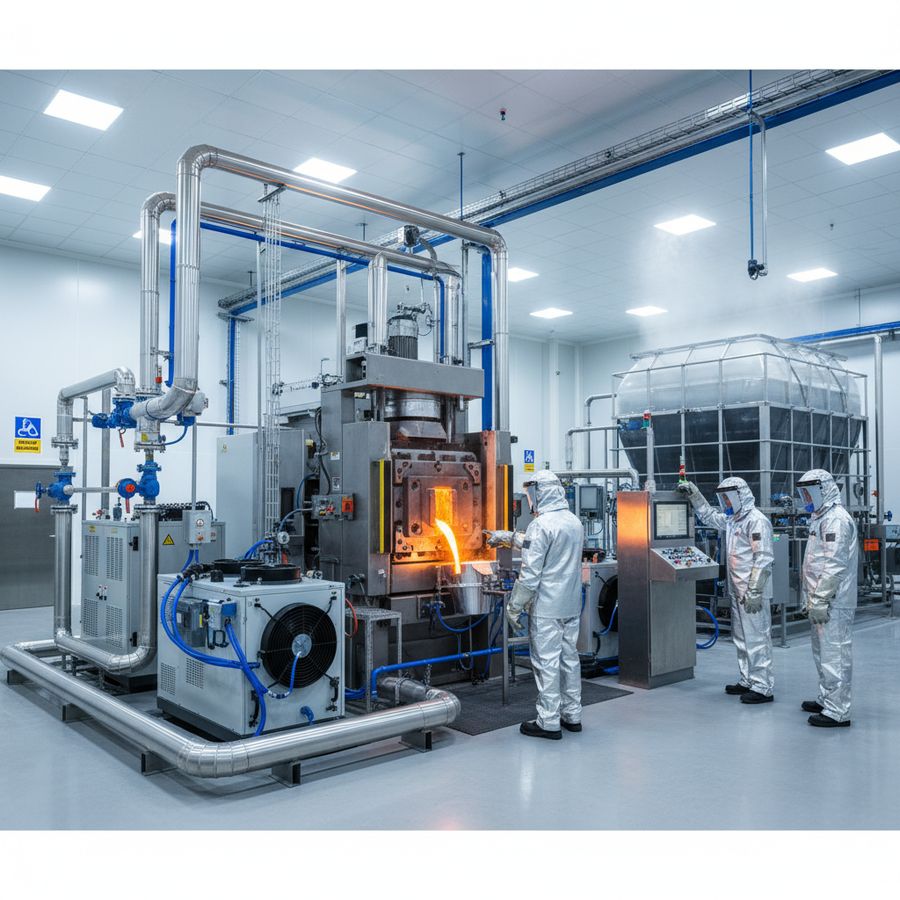
Main Heat Sources in Die Casting Operations
Understanding the primary heat sources in die casting is fundamental to designing an effective cooling strategy. The molten metal injected into the die can reach temperatures above 600°C (1112°F), rapidly transferring heat to the die surface.
Additionally, frictional heat from the mechanical movements of the die and the heat generated by the hydraulic and lubrication oil systems contribute to the overall thermal load. These heat sources require a robust industrial refrigeration setup to maintain stable operating temperatures.
- Molten metal heat transfer during injection and solidification
- Die surface heating from cyclical casting operations
- Heat from hydraulic oil and lubrication systems
- Ambient heat affecting the cooling circuit’s efficiency
Properly addressing these heat sources with dedicated cooling circuits ensures die temperature control that prevents thermal fatigue, prolongs mold life, and maintains casting precision.
Selecting Chillers for Die and Oil Cooling
Choosing the right process chiller is critical for effective die and oil cooling in die casting. Chillers must be capable of handling high heat loads while providing precise temperature regulation to avoid thermal shocks.
Modern chillers designed for industrial refrigeration feature advanced controls, energy-efficient compressors, and adaptable cooling capacities. When selecting chillers, consider:
- Cooling capacity aligned with the maximum expected heat load
- Temperature stability to maintain consistent die and oil temperatures
- Compatibility with cooling fluids used in the system
- Ease of integration and maintenance accessibility
Oil cooling requires chillers with specific features to handle viscosity and thermal properties, ensuring the hydraulic systems operate within safe temperature ranges. Frimec’s tailor-made solutions exemplify the ideal balance between reliability and efficiency in industrial refrigeration for die casting.
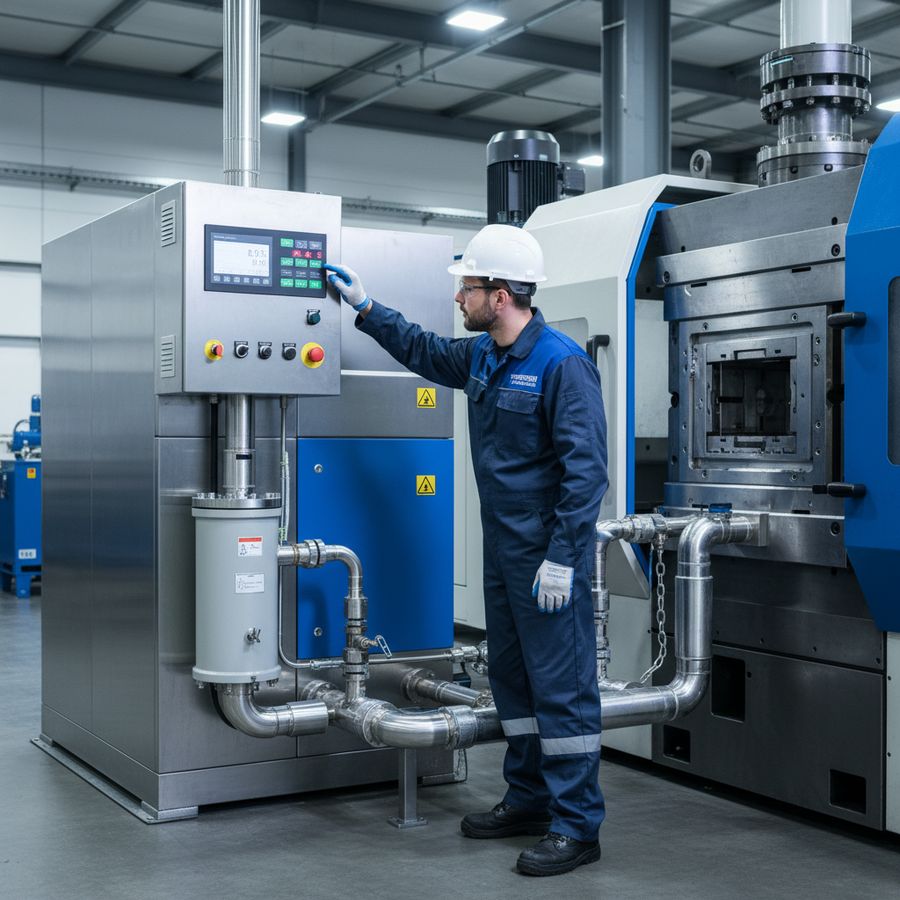
Flow Rate and Delta-T Targets for Stability
Maintaining the correct flow rate and temperature difference (Delta-T) in cooling circuits is essential for stable die casting cooling. The flow rate ensures that enough coolant circulates to absorb and remove heat effectively, while the Delta-T indicates the temperature change across the cooling loop.
Optimizing these parameters prevents localized overheating and thermal gradients that can damage the die or affect casting quality. Typical targets involve:
- Flow rates sufficient to maintain uniform coolant velocity
- Delta-T values generally between 5°C to 10°C to ensure effective heat extraction
- Consistent flow without interruptions or pressure drops
“Achieving optimal flow rate and Delta-T is key to ensuring consistent die temperatures and maximizing production uptime.”
Industrial chillers with precise flow controls and temperature monitoring enable operators to fine-tune these factors, enhancing overall process stability.
Preventing Scale and Fouling in Cooling Circuits
Scale and fouling in cooling circuits pose significant risks to the efficiency of industrial refrigeration systems used in die casting. Mineral deposits and contaminants can accumulate inside pipes and heat exchangers, reducing heat transfer and flow rates.
To mitigate these issues, it is vital to implement preventative measures such as water treatment, regular cleaning schedules, and filtration systems. Key strategies include:
- Using demineralized or treated water to minimize scaling
- Installing filters to capture particulates and debris
- Scheduling periodic flushing and maintenance of cooling circuits
- Monitoring system parameters to detect early signs of fouling
Preventive maintenance not only protects the cooling equipment but also sustains optimal die temperature control, reducing the risk of costly downtime and repairs.
Managing Peak Loads During Production Ramp-Up
Production ramp-up phases in die casting often lead to peak thermal loads that challenge the capacity of industrial refrigeration systems. During these periods, the rapid increase in casting cycles generates sudden spikes in heat output.
Effective management strategies include:
- Utilizing chillers with variable capacity to adapt to changing loads
- Implementing buffer tanks to absorb thermal surges
- Scheduling staggered production starts to avoid simultaneous peak demands
- Integrating real-time monitoring systems to anticipate and control load variations
Process chillers with advanced control algorithms can dynamically adjust cooling output, ensuring the die temperature control remains consistent even under fluctuating operational demands.
Safety Checks for Hoses, Pumps, And Valves
Regular safety inspections of hoses, pumps, and valves are critical to maintaining a reliable industrial refrigeration system for die casting cooling. These components are subject to wear and tear due to continuous operation and exposure to varying pressures and temperatures.
Key safety checks include:
- Inspecting hoses for cracks, leaks, or brittleness
- Verifying pump performance and checking for unusual noises or vibrations
- Ensuring valves operate smoothly without blockages or leaks
- Confirming all fittings and connections are secure and corrosion-free
“Proactive safety checks prevent unexpected failures and maintain uninterrupted cooling efficiency.”
Routine maintenance combined with prompt component replacement helps sustain the integrity of the cooling system, safeguarding both equipment and production quality.
Conclusion
Effective industrial refrigeration is indispensable for optimizing die casting operations, ensuring precise die temperature control, and reliable oil cooling. By understanding the main heat sources, selecting appropriate chillers, and maintaining optimal flow rates and temperature targets, manufacturers can enhance productivity and product quality.
Preventing scale and fouling, managing peak thermal loads, and performing rigorous safety checks on hoses, pumps, and valves are essential practices to preserve system longevity and operational stability.
Partnering with experienced providers of customized industrial refrigeration solutions, such as Frimec, helps achieve energy-efficient, environmentally friendly, and high-performance cooling tailored to the specific needs of die casting facilities worldwide.
