


Overview
Industrial chillers are essential components in numerous manufacturing and processing operations, providing precise process cooling to maintain optimal temperatures in industrial equipment and systems. Selecting the right chiller capacity, often measured in kilowatts (kW), is crucial for ensuring energy efficiency, reliability, and cost-effectiveness.
Choosing the correct chiller size avoids underperformance or excessive energy consumption, which can lead to increased operational costs and potential downtime. With over 55 years of expertise in industrial refrigeration, companies like Frimec emphasize tailored solutions that meet specific cooling requirements for diverse industries such as plastics, packaging, chemical, and more.
“Proper chiller sizing is fundamental to achieving sustainable industrial cooling and enhancing production efficiency.”
This guide will explore the key factors affecting chiller sizing, compare air-cooled and water-cooled chillers, and discuss energy efficiency metrics and installation considerations to help you make an informed decision.
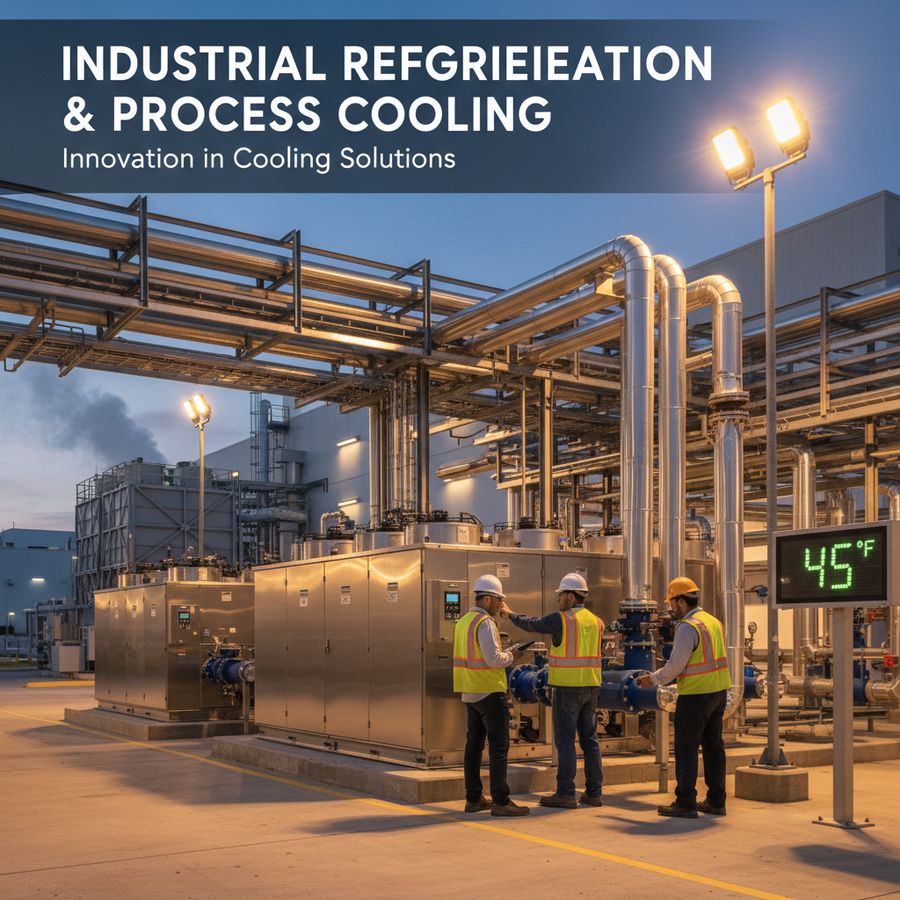
Key Chiller Sizing Factors for Industrial Loads
Determining the right capacity for an industrial chiller requires careful analysis of the cooling load, which depends on several critical factors. These include the heat generated by machinery, ambient temperature, production cycle variations, and the type of process requiring cooling.
Accurate load calculation must consider peak heat loads and fluctuations to avoid undersizing, which can cause equipment failure, or oversizing, which wastes energy. Additionally, understanding the heat transfer characteristics and thermal inertia of the process is vital to optimize performance.
- Process heat load and peak demand
- Ambient environmental conditions
- Flow rates and temperature differentials
- Future expansion or load variability
Consulting with refrigeration experts ensures that the chiller’s kW rating aligns precisely with your industrial cooling needs, maximizing operational efficiency and equipment longevity.
Air-Cooled Vs Water-Cooled Chiller Comparison
When selecting between an air-cooled chiller and a water-cooled chiller, it’s important to evaluate installation environment, maintenance requirements, and cooling efficiency.
Air-cooled chillers dissipate heat via ambient air and are generally easier to install with lower upfront costs. They are suitable for facilities without access to a reliable water source and have fewer concerns related to water treatment.
Conversely, water-cooled chillers leverage cooling towers and water circulation, offering higher energy efficiency and performance in large-scale applications. However, they require more complex infrastructure, including water treatment systems and additional maintenance.
“The choice between air-cooled and water-cooled chillers depends on site-specific factors such as space, climate, and water availability.”
Understanding these differences will help optimize your process cooling and reduce long-term operational costs.
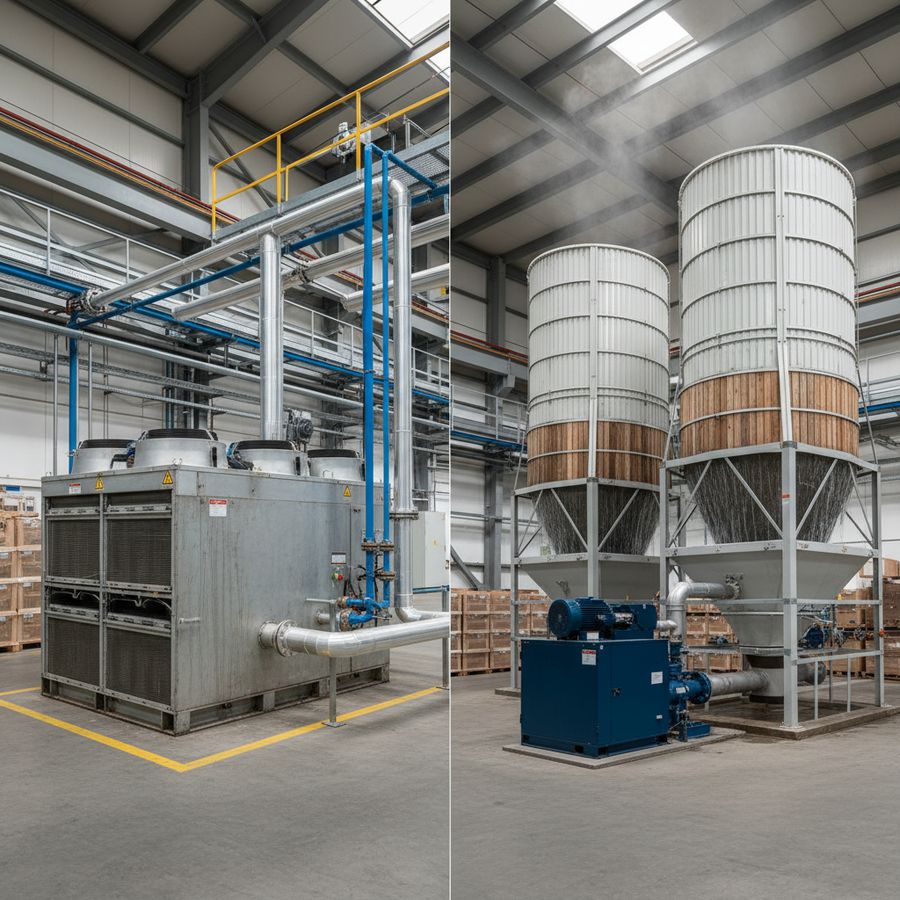
Process Temperature Requirements and Stability Targets
Maintaining precise process temperature requirements is critical for consistent product quality and operational reliability in industrial applications. The chiller must deliver stable cooling performance within tight temperature tolerances.
Temperature stability affects chemical reactions, material properties, and mechanical processes. Fluctuations can cause defects or inefficiencies, leading to increased waste and downtime.
To achieve optimal stability, select chillers with advanced control systems capable of rapid response to load changes and equipped with sensors to monitor temperature variations continuously.
- Identify target process temperatures and allowable deviations
- Ensure chiller controls support precise temperature regulation
- Consider redundancy for critical applications to avoid disruptions
Properly addressing temperature stability is a key component in reliable industrial refrigeration solutions.
Energy Efficiency Metrics: EER, SEER, COP
Energy efficiency is a paramount concern in industrial cooling, as chillers can be substantial energy consumers. Evaluating chillers based on standardized metrics ensures optimal performance and sustainability.
EER (Energy Efficiency Ratio) measures cooling output per unit of electrical input under specific conditions, while SEER (Seasonal Energy Efficiency Ratio) accounts for varying load conditions across a typical cooling season. COP (Coefficient of Performance) indicates the ratio of cooling provided to electrical energy consumed.
Higher values in these metrics indicate more efficient chillers, translating to lower operational costs and reduced environmental impact.
“Selecting chillers with superior EER, SEER, and COP ratings supports both economic and environmental goals in industrial refrigeration.”
Consider these metrics alongside local regulations and incentives to maximize energy savings.
Installation Needs: Space, Noise, Utilities
Proper installation planning is essential to ensure the chiller operates effectively without disrupting industrial workflows. Key considerations include available space, noise levels, and utility requirements such as electrical supply and water connections.
Air-cooled chillers typically require more outdoor space but can be installed without water infrastructure. Water-cooled systems demand space for cooling towers and water treatment equipment but generally operate quieter.
- Assess site layout and clearance for airflow and maintenance access
- Evaluate noise restrictions and use sound attenuation if needed
- Verify utility capacity and infrastructure compatibility
Engage experienced technicians early in the design phase to optimize installation and minimize future operational issues.
Conclusion
Choosing the right kW rating for industrial chillers is a complex process that requires a comprehensive understanding of your facility’s cooling demands, environmental conditions, and operational goals. Integrating knowledge of chiller sizing factors, cooling system types, process temperature stability, energy efficiency, and installation parameters will lead to a well-optimized cooling solution.
Partnering with expert providers who offer tailored industrial refrigeration systems ensures that your chiller selection supports sustainable production, cost savings, and long-term reliability. Whether opting for air-cooled or water-cooled chillers, prioritizing efficiency and precision will enhance your industrial process cooling outcomes significantly.
“Effective industrial refrigeration starts with selecting the right chiller capacity and technology to meet your specific cooling challenges.”
