


Overview
Central cooling plants are essential components in large-scale industrial and commercial facilities, providing efficient and reliable cooling to maintain optimal operating environments. The design of these plants significantly impacts energy consumption, operational costs, and system longevity. Prioritizing energy efficiency in central cooling plant design reduces environmental impact and ensures sustainable operation.
Modern cooling system design integrates advanced technologies and strategic planning to optimize performance. This includes selecting appropriate equipment, implementing control systems, and considering load variations. Central cooling plants serve multiple purposes and industries, necessitating tailored solutions that balance capacity, efficiency, and redundancy to meet critical cooling demands.
“A well-designed central cooling plant is a cornerstone for sustainable industrial operations, enabling significant energy savings and enhancing reliability.”
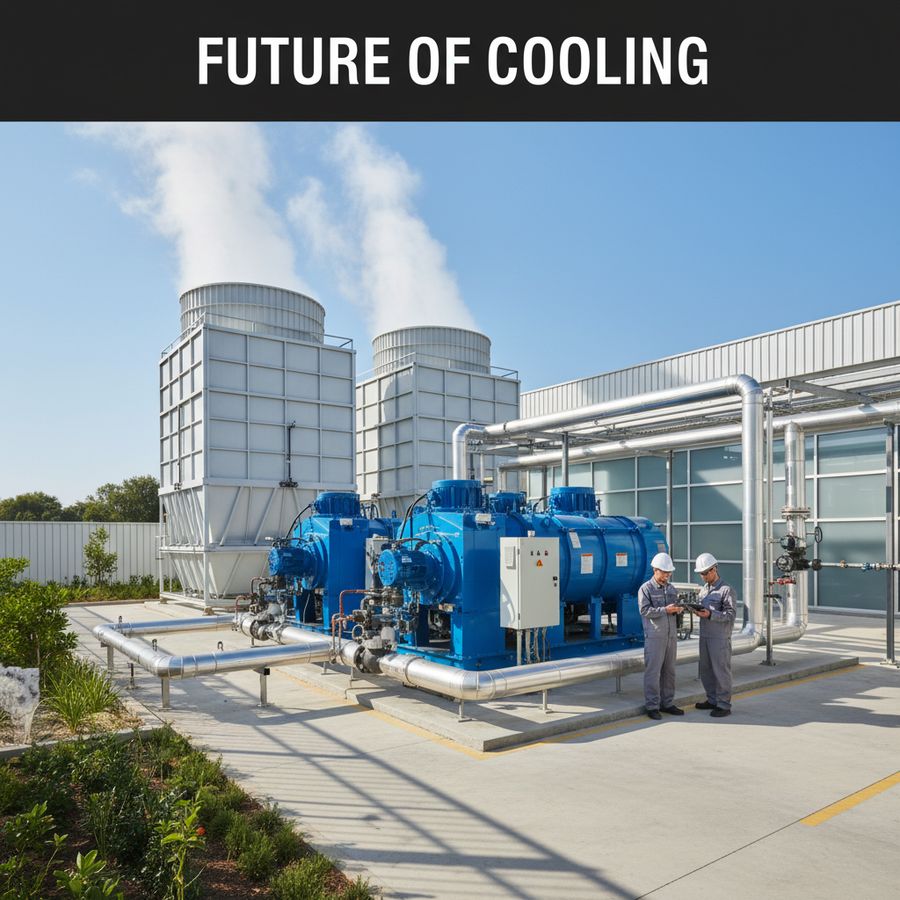
What a Central Cooling Plant Includes
A typical central cooling plant comprises several key components working in harmony to deliver chilled water or cooled air across a facility. The core elements include:
- Chillers – the heart of the system, responsible for extracting heat from the process or environment.
- Cooling towers or condensers – dissipate heat absorbed by the chillers.
- Pumps and fans – circulate chilled water and air throughout the system.
- Piping and valves – connect and regulate flow between components.
- Control systems and sensors – monitor performance and optimize operation.
Each component must be carefully selected and integrated to ensure the overall plant functions efficiently. Tailoring the plant to specific industrial needs enhances performance and longevity.
Load Profiling and Chiller Staging Strategies
Effective chiller staging is crucial in optimizing energy use in central cooling plants. Load profiling helps to understand the cooling demand patterns throughout the day, week, or season. By analyzing these profiles, operators can stage chillers to run only when needed, avoiding unnecessary energy consumption.
Chiller staging strategies typically involve operating chillers sequentially or in parallel based on demand, allowing smaller units to handle low loads efficiently, while larger units activate during peak demand. This approach minimizes wear and tear and maximizes system lifespan.
“Load profiling combined with intelligent chiller staging can reduce energy consumption by up to 30%, significantly boosting cooling system design efficiency.”
Variable Speed Drives for Pumps and Fans
Integrating variable speed drives (VSDs) for pumps and fans is a proven method to enhance the energy efficiency of central cooling plants. VSDs allow the speed of motors to adjust dynamically based on real-time cooling load requirements, reducing power consumption compared to fixed-speed operations.
By matching motor speed to demand, VSDs reduce mechanical stress, noise, and maintenance needs. This flexibility supports precise temperature control and extends equipment lifespan, key factors in sustainable cooling system design.
Pipe Sizing, Insulation, And Pressure Drop
Proper pipe sizing and insulation are fundamental to maintaining efficiency and reducing pressure drop within a central cooling plant. Undersized piping can cause excessive pressure losses, increasing pump energy consumption, while oversized pipes raise capital costs unnecessarily.
Insulating pipes minimizes thermal losses, maintaining chilled water temperature throughout the distribution network. This reduces the load on chillers and improves overall system efficiency. Careful design balances these factors to optimize performance and cost-effectiveness.
Controls, Sensors, And Energy Monitoring Setup
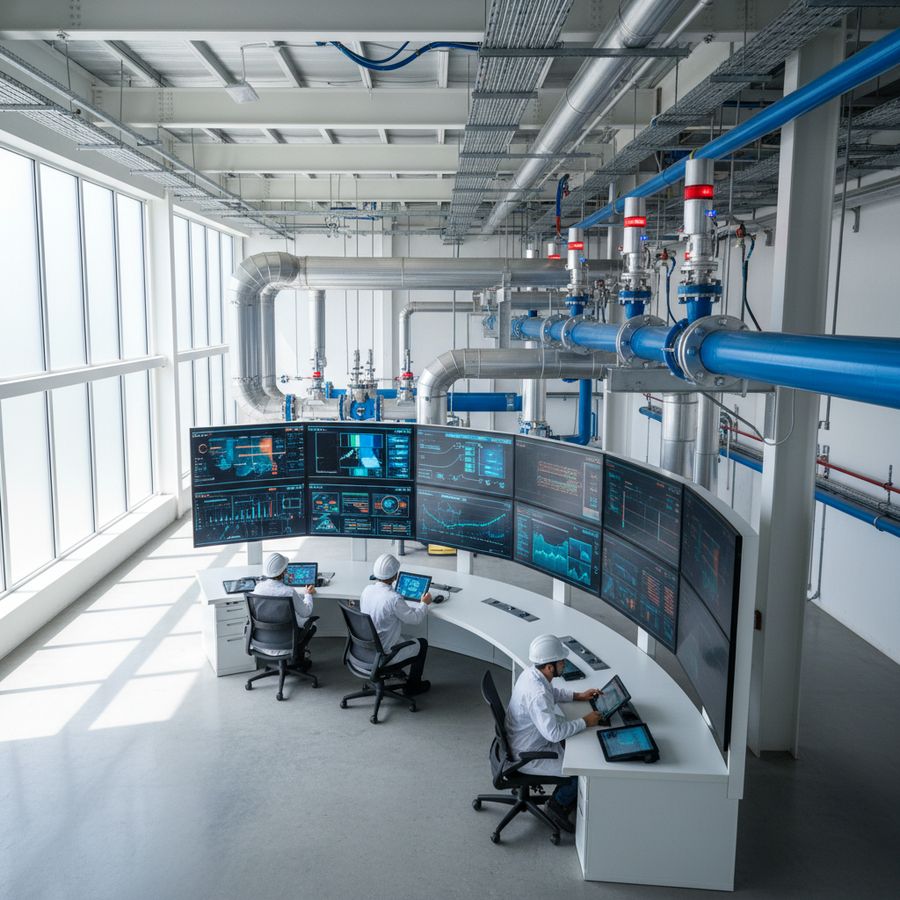
Advanced controls and sensors are integral to modern central cooling plants, facilitating real-time monitoring and automated adjustments. Energy monitoring setups track key performance indicators such as power consumption, temperature, and flow rates, enabling proactive management.
These systems empower operators to implement predictive maintenance, optimize equipment scheduling, and identify inefficiencies. The result is a highly responsive cooling system that adapts to changing conditions while minimizing energy waste.
“Smart controls and energy monitoring are the backbone of an energy-efficient central cooling plant, unlocking substantial operational savings.”
Redundancy and Uptime Planning for Critical Loads
Ensuring continuous operation for critical cooling loads requires strategic redundancy and uptime planning. Redundancy involves duplicating key components such as chillers, pumps, and control systems to prevent downtime during maintenance or failures.
This approach safeguards industrial processes sensitive to temperature fluctuations, maintaining product quality and operational safety. Designing for high availability also includes rapid fault detection and response mechanisms, further securing plant reliability.
Conclusion
Designing an efficient central cooling plant involves a comprehensive approach that combines careful equipment selection, load management, advanced controls, and robust redundancy planning. Emphasizing energy efficiency and leveraging technologies like variable speed drives and intelligent chiller staging can significantly reduce operational costs and environmental impact.
By integrating these design tips, industrial facilities can achieve sustainable, reliable cooling solutions that support long-term productivity and compliance with energy regulations.
