


Overview
Industrial thermoregulators play a crucial role in maintaining precise water temperature control in various manufacturing processes. Their purpose is to ensure consistent thermal conditions, which is essential for process stability, product quality, and operational efficiency.
With over 55 years of expertise in industrial thermoregulation, companies like Frimec have developed advanced water temperature regulator systems tailored to diverse industrial needs. These systems support process heating applications by precisely managing temperature settings, providing reliable and energy-efficient performance.
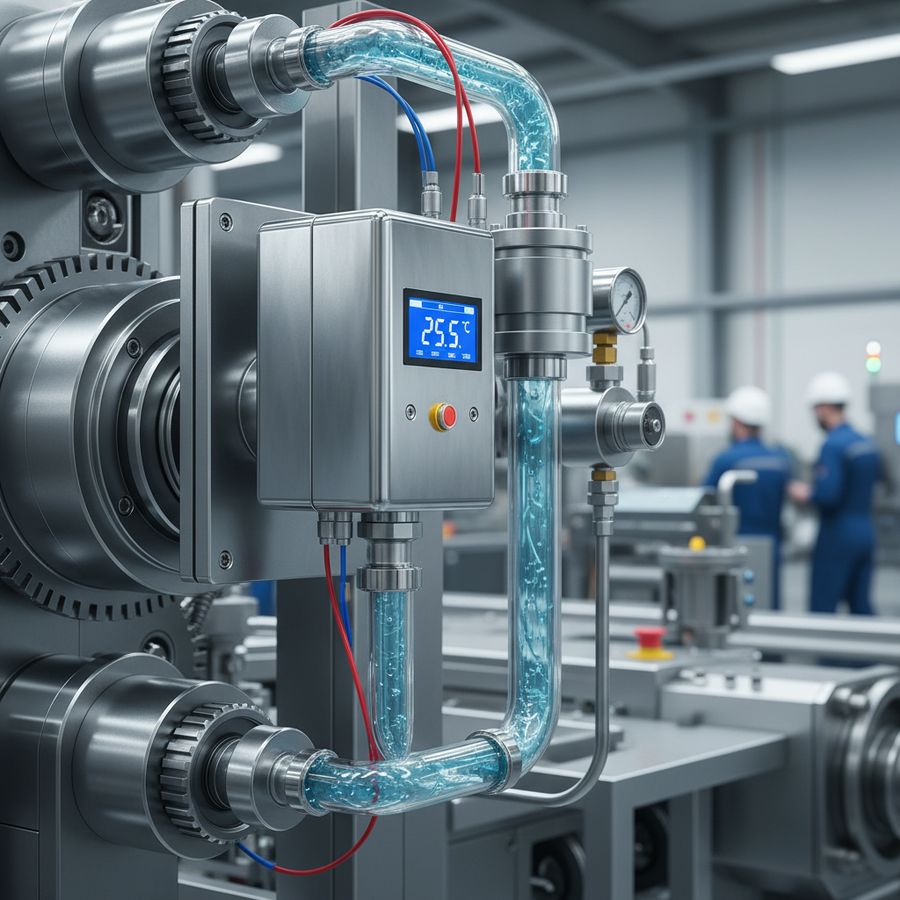
Effective temperature control not only improves product quality but also reduces downtime and energy consumption, making industrial thermoregulation indispensable in modern production environments.
What Water Temperature Regulators Do in Industry
Water temperature regulators are designed to maintain the desired temperature of water circulating in industrial systems. They regulate heating and cooling cycles to ensure the water temperature remains within set parameters, which is vital for process accuracy.
In industry, these regulators:
-
Prevent overheating or underheating of equipment
-
Optimize energy use through efficient temperature management
-
Enhance safety by controlling thermal fluctuations
By stabilizing temperatures, water temperature regulators improve product consistency and extend equipment lifespan, which ultimately boosts operational reliability.
Selecting Setpoint Range and Heating Capacity
Choosing the correct setpoint range and heating capacity is fundamental when configuring a water temperature regulator. The setpoint range defines the temperature limits within which the system operates, while heating capacity determines the system’s ability to raise water temperature efficiently.
Key considerations include:
-
The specific temperature requirements of the industrial process
-
The volume and flow rate of water in the system
-
Thermal losses and ambient conditions affecting the system
Proper sizing ensures precise temperature control and energy-efficient operation, avoiding unnecessary wear on the system components.
Pressurized Vs Non-Pressurized Water Circuits
Understanding the difference between pressurized and non-pressurized water circuits is essential for selecting the right industrial thermoregulation system. Pressurized systems operate under controlled pressure, allowing water to reach higher temperatures without boiling, which is ideal for demanding process heating.
Non-pressurized circuits operate at atmospheric pressure and are simpler but limited to lower temperature ranges. They are usually used in less critical applications.
Pressurized water systems enhance temperature control precision and safety, while non-pressurized systems offer cost-effective solutions for moderate heating needs.
Pump Selection: Flow Rate, Head, And Materials
The pump is a vital component in any water temperature regulator system, responsible for circulating water through the heating or cooling loop. Selecting the right pump involves evaluating flow rate, head pressure, and materials to ensure compatibility with the process requirements.
Considerations include:
-
Flow rate: Must match the volume needs for uniform temperature distribution.
-
Head: The pressure the pump must overcome to circulate water efficiently.
-
Materials: Should resist corrosion and wear, especially in pressurized or chemically aggressive environments.
Optimal pump selection enhances system reliability and minimizes maintenance costs.
Safety Devices: Expansion, Relief Valves, And Sensors
Safety is paramount in industrial thermoregulation. Systems incorporate various safety devices to protect equipment and personnel. Expansion tanks accommodate water volume changes due to temperature fluctuations, preventing pressure buildup.
Relief valves automatically release excess pressure, safeguarding against system failures. Sensors continuously monitor temperature and pressure, enabling real-time control and early detection of anomalies.
Integrating these safety devices ensures compliance with industrial standards and promotes uninterrupted, safe operation of temperature control systems.
Applications: Plastics, Die Casting, And Packaging
Industrial thermoregulators are indispensable in sectors such as plastics, die casting, and packaging, where precise temperature control directly impacts product quality.
In plastics, controlling mold temperature improves material flow and reduces defects. Die casting requires stable thermal conditions to ensure metal solidification and surface finish. Packaging machinery benefits from regulated water temperature for sealing and forming processes.
These applications demand:
-
Reliable temperature control to maintain process consistency
-
Robust systems capable of continuous operation
-
Energy-efficient solutions to reduce operational costs
Conclusion
Industrial water temperature regulators are essential for maintaining precise thermal conditions in various manufacturing processes. By selecting the appropriate setpoint range, heating capacity, and system components—including pumps and safety devices—industries can achieve optimal process heating and efficiency.
Pressurized water systems offer enhanced performance for demanding applications, while tailored solutions ensure compatibility with specific industrial needs. Partnering with experienced providers like Frimec guarantees reliable, innovative thermoregulation solutions that drive productivity and sustainability.
Effective industrial thermoregulation translates into improved product quality, energy savings, and operational safety, securing a competitive edge in manufacturing.
