


Overview
Centralized process cooling systems play a pivotal role in maintaining precise temperature control across various industrial applications. These systems are designed to deliver consistent cooling capacity to multiple points within a facility, ensuring optimal performance of industrial processes. By centralizing the cooling infrastructure, industries can achieve enhanced efficiency, reduced operational costs, and simplified maintenance protocols.
Industrial facilities that rely on stringent temperature regulation, such as chemical plants, plastic manufacturing, and galvanic processing, benefit significantly from centralized cooling. A well-designed industrial cooling system not only stabilizes process temperatures but also minimizes energy consumption and environmental impact.
“A centralized approach to process cooling consolidates resources, streamlines operations, and improves overall system reliability.”
Choosing the right design for a centralized system requires a thorough understanding of the facility’s cooling demand profiles, thermal loads, and future scalability needs. Integrating advanced components like chillers, cooling towers, and temperature regulators ensures that the system maintains a stable and controlled environment essential for high-quality industrial output.
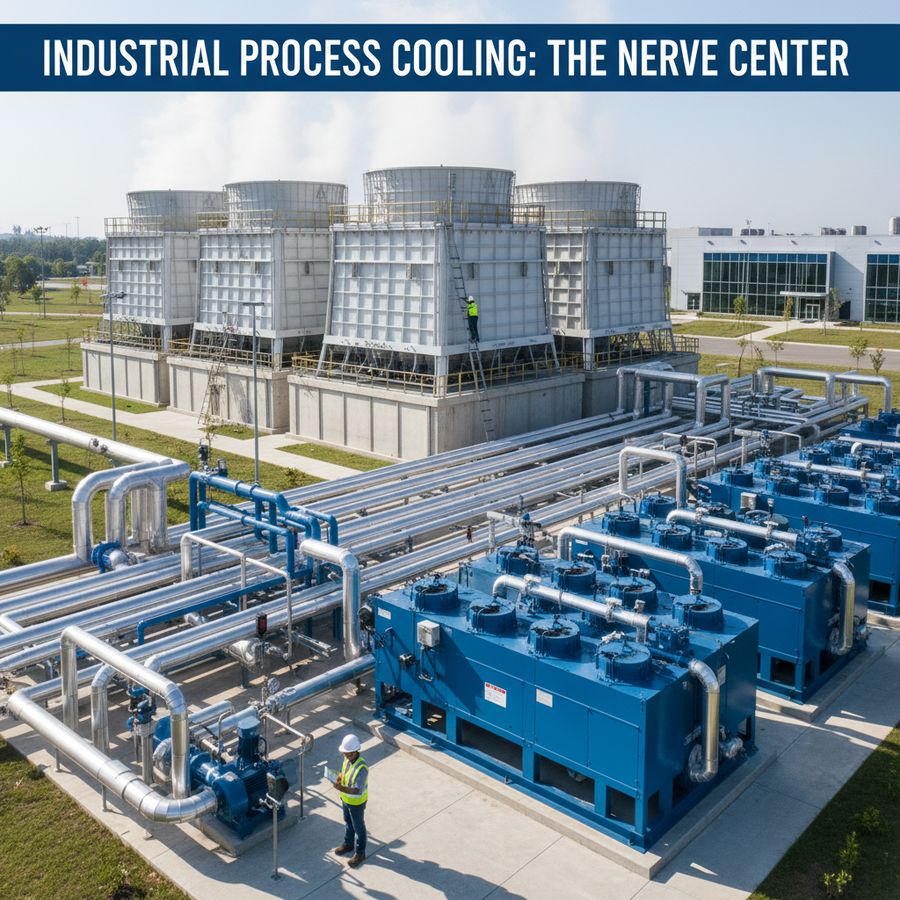
Centralized Vs Decentralized Cooling Architectures
When designing an industrial cooling system, deciding between centralized and decentralized cooling architectures is crucial. Centralized systems consolidate cooling resources into a single, large-scale unit that serves the entire facility, whereas decentralized systems deploy multiple smaller units near the process loads.
Centralized architectures offer several advantages:
- Efficiency: Larger centralized units often operate more efficiently than numerous smaller units.
- Maintenance: Maintenance is streamlined, focusing on fewer units and centralized control.
- Cost-effectiveness: Reduced duplication of equipment and optimized energy usage.
Conversely, decentralized systems may provide better flexibility and localized control but often at the expense of higher installation and maintenance costs. For industries where temperature control consistency is paramount, centralized process cooling typically ensures more stable supply temperatures and improved system reliability.
“Centralized cooling systems are generally preferred for large industrial operations requiring uniform temperature regulation across multiple processes.”
Header Design: Primary-Secondary Pumping Basics
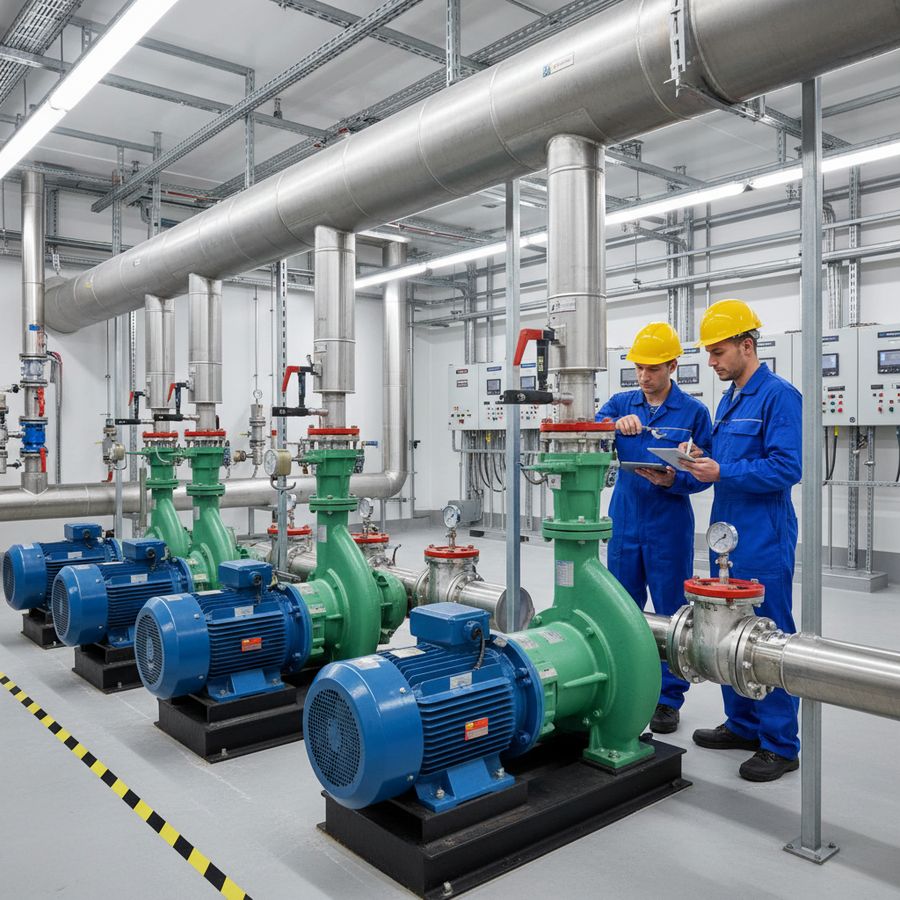
The design of the header and pumping system is fundamental in any centralized process cooling system. A common and effective approach is the primary-secondary pumping configuration, which separates the primary loop (chiller side) from the secondary loop (process side).
In this setup, the primary pump circulates chilled water through the chiller, while the secondary pump distributes cooled water to the process loads. This separation allows for:
- Independent flow control in each loop, enhancing system flexibility.
- Reduction of pressure fluctuations and hydraulic interference.
- Improved system stability and efficiency in pump system design.
Header design must ensure balanced flow distribution, accommodate thermal expansion, and facilitate easy maintenance. Proper valve placement and flow control devices are essential to maintain consistent supply temperatures and meet process demands without undue energy consumption.
“Primary-secondary pumping is a cornerstone strategy for stabilizing flow and temperature in centralized industrial cooling networks.”
Buffer Tanks and Load Diversity Management
Buffer tanks are critical components in centralized cooling systems to manage load fluctuations and improve system stability. These tanks store chilled water to absorb sudden changes in thermal load, preventing short cycling and reducing stress on chillers and pumps.
Managing load diversity effectively means recognizing that not all processes demand cooling simultaneously or at the same rate. Buffer tanks help by:
- Providing hydraulic separation and volume for variable flow demands.
- Maintaining steady supply temperature despite fluctuating process loads.
- Enhancing energy efficiency by reducing unnecessary equipment startups.
Incorporating appropriately sized buffer tanks into the system design ensures that the industrial cooling system can accommodate peak loads without compromising performance or reliability. This is especially important in facilities with diverse and intermittent cooling needs.
“Buffer tanks are indispensable for smoothing out load variations and ensuring continuous, stable temperature control.”
Controls and Sensors for Stable Supply Temperature
Advanced controls and sensors are essential for maintaining a stable supply temperature in a centralized process cooling system. Precise monitoring and control of flow rates, temperature, and pressure enable the system to respond dynamically to changing process demands.
Key components include:
- Temperature sensors placed at strategic points to monitor inlet and outlet conditions.
- Flow meters to ensure proper distribution and detect anomalies.
- Programmable logic controllers (PLCs) or building management systems (BMS) for real-time system management.
These controls optimize the operation of chillers, pumps, and valves, preventing temperature fluctuations that could negatively impact industrial processes. Furthermore, integrating automated alarms and diagnostics supports proactive maintenance, reducing downtime and operational risks.
“Reliable sensor integration and smart controls are the backbone of consistent temperature regulation in centralized cooling systems.”
Redundancy Planning: N+1 and Critical Loads
Redundancy planning is a vital design consideration to ensure uninterrupted cooling for critical industrial processes. The N+1 redundancy principle involves installing one additional piece of equipment beyond the system’s operational requirements, providing a backup in case of failure.
For centralized process cooling systems, redundancy might include:
- Extra chillers or pumps to maintain capacity during maintenance or unexpected breakdowns.
- Dual power supplies and control systems to enhance reliability.
- Strategic placement to protect critical loads from cooling interruptions.
Implementing redundancy safeguards the facility against costly downtime and maintains strict temperature control standards essential for quality and safety. This is particularly important in industries with zero tolerance for process interruptions.
“N+1 redundancy ensures that even in equipment failure scenarios, critical cooling demands remain fully supported.”
Commissioning Steps for Reliable Startup
Successful commissioning of a centralized process cooling system guarantees that design intentions translate into reliable operation. The commissioning process includes systematic verification of equipment installation, system integration, and performance validation.
Key commissioning steps include:
- Pressure testing and leak detection of piping and tanks.
- Calibration of sensors and controls to ensure accurate readings.
- Balancing and adjusting flow rates in the primary and secondary loops.
- Functional testing of redundancy systems like backup pumps and chillers.
- Monitoring supply temperature stability under simulated load conditions.
Comprehensive commissioning minimizes startup issues, enhances system longevity, and assures operators of dependable performance from day one.
“Detailed commissioning transforms design and equipment into a seamlessly operating cooling infrastructure.”
Conclusion
Designing an effective centralized process cooling system requires careful consideration of architecture, pumping strategies, load management, controls, and redundancy. By integrating these design essentials, industries can achieve superior temperature control that supports process stability, energy efficiency, and operational reliability.
Buffer tanks and advanced control systems play a crucial role in managing dynamic loads and ensuring consistent supply temperatures. Additionally, redundancy planning safeguards critical industrial processes against failures, while thorough commissioning ensures a successful and smooth startup.
Partnering with experienced providers in industrial refrigeration and temperature control, who offer tailor-made solutions, can significantly enhance system performance and longevity. This strategic approach ultimately drives productivity and quality across diverse industrial sectors.
“A thoughtfully designed centralized cooling system is a cornerstone of industrial process excellence and sustainability.”
