


Overview
Food industry refrigeration is a critical part of modern production, helping manufacturers protect flavor, texture, shelf life, and food safety from raw material intake to packaging and storage. In busy processing environments, even small temperature variations can affect product consistency, increase waste, and create unnecessary compliance risks. That is why refrigeration systems are not simply utilities; they are part of the production strategy.
Effective temperature control supports stable operations across mixing, chilling, fermentation, cooling, and cold-room handling. From compact process units to larger centralized systems, the right design helps food plants keep products within target ranges during every production shift.
Reliable refrigeration protects both the product and the process that creates it
For facilities that operate continuously, tailored solutions such as industrial chillers, cold plants, and cooling towers can improve energy performance while supporting hygienic, repeatable food processing refrigeration conditions.
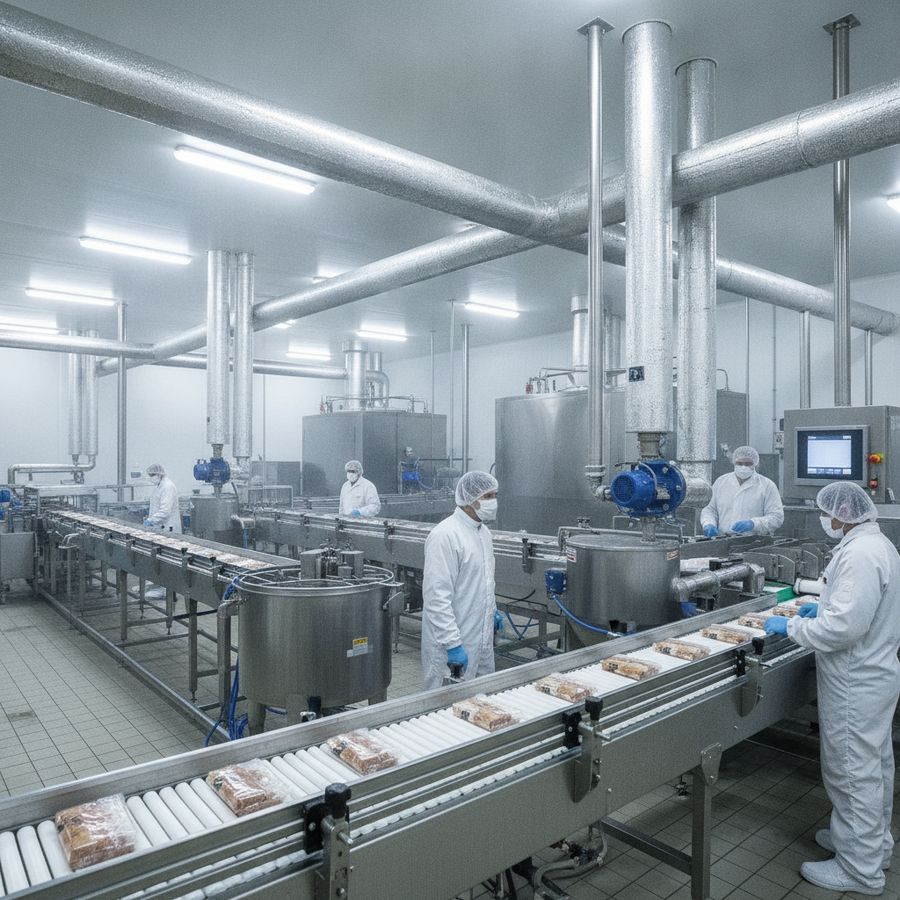
Temperature Control Risks in Food Processing
In food manufacturing, poor temperature control can quickly become a product quality issue. Sensitive ingredients may separate, proteins can degrade, and finished goods may lose the texture or appearance customers expect. In chilled processing lines, unstable temperatures can also shorten shelf life and increase the likelihood of spoilage before products reach distribution.
The main risks usually include:
- Uneven cooling across batches
- Overheating during processing or transfer
- Delayed pull-down times after cooking or filling
- Unexpected equipment stoppages in critical cold zones
These issues affect more than product quality. They can disrupt throughput, create rework, and place pressure on sanitation and inspection teams. Strong food processing refrigeration systems help plants reduce these risks by maintaining precise thermal conditions under changing loads.
In food plants, consistency is often the difference between a saleable batch and a costly loss
Industrial Refrigeration for Hygiene and Stability
Hygiene and thermal stability work together in food environments. While sanitation programs address contamination risks, food industry refrigeration helps create the stable conditions needed to slow microbial growth and preserve process integrity. This is especially important in dairy, meat, prepared foods, beverages, and other sectors where ingredients move through multiple temperature-sensitive stages.
Well-designed refrigeration systems support cleanable layouts, predictable cooling cycles, and dependable operation during long production runs. Industrial chillers, air-cooled units, and water-cooled systems can be selected based on plant layout, process demand, and available utilities.
Stable cooling also helps protect machine performance. When process temperatures remain consistent, fillers, mixers, heat exchangers, and packaging lines tend to operate more smoothly with fewer interruptions.
Hygienic production is strengthened when refrigeration systems deliver steady temperatures without creating operational complexity
This makes food processing refrigeration an essential investment in both product quality and plant reliability.
Cooling Towers in Food Production Plants
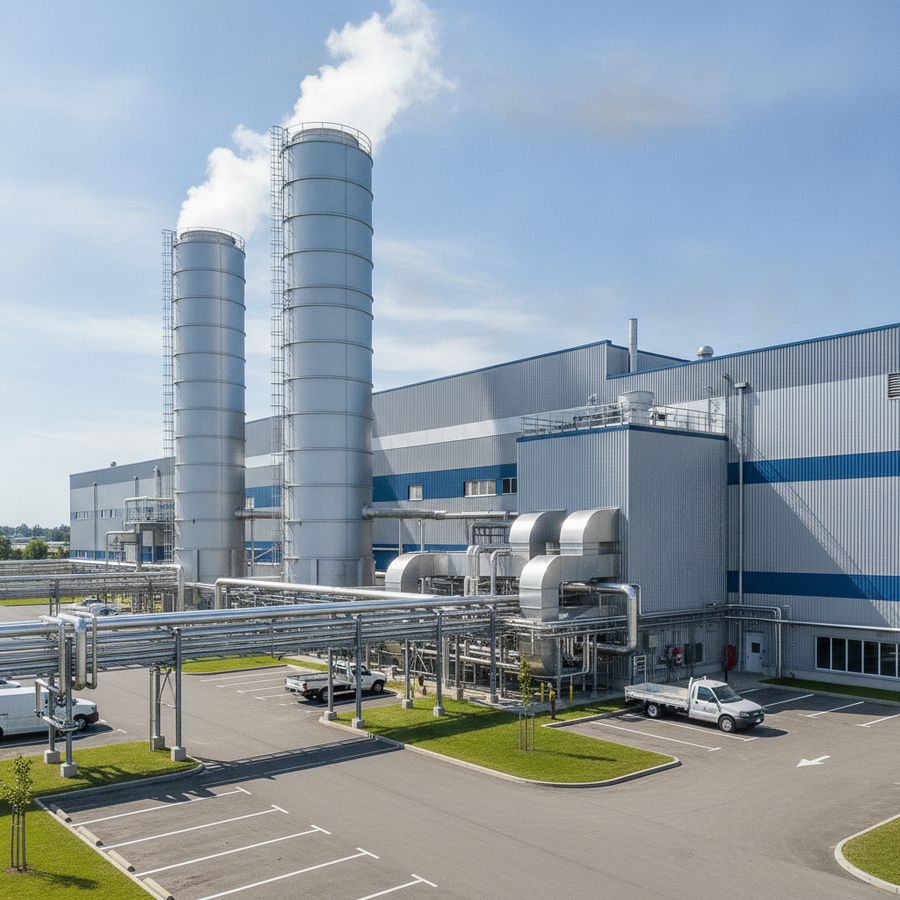
Cooling towers play an important role in many food production plants, especially where water-cooled refrigeration systems or heat rejection processes are part of continuous operations. By removing excess heat efficiently, they help maintain stable process conditions and support the performance of chillers and related equipment.
For industrial use, tower design matters. Features such as vertical air discharge can improve placement flexibility and reduce sensitivity to wind conditions. In more demanding environments, towers may also be specified with options like ductable fan arrangements, outdoor-protected motors, circulation pumps, control panels, or winter defrosting support.
In food facilities, the value of cooling towers is tied to dependable heat management and operational adaptability. When properly integrated, they can help optimize refrigeration performance while supporting long production hours.
Efficient heat rejection is a hidden but essential part of stable food plant refrigeration
Choosing Chillers for Continuous Food Operations
Selecting the right industrial chillers for food operations starts with understanding the process, not just the cooling capacity. A plant producing around the clock needs equipment that can handle changing loads, maintain precise setpoints, and integrate with the wider refrigeration strategy. Air chillers, microchillers, thermo chillers, and centralized cold plants may each be suitable depending on production scale and application.
Decision-makers should evaluate several factors before specifying a system:
- Required temperature range and stability
- Daily operating hours and peak load profile
- Space limitations indoors or outdoors
- Maintenance access and serviceability
- Energy efficiency and future expansion needs
The best food industry refrigeration solution is often a tailored one. Matching chiller type to process demands helps protect product quality, reduce energy waste, and support continuous output without compromising reliability.
Reducing Downtime in Cold Process Lines
Unplanned downtime in cold process lines can lead to lost batches, delayed shipments, and higher operating costs. In food production, refrigeration interruptions are particularly disruptive because products may only remain within safe temperature windows for a limited time. That makes system reliability a direct contributor to profitability.
Reducing downtime begins with robust equipment selection, but it also depends on controls, maintenance planning, and smart system layout. Plants benefit when key refrigeration components are easy to inspect, protected from harsh industrial conditions, and configured for predictable performance across seasonal changes.
Practical steps often include preventive service schedules, monitoring of operating temperatures and pressures, and planning for wear parts before failure occurs. In demanding applications, durable food processing refrigeration systems can help operators avoid repeated stoppages that interrupt throughput.
Every hour of refrigeration uptime helps preserve product value, labor efficiency, and delivery confidence
Compliance, Safety, and Equipment Durability
Compliance in food manufacturing depends on more than documented procedures. Equipment must consistently support the safe handling of products, ingredients, and process water across all operating conditions. Reliable temperature control is central to that goal, helping facilities maintain internal standards as well as broader food safety expectations.
Durability is equally important. Refrigeration equipment installed in industrial settings may face moisture, washdown exposure, outdoor weather, and long daily run times. Components designed with protective construction, weather-resistant finishes, and watertight motor arrangements can offer stronger long-term performance in demanding environments.
Safety also improves when systems are matched to the application and maintained correctly. Stable thermal performance reduces emergency interventions, while dependable controls help operators manage load changes with confidence.
Durable refrigeration equipment supports compliance by making consistent safe operation easier to achieve day after day
For many plants, resilient food industry refrigeration is a practical safeguard for both audits and operations.
Conclusion
Protecting food quality requires more than cold storage alone. It depends on a complete refrigeration approach that supports each stage of production with accuracy, hygiene, and dependable performance. From core food processing refrigeration systems to well-integrated cooling towers and carefully selected industrial chillers, every component contributes to product stability and operational continuity.
Facilities that invest in tailored refrigeration solutions are better positioned to reduce waste, improve consistency, and manage demanding production schedules. They can also respond more effectively to compliance pressures, maintenance challenges, and seasonal operating changes.
As food manufacturers work to improve efficiency without compromising standards, advanced food industry refrigeration remains a strategic asset. The right system helps plants maintain precise temperature control, protect brand reputation, and keep high-value products in the best possible condition from process line to dispatch.
