


Defrost Strategies That Reduce Downtime and Energy Waste
In industrial refrigeration, defrost is not just a maintenance function. It is a control strategy that directly affects energy efficiency, coil performance, and production continuity. When frost builds on evaporator surfaces, airflow drops, heat transfer weakens, and compressors work longer to hold setpoint. A well-managed defrost cycle control plan removes ice before performance declines sharply, but avoids unnecessary defrost events that waste heat, electricity, and labor.
The most effective strategies match defrost frequency and duration to real operating conditions. Time-based defrost can work in stable environments, but many facilities benefit from adaptive control that responds to coil temperature, suction behavior, or humidity patterns. This approach helps reduce downtime because the system defrosts only when needed, not simply because the clock says so.
Efficient defrost is not about running more cycles. It is about running the right cycle at the right time.
Operators often improve results by combining several methods:
- Staggering defrost across multiple evaporators to protect room temperature stability
- Using shorter, verified termination points instead of fixed long cycles
- Selecting the proper defrost method for the application, such as electric, hot gas, or air defrost
- Reviewing seasonal changes in moisture load and production schedules
For facilities focused on uptime, the best defrost strategy is one that protects coil capacity without interrupting cooling longer than necessary.
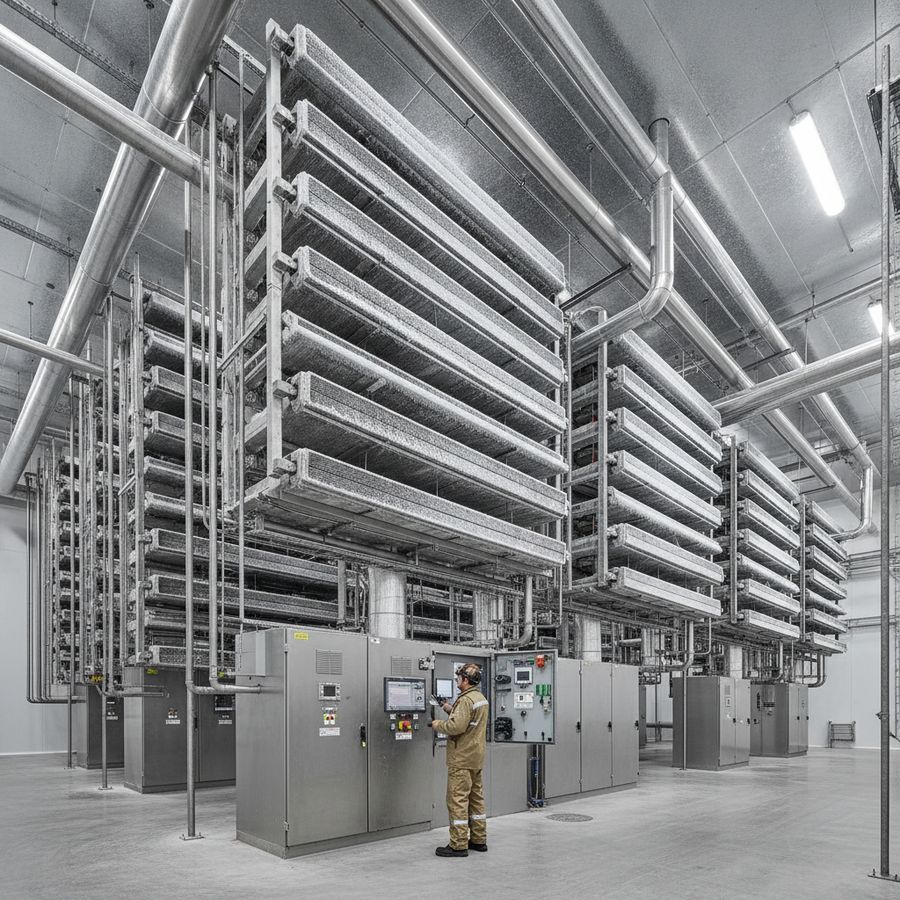
What Triggers an Efficient Defrost Cycle?
An efficient defrost cycle begins with the right trigger. In many plants, the traditional trigger is elapsed time, such as every six or eight hours. While simple, this method often ignores actual coil condition. The result is common: some cycles start too early and waste energy, while others start too late and allow frost to reduce cooling performance. Better defrost timing depends on real system signals.
Useful triggers include evaporator coil temperature, pressure changes, suction superheat trends, fan runtime, and differential temperature across the coil. These inputs help controllers recognize when frost has reached the point where heat transfer is compromised. In moisture-heavy applications, door activity and ambient humidity can also serve as practical indicators for defrost demand.
Industrial refrigeration systems perform best when start and stop conditions are both clearly defined. A good trigger starts defrost neither too often nor too late, and a good termination point ends the cycle as soon as ice is cleared. This prevents overheating the coil area and reduces recovery time after defrost.
Efficient defrost timing depends on measurable operating conditions, not assumptions.
When controls are aligned with real load conditions, facilities gain lower energy use, more predictable cooling, and stronger temperature stability throughout the refrigerated space.
How Does Product Load Affect Defrost Timing?
Product load has a major influence on defrost timing, yet it is often underestimated. A room filled with warm incoming product creates a different moisture and heat profile than a room storing already frozen goods. As product load changes, so does evaporator demand, frost formation rate, and the amount of time the system can tolerate reduced coil efficiency before cooling performance starts to slip.
Heavier loads usually mean longer compressor operation and increased fan activity, which can lead to faster frost accumulation when moisture is present. High-turnover food processing areas, loading zones, and facilities with frequent door openings often need more responsive defrost cycle control than static storage rooms. On the other hand, light-load periods may allow fewer defrost events without sacrificing coil performance.
This is why fixed schedules can become costly. If defrost frequency remains unchanged during low-load periods, the system may waste energy on unnecessary cycles. If schedules stay too light during peak throughput, frost buildup can reduce airflow and harm temperature stability.
- Warm product entering the room can raise humidity and frost potential
- Frequent handling increases air infiltration
- Dense product stacking may alter airflow patterns around evaporators
Matching defrost logic to product movement helps maintain stable cooling conditions while supporting better energy efficiency across changing production demands.
Sensor-based Control Improves System Stability and Safety
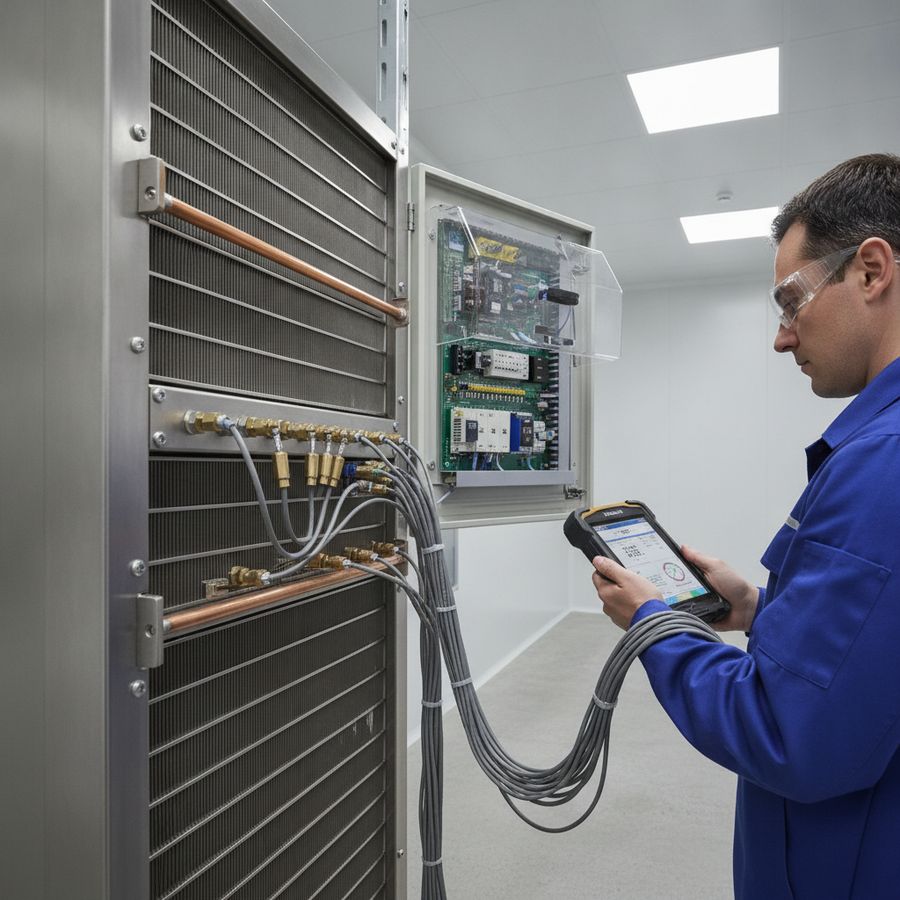
Sensor-based control gives modern industrial refrigeration systems the data needed to make smarter defrost decisions. Instead of relying only on timers, sensors monitor the actual condition of the evaporator, room, and refrigerant circuit. This improves defrost cycle control by reducing guesswork and helping the system respond to real frost buildup, termination conditions, and post-defrost recovery needs.
Common sensors include coil temperature probes, room temperature sensors, pressure transducers, humidity sensors, and door status inputs. Together, these devices create a more complete picture of how the system is operating. When properly calibrated, they help prevent premature defrost, incomplete ice removal, and excessive heating during a cycle.
Safety also improves when controls can detect abnormal conditions early. A sensor can reveal that a coil is not warming as expected during defrost, that a fan restarted too soon, or that room temperature is drifting outside acceptable limits. These issues matter in applications where product integrity and compliance depend on tight temperature stability.
Better sensing leads to better control, and better control protects both equipment and product.
For facilities seeking higher energy efficiency and fewer process disruptions, sensor-driven logic is one of the clearest upgrades available. It supports stable operation, faster recovery, and more consistent cooling performance over time.
Common Defrost Errors That Raise Operating Costs
Many refrigeration systems lose efficiency not because defrost is missing, but because it is poorly configured. One common mistake is scheduling too many defrost cycles. Excessive defrost adds unnecessary heat to the refrigerated space, increases recovery time, and forces compressors to run harder afterward. Another frequent error is allowing cycles to run too long, even after the coil is already clear of ice.
Incomplete defrost is equally costly. If ice remains on the evaporator, airflow stays restricted and heat transfer remains weak. Operators may then respond by lowering setpoints, even though the real problem is poor defrost cycle control. This creates a cycle of wasted energy and unstable room conditions.
Other errors include bad sensor placement, failed heaters, fan restart delays that are too short, and ignoring seasonal changes in humidity or production load. Each issue reduces energy efficiency and can undermine temperature stability in sensitive applications.
- Overly frequent defrost intervals
- Termination temperatures set too high or too low
- Restarting fans before moisture has drained or refrozen safely
- Using the same settings year-round despite changing conditions
A disciplined review of alarms, runtimes, and coil performance helps identify where operating costs are rising. In most cases, correcting a few basic control errors produces measurable savings without major equipment changes.
When Manual Overrides Create Avoidable Temperature Swings
Manual overrides can be useful during troubleshooting, cleaning, or emergency operation, but they often create avoidable temperature swings when used too freely. In industrial refrigeration, every manual defrost, forced fan stop, or bypassed termination point changes the balance between ice removal and cooling recovery. If that balance is disrupted, room conditions can drift quickly, especially in high-load or product-sensitive environments.
A manual override may seem harmless when an operator wants to clear a coil early or delay a scheduled cycle. However, repeated intervention can distort the logic built into the controller. Too many manual defrosts add heat and reduce energy efficiency. Delaying defrost for convenience can allow frost to accumulate until airflow collapses and system recovery becomes slower and more expensive.
Overrides should solve exceptions, not replace control strategy.
The biggest risk is inconsistency. Different shifts may apply different decisions, making it difficult to track the true cause of poor temperature stability or rising power consumption. Without clear procedures, manual control can also mask faulty sensors or improper defrost timing that should be corrected permanently.
Facilities reduce this risk by limiting override authority, logging every intervention, and reviewing when and why manual actions occur. Strong procedures protect product quality while keeping defrost performance predictable and repeatable.
Control Settings That Support Consistent Cooling Performance
Consistent cooling performance depends on more than selecting a defrost method. It requires control settings that work together across the entire cycle, from initiation to termination to post-defrost recovery. In well-managed defrost cycle control, every parameter serves a purpose: start conditions, maximum cycle time, termination temperature, drip time, fan delay, and restart logic must all be tuned to the application.
Termination settings are especially important. If the cycle ends too early, residual ice reduces coil performance. If it ends too late, the system wastes energy and exposes the room to unnecessary heat gain. Fan delay is also critical because restarting airflow too soon can blow moisture into the space or encourage fast refreezing on the coil surface.
To support temperature stability, operators should review settings in relation to actual room usage, product load, humidity patterns, and required pull-down speed after defrost. The goal is not just to clear frost, but to return the evaporator to efficient cooling as quickly and smoothly as possible.
- Set realistic maximum defrost durations
- Verify sensor accuracy and placement regularly
- Coordinate fan restart with drainage and coil condition
- Review settings after seasonal or production changes
When these controls are optimized, energy efficiency improves, cooling becomes more reliable, and the full industrial refrigeration system operates with greater stability over the long term.
