


Sensor Data That Flags Faults Before Failure
Predictive maintenance starts with the right sensor data. In industrial chillers and cooling systems, small changes in operating conditions often appear long before a shutdown or major performance loss. Temperature drift, suction and discharge pressure variation, abnormal vibration, motor current spikes, and inconsistent flow rates can all point to developing faults in compressors, pumps, fans, or heat exchangers.
For plant teams, the value of automation monitoring is not just collecting numbers. It is identifying patterns that indicate fouled coils, refrigerant leaks, bearing wear, blocked filters, scaling, or unstable load conditions. A gradual rise in approach temperature, for example, may suggest heat transfer surfaces are losing efficiency well before alarms reach a critical state.
Early fault detection turns maintenance from a rushed reaction into a controlled decision
The most useful sensor points typically include:
-
Supply and return water temperature
-
Evaporator and condenser pressure
-
Pump differential pressure
-
Fan and motor vibration
-
Electrical current and power draw
-
Ambient and process load conditions
When these inputs are trended over time, service teams gain a clearer view of asset health and can plan targeted interventions before failures affect production.
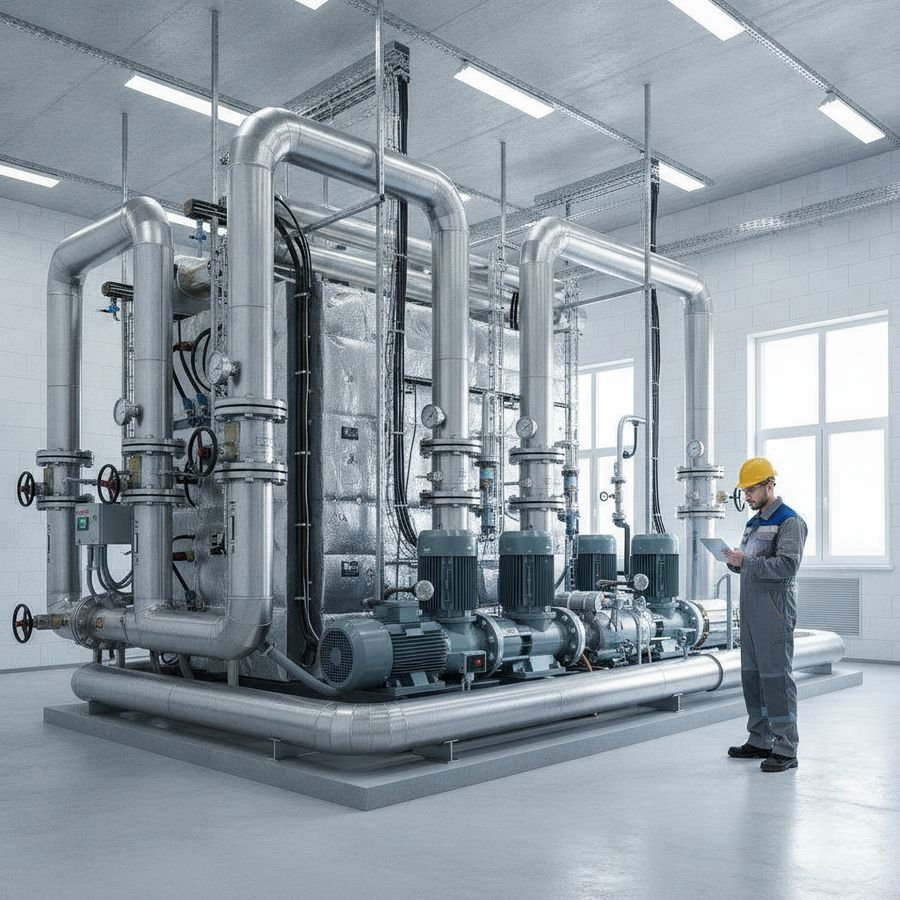
What Predictive Tools Work Best on Chillers?
The best predictive tools for industrial chillers combine hardware, analytics, and practical service workflows. A modern system usually begins with connected sensors and a controller or gateway that gathers operating data continuously. From there, software dashboards compare live values against historical baselines, manufacturer expectations, and acceptable performance bands.
Some tools are especially effective in cooling applications. Vibration analysis helps detect imbalance, misalignment, and bearing wear in motors and fans. Oil and refrigerant condition checks can reveal contamination or leakage risks. Infrared thermography is useful for spotting hot electrical connections and uneven thermal performance. Meanwhile, cloud-based trend analysis helps operators see recurring inefficiencies across shifts, seasons, or production batches.
Automation monitoring becomes more powerful when paired with alarm logic and technician insight. A dashboard alone does not solve problems unless it highlights which deviation matters, how fast it is worsening, and what response is required.
The most effective predictive tool is the one that translates raw data into a clear maintenance action
For many facilities, the strongest approach is layered: sensors for visibility, analytics for diagnosis, and service planning tools for execution. That combination reduces guesswork and improves uptime.
How Can Automation Improve Service Response Times?
Automation improves service response times by reducing the delay between fault development, alarm recognition, and maintenance action. In many plants, the real problem is not that failures happen unexpectedly, but that warning signs sit unnoticed in scattered systems or manual logbooks. With integrated monitoring, deviations are detected immediately and routed to the right team.
For example, if a chiller shows rising compressor amperage together with unstable evaporator pressure, an automated platform can trigger a prioritized alert, attach recent trend data, and classify the issue by severity. That gives technicians a head start before they arrive on site. Instead of beginning with basic troubleshooting, they can prepare the correct spare parts, tools, and service sequence.
This is especially important for facilities running continuous processes in plastics, food, electroplating, and other temperature-sensitive applications. Faster response protects both equipment and production quality.
-
Automatic fault notification reduces diagnosis time
-
Remote visibility supports faster dispatch decisions
-
Historical trends help technicians isolate root causes
-
Priority rules prevent minor alarms from hiding urgent faults
Service planning becomes more accurate when automation connects asset condition, alarm history, and maintenance scheduling. The result is fewer emergency callouts and more controlled interventions.
Maintenance KPIs That Matter to Plant Managers
Plant managers need more than maintenance activity reports. They need maintenance KPIs that show whether cooling assets are supporting uptime, energy performance, and service efficiency. In predictive maintenance programs, the most valuable indicators connect equipment health to business impact, especially for industrial chillers that serve critical production processes.
Start with asset-focused measures such as unplanned downtime hours, mean time between failures, alarm response time, and percentage of planned versus reactive work. These metrics show whether the maintenance strategy is actually becoming more proactive. Then add performance indicators like coefficient of performance trends, energy use per cooling load, approach temperature stability, and recurring fault frequency.
Good KPIs do not simply count tasks completed; they reveal whether reliability is improving
Useful KPI categories often include:
-
Reliability: downtime, failure rate, repeat faults
-
Responsiveness: alarm acknowledgment time, repair lead time
-
Efficiency: energy consumption, load matching, thermal stability
-
Planning: scheduled work completion, spare parts readiness
When these maintenance KPIs are reviewed regularly, managers can justify investments in monitoring, refine service planning, and identify where operating costs are increasing due to hidden equipment stress.
Alarm Thresholds for Pumps, Motors, and Fans
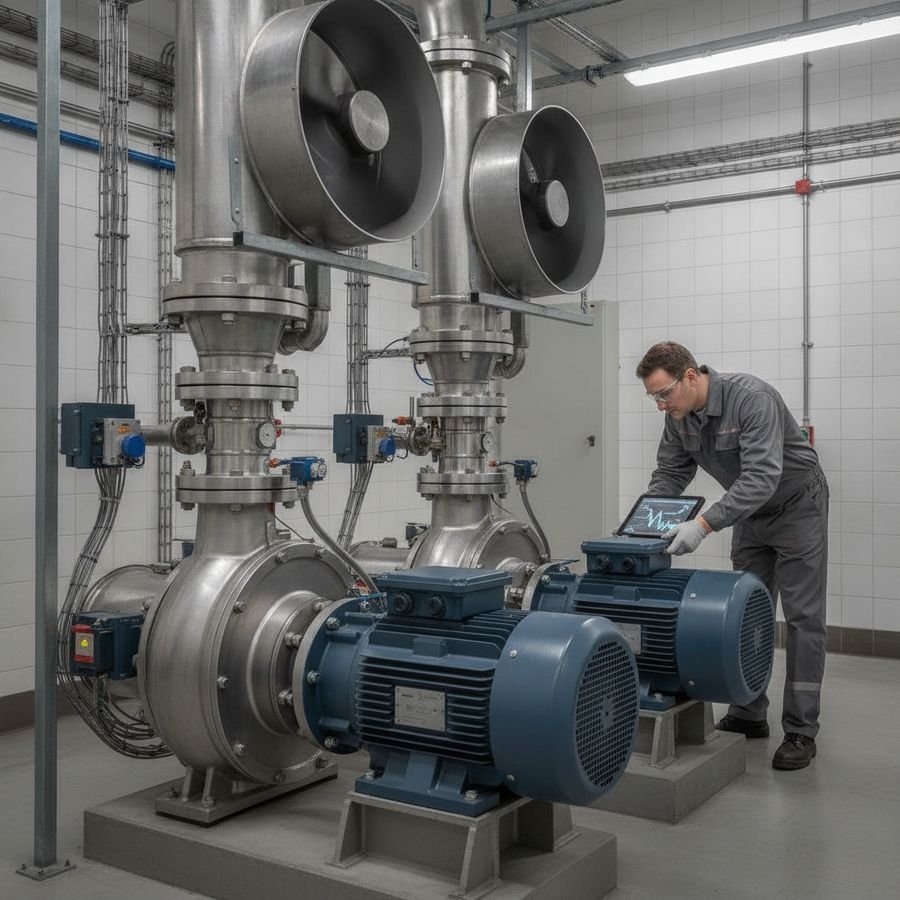
Alarm thresholds are essential in any predictive maintenance strategy, but they must be set carefully. If limits are too wide, developing faults go undetected. If they are too narrow, teams receive constant nuisance alarms and begin to ignore them. For pumps, motors, and fans in cooling systems, thresholds should reflect both equipment design and the plant’s actual operating profile.
Effective alarm logic usually includes more than one level. A warning threshold may indicate gradual wear or reduced efficiency, while a critical threshold signals immediate risk to operation. For example, increasing vibration on a fan motor may begin as a warning trend, then escalate to a shutdown condition if the rise accelerates or combines with abnormal current draw.
Automation monitoring works best when thresholds are dynamic enough to account for load, ambient temperature, and production cycles. A fixed value without context can produce misleading alarms, especially in variable process conditions.
-
Pumps: flow deviation, cavitation vibration, differential pressure loss
-
Motors: overcurrent, winding temperature, bearing vibration
-
Fans: imbalance, speed variation, abnormal power consumption
Well-tuned thresholds help maintenance teams act earlier, prioritize correctly, and protect the long-term reliability of industrial chillers and connected cooling equipment.
From Reactive Repairs to Planned Interventions
The real goal of predictive maintenance is to transition from reactive repairs to planned interventions. Many facilities still wait for clear failure signs before taking action, which often results in higher repair costs, rushed labor, production disruptions, and unnecessary stress on interconnected equipment. Chillers seldom fail without warning; the issue lies in warnings being overlooked, underestimated, or not linked to actionable service decisions.
A planned approach utilizes sensor trends, alarm history, and operational context to schedule maintenance before performance reaches critical levels. This could involve cleaning heat exchangers when efficiency drops, replacing bearings after vibration trends exceed warning thresholds, or adjusting controls when cycling becomes erratic. Each task is strategically timed to minimize disruption while extending asset lifespan.
Planned interventions create reliability by acting on evidence before breakdowns disrupt the schedule. For businesses reliant on continuous cooling, this shift enhances both maintenance discipline and production confidence. It also complements the strengths of a specialized industrial refrigeration partner focused on durable and customized temperature control solutions.
Over time, improved service planning leads to fewer emergencies, more predictable budgets, increased uptime, and a maintenance culture centered on prevention rather than recovery. To explore how your facility can benefit, learn more here.
FAQs
What sensor data is most useful for predictive maintenance on chillers?
The most useful data points usually include supply and return water temperature, evaporator and condenser pressure, pump differential pressure, fan or motor vibration, electrical current, power draw, and ambient or process load conditions. Trending these values over time helps teams spot efficiency loss and developing faults before shutdowns occur.
Which predictive tools work best for industrial chillers?
A strong setup combines connected sensors, a controller or gateway, software dashboards, alarm logic, and service workflows. Vibration analysis, infrared thermography, refrigerant or oil condition checks, and cloud-based trend analysis are especially useful because they turn operating data into actionable maintenance decisions.
How does automation improve service response times?
Automation shortens the gap between fault development and maintenance action by detecting deviations in real time, prioritizing alarms, and sending trend data to the right team. This helps technicians arrive prepared with the right parts, tools, and troubleshooting plan instead of starting from scratch on site.
What maintenance KPIs matter most for chiller reliability?
Key KPIs include unplanned downtime, mean time between failures, alarm response time, planned versus reactive work, recurring fault frequency, energy use per cooling load, and approach temperature stability. These metrics show whether maintenance is improving reliability, efficiency, and service planning.
How should alarm thresholds be set for pumps, motors, and fans?
Alarm thresholds should be based on equipment design, normal operating ranges, and actual plant conditions rather than fixed generic numbers alone. A layered approach with warning and critical levels works best, especially when thresholds also account for load, ambient temperature, and production cycles.
