


Planned Service Prevents Unscheduled Production Stops
Preventive maintenance is one of the most effective ways to reduce costly downtime in industrial refrigeration and thermoregulation systems. In production environments that rely on stable temperatures, even a short interruption can halt output, affect product quality, and increase energy consumption as equipment struggles to recover. A planned service program helps identify wear, contamination, and drift in operating values before they become failures.
For systems such as cooling towers, chillers, and circulation units, routine inspections create a predictable maintenance window instead of an emergency shutdown. This is especially important in demanding sectors like plastics, electroplating, and food processing, where temperature stability supports both throughput and compliance.
Scheduled cooling system maintenance turns avoidable breakdowns into manageable service tasks
When service is calendar-based and condition-based, maintenance teams can replace vulnerable parts, clean heat-transfer surfaces, and verify controls before performance drops. That disciplined approach supports equipment life extension, protects production continuity, and helps industrial operators make better use of every installed asset.
What Maintenance Tasks Protect Cooling Performance?
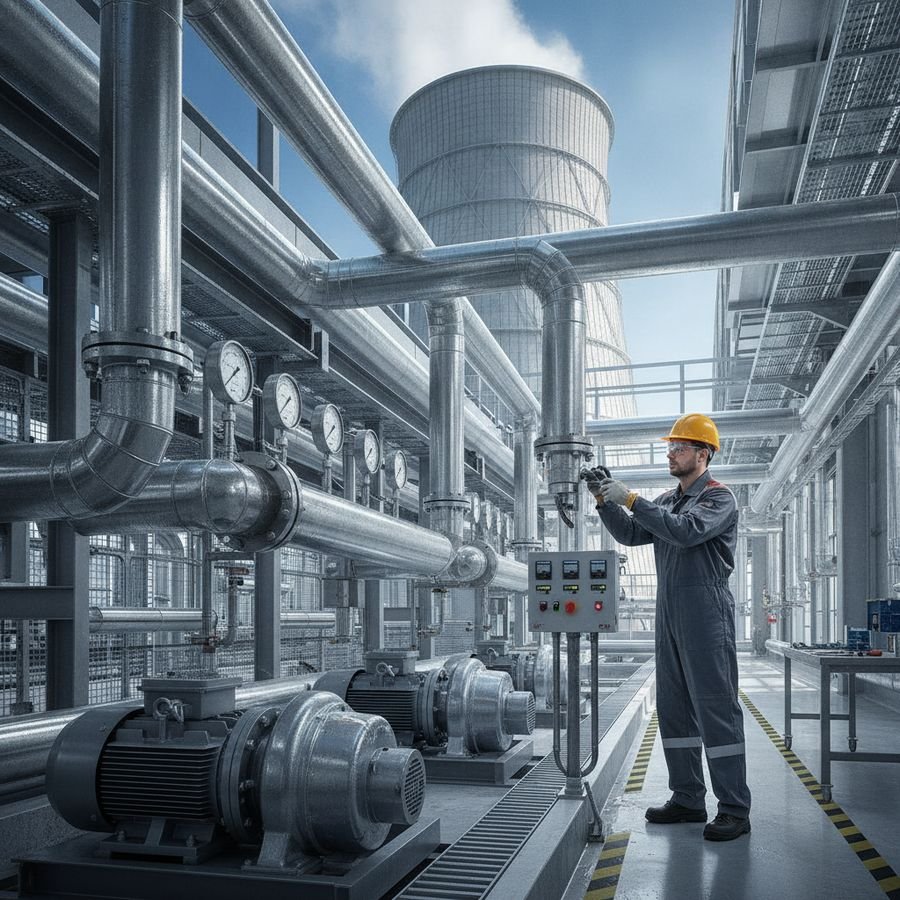
Strong cooling performance depends on a group of routine tasks rather than a single inspection. The goal is to preserve heat transfer efficiency, maintain stable flow, and ensure controls respond accurately under changing process loads. Effective cooling system maintenance focuses on the areas where dirt, wear, and imbalance reduce output first.
Core tasks often include:
-
Cleaning heat exchangers, tower fill, and strainers
-
Inspecting nozzles, basins, and piping for blockage or leaks
-
Checking refrigerant-side and water-side operating pressures
-
Verifying fan rotation, belt condition, and motor amperage
-
Confirming pump flow, seal condition, and vibration levels
-
Testing safety devices, controls, and alarms
These actions work together to prevent inefficient operation. Fouled surfaces force equipment to work harder, while poor flow or air movement reduces cooling capacity during peak demand.
Preventive maintenance should also include visual corrosion checks and confirmation that weather-protected components remain sealed, especially on outdoor equipment exposed to atmospheric conditions. Consistent task execution preserves performance margins and lowers the risk of unexpected thermal instability.
How Often Should Sensors Be Calibrated?
Sensor calibration is essential because cooling decisions are only as accurate as the temperature, pressure, and flow readings behind them. If a sensor drifts out of tolerance, the system may overcool, undercool, short-cycle, or trigger false alarms. Those errors can quietly waste energy while increasing mechanical stress on compressors, pumps, and fans.
In most industrial applications, critical sensors should be checked at least annually, with more frequent verification for harsh operating conditions, highly regulated processes, or systems showing unstable readings. Facilities with continuous production may also benefit from quarterly spot checks on the most important control points.
Calibration intervals should reflect process criticality, operating environment, and the historical stability of each instrument
A practical program usually separates instruments into priority levels. For example, leaving-water temperature sensors, pressure transducers, and conductivity probes often deserve tighter attention than secondary display devices.
Proper sensor calibration supports reliable automation, cleaner trend data, and better maintenance decisions. It also improves equipment life extension because controls no longer force components to run harder than necessary in response to inaccurate feedback.
Water Quality Control Limits Scale and Corrosion
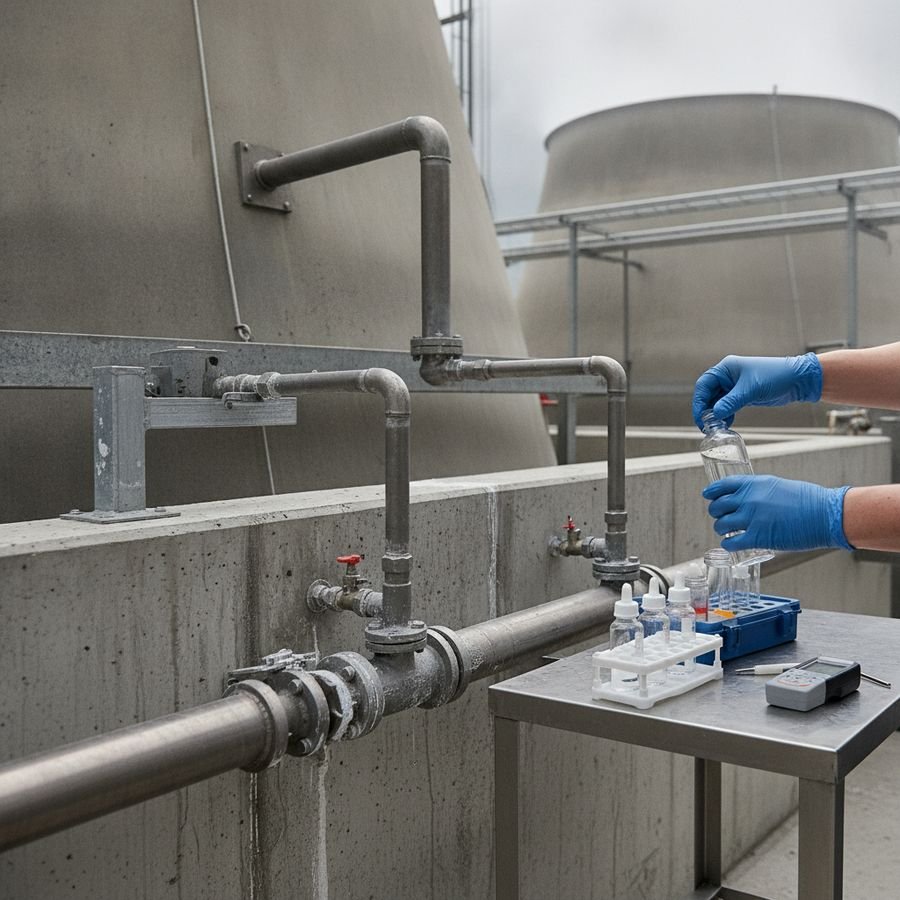
Water quality control is central to the long-term reliability of towers, pumps, and heat exchangers. When water chemistry is neglected, dissolved minerals can form scale on heat-transfer surfaces, while aggressive conditions accelerate corrosion in metal components. Both problems reduce efficiency and shorten service life.
Scale acts like insulation, making it harder for the system to reject heat. Corrosion can weaken piping, clog passages with oxide deposits, and create leaks that interrupt production. In evaporative equipment, water losses and concentration cycles make this issue even more important, especially where outdoor exposure and variable makeup water quality influence performance.
A strong program should monitor:
-
Conductivity and total dissolved solids
-
pH and alkalinity balance
-
Hardness levels
-
Corrosion inhibitor concentration
-
Biological growth and basin cleanliness
Cooling system maintenance is most effective when paired with regular testing, blowdown control, and treatment adjustments. Good water quality control protects heat transfer, limits unplanned cleaning, and directly supports equipment life extension across the full cooling loop.
Fan, Pump, and Motor Checks Matter
Mechanical components do much of the daily work in industrial cooling systems, so their condition has a direct effect on reliability. Fans move air across cooling surfaces, pumps maintain water circulation, and motors provide the power that keeps the system responsive under fluctuating loads. If any one of these elements degrades, overall performance falls quickly.
Routine inspections should look for bearing noise, coupling wear, belt damage, misalignment, overheating, and abnormal vibration. Electrical checks are just as important: high amperage, insulation weakness, or repeated overload trips often signal developing trouble before a visible failure occurs.
Small mechanical imbalances often become major thermal problems long before total component failure
For cooling towers and similar equipment, operators should also verify that fan supports, guards, and weather-exposed motor assemblies remain secure and properly protected. Stable rotation and consistent water movement are essential to preserve design performance.
By checking fans, pumps, and motors on a planned schedule, teams strengthen preventive maintenance practices, reduce emergency repairs, and improve the odds of meaningful equipment life extension for the entire installation.
Which Warning Signs Indicate Early System Failure?
Early warning signs are often present long before a shutdown occurs, but they are easy to miss when teams focus only on whether the system is still running. A cooling system heading toward failure usually shows a pattern of small changes in temperature stability, noise, pressure, or energy use. Recognizing those signals early makes corrective action faster and less expensive.
Common indicators include rising approach temperatures, reduced flow, repeated alarm resets, unusual fan or pump vibration, visible leaks, scaling deposits, and slower recovery after process demand increases. Unexplained increases in power consumption can also point to fouling, poor calibration, or failing mechanical components.
-
Inconsistent outlet temperatures
-
Frequent cycling or nuisance trips
-
Hot motor housings or burnt odors
-
Corrosion around joints and fasteners
-
Cloudy basin water or debris buildup
Cooling system maintenance programs work best when operators are trained to document these symptoms rather than dismiss them as minor fluctuations. Fast response turns warning signs into service calls instead of production emergencies, reinforcing the value of disciplined preventive maintenance.
Maintenance Records Improve Lifecycle Decisions
Detailed records provide maintenance teams with more than just compliance documentation; they establish a practical roadmap for smarter investment. By consistently tracking service dates, failures, calibration results, water treatment readings, and energy trends, it becomes easier to identify which components are aging normally and which assets are at high risk.
Good records also help answer critical questions: Are cleanings becoming more frequent? Is a pump drawing more current each quarter? Are recurring alarms linked to a specific sensor or operating condition? This historical data turns individual repairs into patterns that guide future planning.
Data-backed maintenance records convert reactive spending into informed lifecycle management. Over time, these insights lead to better scheduling, more accurate spare-parts planning, and stronger replacement decisions. Moreover, they enhance communication between operations, maintenance, and management, as recommendations are supported by evidence rather than assumptions.
For companies focused on equipment life extension, effective recordkeeping is essential to preventive maintenance. It links daily service activities to long-term reliability, budget control, and the sustained cooling performance necessary for industrial refrigeration and temperature control environments.
FAQs
Why is preventive maintenance important for industrial cooling systems?
Preventive maintenance reduces the risk of unplanned production stops by identifying wear, fouling, leaks, and control drift before they cause a failure. It also helps maintain cooling capacity, energy efficiency, and product quality in temperature-sensitive processes.
What maintenance tasks most affect cooling performance?
The most important tasks include cleaning heat exchangers and strainers, checking pressures and flow, inspecting nozzles and piping, verifying fan and pump condition, and testing controls, alarms, and safety devices. These tasks protect heat transfer, airflow, water circulation, and stable control response.
How often should cooling system sensors be calibrated?
Critical sensors should usually be checked at least once a year, while high-priority control points may need more frequent verification in harsh, regulated, or unstable operating environments. Calibration intervals should be based on process criticality, operating conditions, and the sensor’s history of drift.
How does water quality control extend equipment life?
Good water quality control limits scale, corrosion, and biological growth that can damage towers, pumps, piping, and heat exchangers. By preserving clean heat-transfer surfaces and stable water chemistry, it improves efficiency and reduces the need for emergency cleaning or replacement.
What are early warning signs of cooling system failure?
Common warning signs include rising approach temperatures, unstable outlet temperatures, reduced flow, repeated alarms, abnormal vibration, hot motor housings, visible leaks, scale buildup, and unexplained increases in power use. Documenting these changes early makes maintenance faster and less costly.
