


Overview
Air-cooled and water-cooled chillers are pivotal components in industrial cooling systems, each serving unique operational environments and performance demands. Understanding the air-cooled vs water-cooled chillers debate is essential for industries seeking optimal chiller efficiency and sustainable industrial cooling solutions.
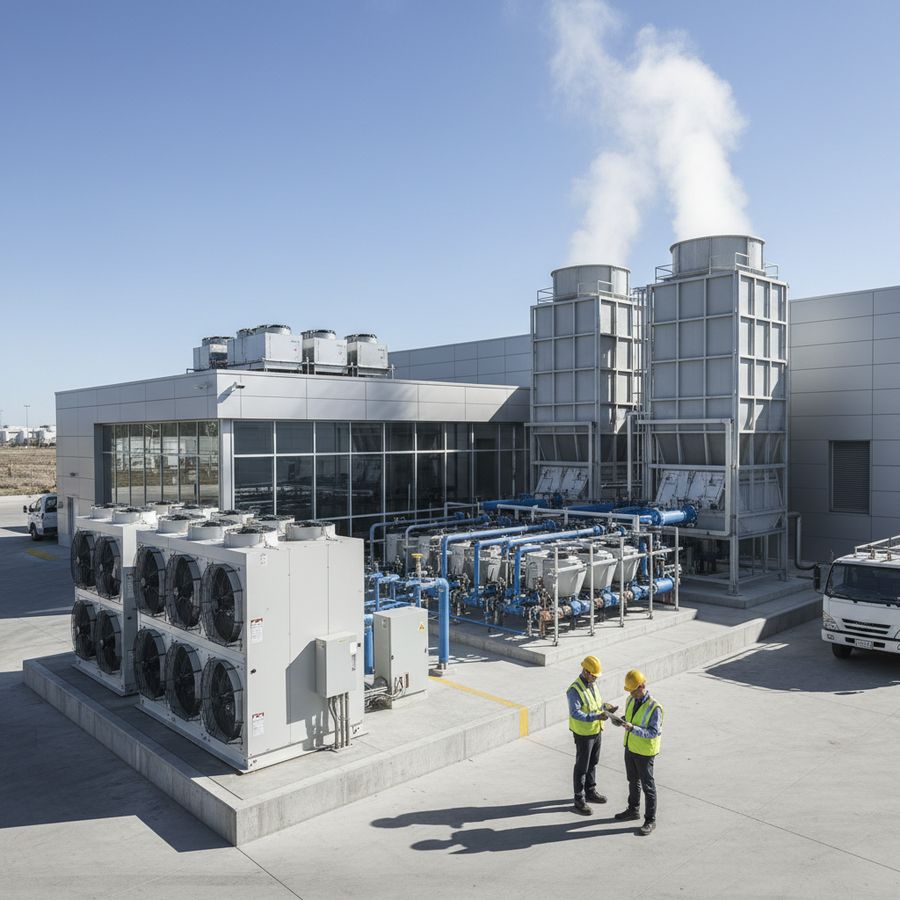
Both chiller types function to remove heat from a liquid via a refrigeration cycle, which is then circulated to cool equipment or processes. However, their fundamental difference lies in how they reject heat: air-cooled chillers dissipate heat directly to the ambient air, while water-cooled chillers transfer heat to water, which is then cooled in a cooling tower.
Choosing between air-cooled and water-cooled chillers depends on factors such as installation space, environmental conditions, water availability, and maintenance considerations. With over 55 years of expertise in industrial refrigeration, companies like Frimec design tailored solutions to meet diverse industrial needs, integrating these chiller types effectively.
“Selecting the correct chiller system is not merely a technical decision but a strategic one that influences energy consumption, operational costs, and environmental impact.”
How Air-Cooled and Water-Cooled Chillers Work
Air-cooled chillers operate by circulating refrigerant through a condenser coil where heat is expelled directly to the surrounding air via fans. This eliminates the need for water and complex plumbing but requires sufficient airflow and space to disperse heat effectively.
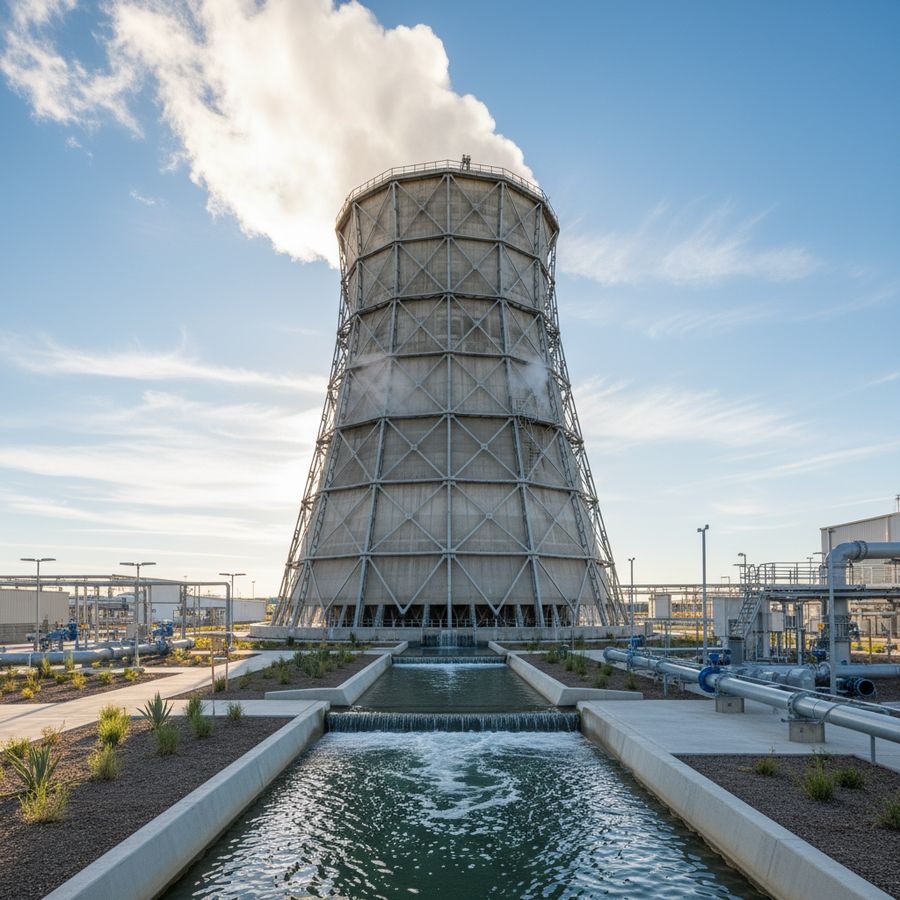
In contrast, water-cooled chillers transfer heat from the refrigerant to water inside the condenser. This heated water is pumped to a cooling tower, where it releases heat to the atmosphere through evaporation, then recirculates back to the chiller. This indirect heat rejection allows water-cooled chillers to achieve lower condensing temperatures, enhancing efficiency.
Both systems use compressors, evaporators, and expansion valves to complete the refrigeration cycle. The choice between them often hinges on site conditions and cooling capacity requirements. Water-cooled chillers are favored for larger industrial setups due to their superior efficiency, while air-cooled units offer simplicity and reduced water dependency.
“Water-cooled chillers leverage evaporative cooling in cooling towers, making them highly effective for sustained heavy-duty industrial cooling demands.”
Efficiency Comparison Across Seasonal Conditions
Chiller efficiency varies significantly between air-cooled and water-cooled systems, especially when considering seasonal temperature fluctuations. Water-cooled chillers generally maintain higher efficiency year-round due to stable condenser water temperatures maintained by the cooling tower.
During hot seasons, air-cooled chillers face challenges because rising ambient air temperatures reduce their ability to dissipate heat, leading to increased energy consumption. Conversely, water-cooled chillers can sustain lower condensing temperatures, preserving performance even in warmer climates.
In colder seasons, air-cooled chillers may operate more efficiently because ambient air cools the condenser more effectively. However, water-cooled chillers can also benefit from cooler water temperatures, often adjustable through cooling tower control strategies.
Overall, water-cooled chillers typically exhibit better seasonal chiller efficiency, especially in large-scale industrial applications where operational cost savings justify the higher initial investment and infrastructure.
“Seasonal variations significantly impact cooling system efficiency; understanding these effects ensures the right chiller choice for sustainable industrial cooling.”
Water Usage, Cooling Towers, And Regulations
Water usage is a critical factor when comparing air-cooled vs water-cooled chillers. Water-cooled systems rely on continuous water circulation through cooling towers for heat rejection, which involves water evaporation and blowdown to control mineral concentration.
This reliance on water introduces considerations regarding water availability, quality, and environmental regulations. Many regions enforce strict guidelines on cooling tower water usage, discharge, and chemical treatment to minimize environmental impact.
Air-cooled chillers do not require water for operation, making them an attractive option in areas with limited water resources or stringent water-use regulations. However, the trade-off is often higher energy consumption and larger physical footprint.
Cooling towers themselves require maintenance and monitoring to prevent issues such as microbial growth and scaling, which can affect system reliability and compliance with health standards.
- Water-cooled chillers require water treatment and consumption management.
- Air-cooled chillers eliminate water use but may consume more electricity.
- Regulations on water discharge and usage can influence system selection.
“Balancing water usage with energy efficiency and regulatory compliance is fundamental to sustainable industrial cooling strategies.”
Noise, Footprint, And Installation Constraints
Noise levels and physical footprint are important design considerations when selecting between air-cooled and water-cooled chillers. Air-cooled chillers typically generate more noise due to large condenser fans operating continuously to expel heat into the ambient air.
Conversely, water-cooled chillers operate with quieter condensers, as the heat exchange occurs within water circuits, but require additional space for cooling towers and water pumps. This can increase the overall spatial requirements of the cooling system.
Installation constraints also vary: air-cooled chillers are often easier and faster to install, requiring fewer auxiliary components. Water-cooled chillers demand a well-planned infrastructure for water supply, cooling towers, and drainage, which can extend installation timelines and complexity.
For industrial facilities with limited space or noise restrictions, these factors heavily influence the choice. Air-cooled chillers suit rooftop or open-air installations, while water-cooled chillers are preferable where space allows for integrated cooling towers and where noise mitigation is a priority.
“The interplay of noise, footprint, and installation logistics directly shapes the feasibility and effectiveness of chiller deployment in industrial settings.”
Maintenance Needs and Service Accessibility
Maintenance requirements differ notably between air-cooled and water-cooled chillers, impacting long-term operational costs and system reliability. Air-cooled chillers generally require less maintenance due to simpler designs without complex water circuits or cooling towers.
Water-cooled chillers necessitate regular inspection and maintenance of the cooling tower, water treatment systems, pumps, and piping to prevent scaling, corrosion, and biological contamination. This adds to the service complexity and requires skilled technicians familiar with water management.
Accessibility for maintenance is essential for both types. Air-cooled chillers benefit from straightforward access to condenser coils and fans, while water-cooled chillers may involve more extensive service areas due to additional equipment.
Industrial operators must weigh these maintenance considerations alongside performance benefits to ensure uptime and minimize unexpected downtime in critical cooling applications.
“Proactive maintenance tailored to each chiller type enhances system longevity and ensures consistent industrial cooling performance.”
Best-Fit Applications for Each Chiller Type
Each chiller type offers distinct advantages making them ideal for specific industrial cooling scenarios. Air-cooled chillers are best suited for small to medium capacity applications, locations with water scarcity, or where simpler installation and lower upfront costs are priorities.
They are commonly employed in sectors such as packaging, plastics, and smaller chemical processes where cooling loads are moderate, and operational flexibility is required.
Water-cooled chillers, with their superior chiller efficiency and capacity scaling, excel in large industrial environments like print works, diecasting, galvanic processes, and extensive machine tool operations. Their ability to maintain stable temperatures under heavy loads makes them invaluable for continuous, high-demand cooling.
The choice ultimately depends on balancing factors like site constraints, cooling load, environmental considerations, and total cost of ownership to achieve optimal industrial refrigeration performance.
“Matching chiller technology to application needs drives operational efficiency and supports sustainable industrial production.”
Conclusion
Understanding the air-cooled vs water-cooled chillers dynamic is crucial for industries aiming to optimize their industrial cooling systems. While air-cooled chillers offer simplicity and water independence, water-cooled chillers provide enhanced chiller efficiency and scalability, especially for large-scale applications.
Considerations around water usage, noise, installation, and maintenance heavily influence the decision-making process. Regulatory compliance concerning water and environmental impact further complicates the choice, emphasizing the need for expert consultation and tailored solutions.
With over five decades of experience, companies like Frimec provide advanced, environmentally friendly industrial refrigeration and thermoregulation systems designed to meet specific operational needs while promoting energy savings and reliability.
“Selecting the right chiller technology is a strategic investment that enhances productivity, sustainability, and cost-efficiency in industrial cooling.”
