


Advantages of thermoregulation in production processes for energy savings
Lowering power consumption through advanced control strategies
Okay, so think about it: thermoregulation isn’t just about keeping things cool; it’s about being smart with energy. Advanced control systems can really dial down the power needed for cooling and heating. It’s like having a thermostat that actually understands what’s going on in the whole production line, not just reacting to a single temperature reading. This means less wasted energy and lower bills.
Optimizing cooling cycles for reduced operational costs
Cooling cycles can be a huge drain if they’re not managed well. But with thermoregulation, you can fine-tune those cycles to only run when needed and at the right intensity. This optimization cuts down on unnecessary runtime, which directly translates to lower operational costs. It’s all about making the cooling process as efficient as possible, kind of like making sure your car gets the best gas mileage.
Leveraging real-time monitoring to avoid energy waste
Real-time monitoring is a game-changer. It lets you see exactly where energy is being used and where it might be getting wasted. If a machine is running hotter than it should, you’ll know right away and can fix it before it becomes a bigger problem. It’s like having a dashboard that shows you exactly how your energy is flowing, so you can make adjustments on the fly and keep things running smoothly.
Advantages of thermoregulation in production processes for product quality
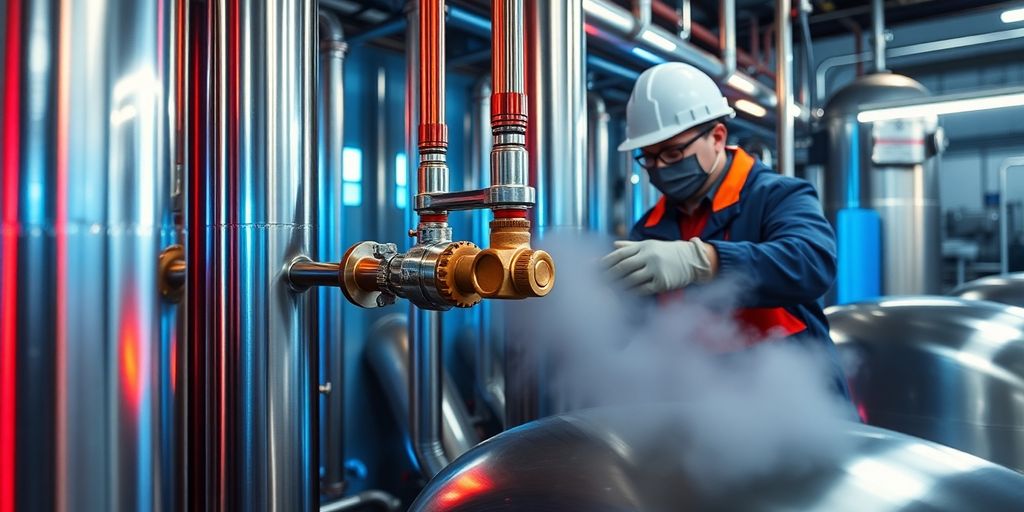
Okay, so let’s talk about how keeping temperatures steady can seriously help with making better stuff. It’s not just about avoiding meltdowns; it’s about making sure everything comes out right, every single time. Think of it like baking – too hot or too cold, and you’ve got a disaster. Same deal here, just on a bigger, more industrial scale.
Maintaining uniform temperatures to prevent material defects
Ever wonder why some products just look off? A lot of times, it’s because the temperature wasn’t right during manufacturing. Keeping things at the same temperature across the board helps stop materials from warping, cracking, or just generally acting weird. It’s like making sure all the ingredients in a recipe are at the same temperature before you mix them – it just blends better.
Ensuring consistent chemical reactions for reliable yields
If you’re dealing with chemical reactions, temperature is a HUGE deal. Too much heat, and things might explode (not literally, hopefully). Too little, and nothing happens. Thermoregulation makes sure those reactions happen the way they’re supposed to, so you get the amount of product you’re expecting, without any nasty surprises. It’s like setting the oven to the right temperature for a cake – you want it to rise properly, right?
Enhancing finish and texture in precision manufacturing
For things that need to be super precise, like tiny parts for electronics or fancy surfaces on furniture, temperature control is key. It can affect how smooth or rough something feels, how shiny it looks, and even how well it fits together with other parts. Basically, if you want something to look and feel perfect, you gotta keep the temperature just right. It’s like icing a cake – you want it smooth, not lumpy!
Advantages of thermoregulation in production processes for operational reliability
Okay, so let’s talk about how thermoregulation can seriously boost your factory’s reliability. It’s not just about keeping things cool; it’s about making sure everything runs smoothly day in and day out. Think of it as preventative medicine for your machines.
Preventing equipment overheating and unplanned downtime
Overheating is a major buzzkill for any production line. Thermoregulation steps in to keep temperatures in check, preventing those dreaded shutdowns that throw everything off schedule. It’s like having a built-in safety net, ensuring your equipment doesn’t push itself to the point of failure.
Extending machinery lifespan with controlled thermal stress
Constant temperature swings can really wear down your equipment over time. Thermoregulation helps minimize this thermal stress, which means your machines aren’t constantly expanding and contracting. This can add years to their operational life, saving you a ton on replacements.
Simplifying maintenance schedules through predictable performance
When you’ve got consistent temperatures, your equipment behaves more predictably. This makes it way easier to plan maintenance. Instead of constantly reacting to unexpected breakdowns, you can schedule maintenance based on actual performance data, making everything more efficient. It’s all about knowing what to expect and when to expect it.
Advantages of thermoregulation in production processes for sustainability
Okay, so let’s talk about how thermoregulation can make your production processes way more sustainable. It’s not just about being green; it’s about smart resource management and future-proofing your operations. You might be surprised at how much of a difference it can make.
Reducing carbon footprint with efficient heat management
Efficient heat management is a big deal when it comes to shrinking your carbon footprint. Thermoregulation systems can help you minimize energy consumption by optimizing heating and cooling processes. This means less reliance on fossil fuels and a smaller impact on the environment. It’s a win-win.
Minimizing water consumption through closed-loop cooling
Water is a precious resource, and industries use a ton of it. Closed-loop cooling systems, a key part of thermoregulation, recycle water instead of constantly drawing from external sources. This drastically cuts down on water consumption, which is good for the planet and can save you money on water bills. Seriously, it’s a game changer.
Supporting circular economy goals with recyclable coolants
Ever thought about what happens to your coolants after they’ve done their job? Thermoregulation can support circular economy goals by using recyclable coolants. This means less waste ending up in landfills and a more sustainable approach to resource use. It’s all about closing the loop and keeping materials in use for as long as possible.
Advantages of thermoregulation in production processes for regulatory compliance
Okay, so when it comes to manufacturing, it’s not just about making stuff; you’ve also got to play by the rules. That’s where thermoregulation comes in super handy. It’s like having a cheat code for keeping the regulators happy. Let’s break it down.
Meeting industry standards for temperature-sensitive manufacturing
Some industries, like pharmaceuticals and food processing, have really strict rules about temperature. Thermoregulation helps you nail those standards without breaking a sweat. It’s all about keeping things consistent and safe, which is exactly what the regulators want to see.
Documenting thermal records for audit readiness
Audits can be a real pain, right? But with thermoregulation, you’re basically building a paper trail as you go. You’ve got all the data on temperature, so when the auditors come knocking, you can show them everything’s been on the up-and-up. It’s like having all your homework done way before the deadline.
Ensuring safe handling of thermally unstable materials
Some materials are just plain dangerous if they get too hot or too cold. Thermoregulation helps you keep those materials in check, preventing accidents and keeping everyone safe. It’s not just about compliance; it’s about doing things the right way.
Advantages of thermoregulation in production processes for process flexibility
Thermoregulation isn’t just about keeping things cool (or hot); it’s also about making your production line super adaptable. Think of it as giving your processes the ability to switch gears quickly and efficiently. This is where the real magic happens, allowing you to handle a wider range of products and respond to market changes with ease.
Adapting temperature profiles for diverse product lines
Ever tried baking different kinds of cookies in the same oven without adjusting the temperature? Disaster, right? Same goes for manufacturing. Thermoregulation lets you tweak the temperature for each product, ensuring everything comes out just right. Flexibility is key here – you’re not stuck making the same thing over and over.
Scaling operations with modular thermal systems
Imagine building with LEGOs instead of pouring concrete. Modular thermal systems are kind of like that. You can add or remove cooling (or heating) units as needed, scaling your production up or down without a major overhaul. It’s all about having the right tools for the job, no matter the size.
Integrating smart controls for rapid production changes
Gone are the days of manually adjusting dials and knobs. Smart controls let you change temperature settings with a few clicks, making it easy to switch between products or adjust to unexpected changes. It’s like having a thermostat for your entire production line, giving you precise control at your fingertips.
## Conclusion
Alright, keeping your production line at just the right temperature isn’t some fancy extra. It’s how you dodge surprise shutdowns and scrap costs. Sure, setting up the system can be a bit of a headache, but the payoff shows up in fewer hiccups and smoother days. Bottom line? Good thermoregulation keeps your gear happy, your output steady, and your budget in check. Give it a shot—you’ll probably wonder why you waited so long.
