


Understanding thermal control in industrial processes
Definition and importance
So, what’s the deal with thermal control in the industrial world? Basically, it’s all about keeping things at the right temperature. This is super important because temperature can seriously mess with how well processes work. Think about it: too hot or too cold, and suddenly your chemical reactions are off, your food spoils faster, or your electronics fry. Thermal control makes sure everything runs smoothly and efficiently, preventing disasters and saving money in the long run.
Key components of thermal control systems
Okay, so what makes up these thermal control systems? Well, you’ve got a few key players. First, there are the sensors, which are like the system’s eyes, constantly checking the temperature. Then you have the controllers, which are the brains of the operation, deciding what to do based on the sensor readings. And of course, you need actuators – these are the muscles, like heaters or coolers, that actually change the temperature. Insulation is also a big deal, helping to keep the heat where it needs to be (or not be). Put them all together, and you’ve got a system that can keep things at just the right temperature.
Common challenges in thermal management
It’s not always smooth sailing, though. Thermal management can be a real headache. One big issue is dealing with heat dissipation – getting rid of excess heat without wasting energy. Then there’s the challenge of maintaining consistent temperatures in large or complex systems, where some areas might be hotter or colder than others. And let’s not forget about the cost – setting up and running these systems can be expensive, so finding cost-effective solutions is always a priority.
Implementing effective thermal control strategies
Best practices for temperature regulation
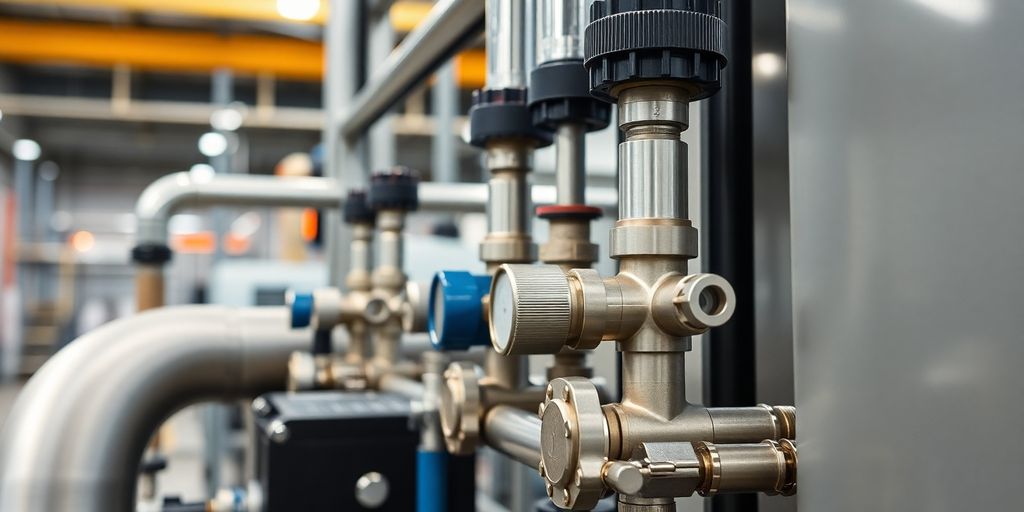
Okay, so you want to get serious about temperature regulation? It’s not just about setting a thermostat and hoping for the best. You need a plan. Think about things like insulation, airflow, and the specific heat requirements of your process. It’s also important to consider the environmental conditions around your equipment. A system that works great in the winter might struggle in the summer. Regular maintenance is key, too. Check for leaks, worn-out parts, and anything else that could throw off your temperature control.
Integration of automation in thermal control
Automation can be a game-changer. Instead of manually adjusting settings, you can use sensors and controllers to automatically maintain the right temperature. This not only saves you time and effort but also reduces the risk of human error. Plus, automated systems can often respond much faster to changes in temperature than a person could. It’s worth looking into programmable logic controllers (PLCs) and other automation technologies to see how they can improve your thermal control.
Monitoring and feedback systems
Think of monitoring and feedback as the eyes and ears of your thermal control system. You need to know what’s going on in real-time, so you can make adjustments as needed. This means installing sensors to measure temperature, pressure, flow rate, and other relevant parameters. The data from these sensors is then fed into a control system, which uses it to adjust the heating or cooling as needed. A good feedback system will also alert you to any problems, such as overheating or equipment failures. This allows you to take corrective action before things get out of hand.
Case studies of thermal control applications
Food processing and preservation
Okay, so think about food processing. It’s not just about cooking; it’s about keeping stuff fresh and safe. Thermal control is super important here. For example, pasteurization uses heat to kill bad stuff in milk, and then rapid cooling keeps it from spoiling. Without precise temperature control, you could end up with unsafe food or stuff that goes bad way faster. It’s a pretty big deal for keeping our food supply safe.
Chemical manufacturing
Chemical plants? They’re all about reactions, and reactions are all about temperature. Some reactions need to be super cold, others super hot, and if you mess it up, things can go boom – literally. Thermal control ensures reactions happen safely and efficiently. It’s not just about safety, though; it’s also about getting the right product. If the temperature isn’t spot-on, you might end up with something totally different than what you were trying to make.
Pharmaceutical production
When you’re making medicine, you can’t just wing it. Everything has to be perfect, and that includes temperature. Thermal control is critical for drug stability and effectiveness. Think about vaccines; they need to be kept at specific temperatures from the moment they’re made until they’re injected. If they get too warm or too cold, they can become useless or even dangerous. It’s a high-stakes game, and precise thermal control is a must.
Innovative technologies in thermal control
Advanced Materials for Thermal Insulation
Let’s be real, old-school insulation can be a drag. But now, we’re seeing some seriously cool stuff hit the market. Think materials that are not only better at keeping heat where it needs to be, but also lighter and more durable. Aerogels are a great example; they’re super lightweight and offer amazing insulation properties. It’s not just about saving energy; it’s about making systems more efficient and reliable.
Smart Sensors and IoT Applications
Imagine a world where your thermal control system can think for itself. That’s the promise of smart sensors and the Internet of Things (IoT). These sensors can monitor temperature, humidity, and other key parameters in real-time, feeding data back to a central system. This allows for adjustments on the fly, optimizing performance and preventing problems before they even happen. It’s like having a thermal control expert watching over your process 24/7.
Energy-Efficient Cooling Systems
Traditional cooling systems can be energy hogs, but there are some interesting alternatives coming up. We’re talking about things like absorption chillers, which use waste heat to produce cooling, and advanced heat exchangers that maximize heat transfer while minimizing energy consumption. These technologies can significantly reduce the carbon footprint of industrial processes and save a ton of money on energy bills. It’s a win-win for the environment and the bottom line.
Regulatory standards and compliance
Industry-specific regulations
Okay, so when it comes to thermal control, you can’t just do whatever you want. Different industries have different rules, and they can be pretty specific. For example, food processing has a whole set of regulations to keep things safe, while chemical manufacturing has another set focused on, well, not blowing things up. Staying up-to-date on these rules is a must.
Impact of non-compliance
Ignoring the rules? That’s a bad idea. Non-compliance can lead to some serious problems, like fines, shutdowns, and even legal trouble. Plus, it can damage your company’s reputation, and nobody wants that. It’s way better to just follow the rules in the first place.
Best practices for meeting standards
So, how do you make sure you’re doing things right? Start by knowing the regulations that apply to your industry. Then, put systems in place to monitor and control your thermal processes. Regular audits and training can also help you stay on track. It might seem like a lot of work, but it’s worth it to avoid the headaches of non-compliance.
Future trends in thermal control
Sustainability and energy efficiency
Okay, so, looking ahead, sustainability is going to be a huge deal. We’re talking about moving away from systems that guzzle energy and towards stuff that’s way more efficient. Think about it: less waste, lower costs, and it’s better for the planet. It’s a win-win, really. Companies are going to be under more pressure to adopt these greener solutions, and honestly, it just makes good business sense.
Emerging technologies
There’s some really cool stuff on the horizon. New materials with crazy insulation properties, better heat exchangers, and even things like nanofluids that can transfer heat way more effectively. It’s not just about tweaking old tech; it’s about completely rethinking how we manage temperature. I’m excited to see what comes next, because it feels like we’re on the edge of some major breakthroughs.
The role of AI in thermal management
AI is going to change everything, and thermal management is no exception. Imagine systems that can predict temperature fluctuations and adjust settings in real-time, all without human intervention. That’s the power of AI. We’re talking about optimizing energy use, preventing equipment failures, and making the whole process way more efficient. It’s not just about automation; it’s about intelligent automation.
Cost-benefit analysis of thermal control solutions
Initial investment vs. long-term savings
Okay, so let’s talk money. When you’re looking at thermal control solutions, the first thing that jumps out is the upfront cost. It can feel like a big hit to the budget. But here’s the thing: you’ve got to think longer term. That initial investment can lead to some serious savings down the road. Think about reduced energy consumption, less waste, and fewer equipment breakdowns. Those savings add up, and they can really make a difference to your bottom line. It’s like buying a more expensive, energy-efficient appliance – you pay more at first, but you save on your electricity bill for years.
Impact on operational efficiency
Thermal control isn’t just about saving money; it’s also about making things run smoother. When you have consistent and reliable temperature management, your processes become more predictable. This means fewer errors, less downtime, and a more consistent product quality. All of this translates to increased operational efficiency. Plus, happy workers are productive workers, and nobody likes working in a sweltering or freezing environment. So, good thermal control can boost morale and productivity too.
Return on investment metrics
Alright, let’s get down to the numbers. How do you actually measure the return on investment (ROI) of a thermal control solution? Well, there are a few key metrics to look at. First, there’s the payback period – how long it takes for the savings to cover the initial investment. Then, there’s the internal rate of return (IRR), which tells you the profitability of the investment. And don’t forget about net present value (NPV), which accounts for the time value of money. By tracking these metrics, you can get a clear picture of whether your thermal control solution is actually paying off. It’s all about making informed decisions based on data, not just gut feelings.
When looking at thermal control solutions, it’s important to weigh the costs against the benefits. This helps you see if the investment is worth it. For example, a good thermal system can save money on energy bills and keep your equipment running smoothly. If you want to learn more about how to choose the right thermal control for your needs, visit our website today!
Final Thoughts on Thermal Control in Industry
In wrapping things up, it’s clear that practical thermal control can really make a difference in industrial processes. By keeping temperatures in check, companies can save energy, boost productivity, and improve product quality. It’s not just about having the right equipment; it’s about understanding how to use it effectively. Whether you’re looking at refrigeration or thermoregulation, the right strategies can lead to better outcomes. So, if you haven’t already, consider taking a closer look at your thermal management practices. A few adjustments could lead to significant improvements.
