


Overview
Microchillers have emerged as a critical innovation in the realm of machine tool cooling, offering precise and reliable temperature regulation necessary for high-performance manufacturing processes. These compact cooling units are designed specifically to maintain stable coolant temperatures, thereby enhancing machine tool efficiency and extending equipment lifespan.
In modern industrial settings, maintaining tight temperature control is vital to achieving consistent dimensional accuracy and process repeatability. Microchillers serve this purpose by providing localized temperature control with minimal energy consumption and footprint, making them ideal for integration within machine tool coolant loops.
Manufacturers increasingly rely on microchillers due to their ability to deliver precision temperature control in demanding environments. Whether in CNC machining, grinding, or milling, these units help prevent thermal expansion and contraction that can compromise component quality. The integration of microchillers into industrial thermoregulation systems underscores their role not just as cooling devices but as enablers of advanced manufacturing excellence.
“Microchillers represent a leap forward in industrial refrigeration, combining compact design with high efficiency to support precision machining processes.”
At the core of their design, microchillers are engineered to optimize coolant temperature, ensuring that machine tools operate within strict thermal parameters. This control is essential for minimizing thermal distortion and maintaining the integrity of machined parts over long production runs. Their modular nature allows for easy customization and adaptability across various machine tool applications.
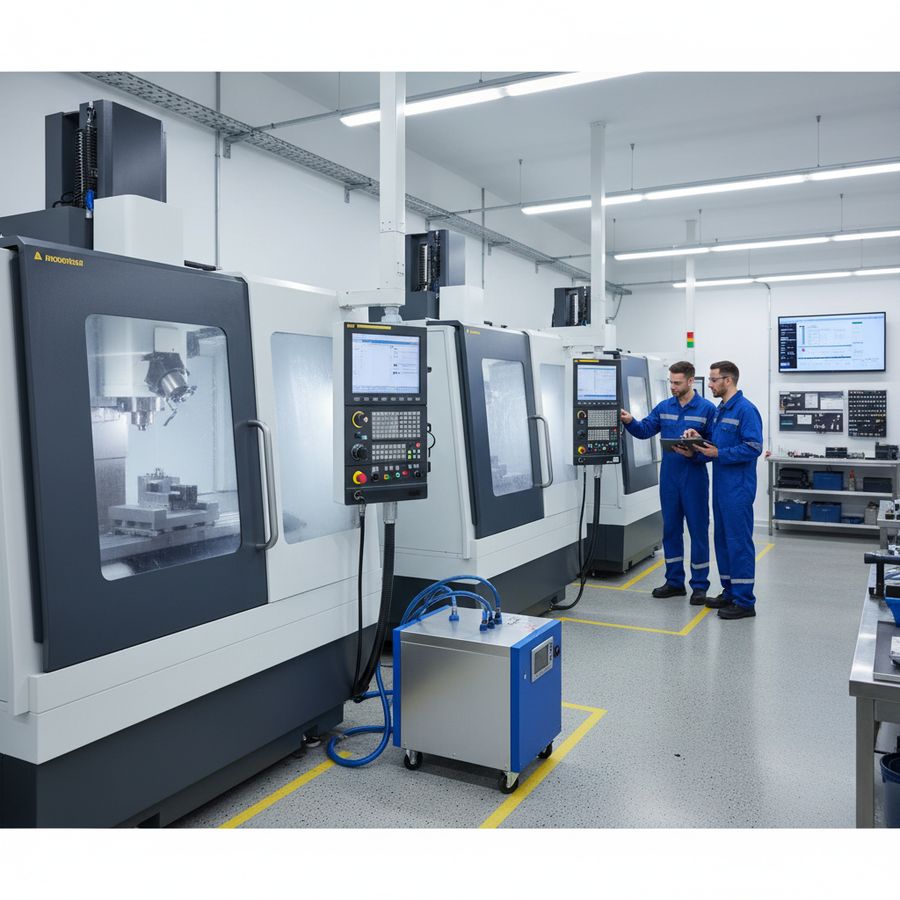
Why Machine Tools Need Tight Temperature Control
Machine tools require precise temperature regulation because even minor fluctuations in temperature can lead to significant deviations in part dimensions and surface finishes. Coolant temperature directly influences the thermal stability of spindles, bearings, and cutting tools, which are highly sensitive to heat generation during machining.
Thermal expansion caused by inconsistent cooling can result in reduced tolerances and compromised product quality, leading to costly rework or scrap. Moreover, temperature variations affect lubricant viscosity and cutting fluid performance, further impacting machine reliability and process consistency.
Precision temperature control is essential to maintain the geometric accuracy of machine tools. By tightly regulating the temperature of coolant circulating through the spindle and tool interface, manufacturers can ensure repeatable machining conditions that translate to higher quality outputs.
“Stable temperature control is not just desirable but indispensable for achieving the stringent tolerances demanded in modern manufacturing.”
Additionally, tight temperature control helps in extending the life of machine components by reducing thermal stresses. It also optimizes energy consumption by avoiding overcooling or overheating, making the manufacturing process both cost-effective and environmentally friendly. Integrating effective cooling solutions like microchillers is a strategic investment in production quality and operational efficiency.
Microchiller Sizing for Spindle and Coolant Loops
Correct chiller sizing is paramount when incorporating microchillers into machine tool cooling systems. Selecting a microchiller that is properly sized for the spindle and coolant loops ensures optimal performance, energy efficiency, and longevity of both the chiller and the machine tool.
The process of sizing involves calculating the heat load generated by the spindle and other machine components, factoring in operational cycles, ambient conditions, and coolant flow rates. Undersized chillers may struggle to maintain the required coolant temperature, leading to thermal instability, while oversized units increase upfront costs and waste energy.
- Assess the maximum heat dissipation from the spindle and tooling during peak operation.
- Determine coolant flow rates necessary to absorb and transfer this heat effectively.
- Evaluate ambient environmental conditions which may affect chiller performance.
- Include safety margins for unexpected load variations or system inefficiencies.
Advanced microchillers are often equipped with variable speed compressors and intelligent controllers that adapt to changing heat loads, enhancing efficiency. Precise sizing also integrates with flow control and filtration systems to maintain stable coolant circulation and purity, critical for machine tool longevity.
Proper chiller sizing translates directly into improved machining accuracy, reduced downtime, and lower operational costs, making it a foundational step in implementing effective machine tool cooling solutions.
Controlling Coolant Temperature for Dimensional Accuracy
Maintaining stringent control over coolant temperature is crucial for ensuring dimensional accuracy in machined parts. Temperature fluctuations can cause expansion or contraction of machine components and workpieces, leading to deviations from intended specifications.
Precision machining processes demand that coolant temperatures remain stable within narrow tolerances, often within ±0.1°C. Microchillers provide this level of control by continuously monitoring and adjusting coolant temperature in response to thermal loads.
“Dimensionally accurate parts require coolant temperatures that are consistently maintained to minimize thermal distortion.”
The benefits of effective coolant temperature control include:
- Improved repeatability: Consistent thermal conditions reduce variability between production runs.
- Reduced scrap rates: Stable temperatures help maintain tight tolerances, minimizing defects.
- Enhanced surface finish: Controlled temperatures reduce thermal stresses that can affect surface quality.
- Prolonged tool life: Cooler, stable conditions reduce tool wear and thermal shock.
Integrating microchillers with advanced sensors and feedback controls creates a closed-loop system that dynamically adjusts cooling capacity. This precise temperature management complements other machine tool parameters, ensuring that the entire production process achieves optimal quality and efficiency.
Filtration, Flow Control, And Pump Pressure Tips
Effective machine tool cooling depends not only on temperature control but also on maintaining clean, properly circulated coolant. Filtration, flow control, and pump pressure are critical factors that influence cooling system performance and the longevity of both the microchiller and machine tools.
Filtration removes contaminants such as metal chips, dirt, and other debris that can clog coolant passages or damage pumps and seals. Regular maintenance of filters ensures consistent flow and prevents system failures.
Flow control involves regulating the volume and velocity of coolant circulating through the machine tool. Excessive flow can lead to turbulence and reduced heat transfer efficiency, while insufficient flow may cause hotspots and thermal instability.
- Use high-quality, fine-pore filters to capture microscopic contaminants.
- Monitor pump pressure to detect blockages or leaks early.
- Implement variable speed pumps for precise flow adjustments based on cooling demand.
- Schedule routine system flushes to maintain coolant purity and prevent biofilm formation.
Optimizing pump pressure ensures the coolant moves steadily through both the microchiller and the machine tool’s cooling loops without causing undue wear. Balanced flow control and filtration reduce the risk of alarms triggered by flow or temperature anomalies, enhancing system reliability.
Attention to these details complements microchiller operation, creating a robust cooling system that supports precision machining requirements while minimizing downtime and maintenance costs.
Preventing Alarms: Low Flow, High Temp, Freezing
Microchiller systems are equipped with safety alarms to alert operators of conditions that could compromise machine tool cooling, such as low flow, high temperature, or freezing risks. Understanding how to prevent these alarms is essential for uninterrupted production and equipment protection.
Low flow alarms often indicate blockages, pump failure, or leaks. Preventive measures include regular inspection of filters, maintaining pump health, and ensuring coolant lines are free from obstructions.
High temperature alarms signal that the microchiller is unable to maintain the setpoint temperature, possibly due to excessive heat load, insufficient chiller capacity, or ambient temperature extremes. Correct chiller sizing and environmental controls help mitigate these issues.
Freezing alarms occur when coolant temperatures drop below safe levels, risking damage to the system. Anti-freeze additives and precise thermostat controls within microchillers prevent freezing while maintaining optimal cooling.
“Proactive maintenance and system monitoring are key to preventing alarms that disrupt precision cooling operations.”
Implementing intelligent control systems with real-time diagnostics enables early detection and automated responses to abnormal conditions. This approach minimizes downtime, protects machine tools, and sustains the integrity of the cooling process.
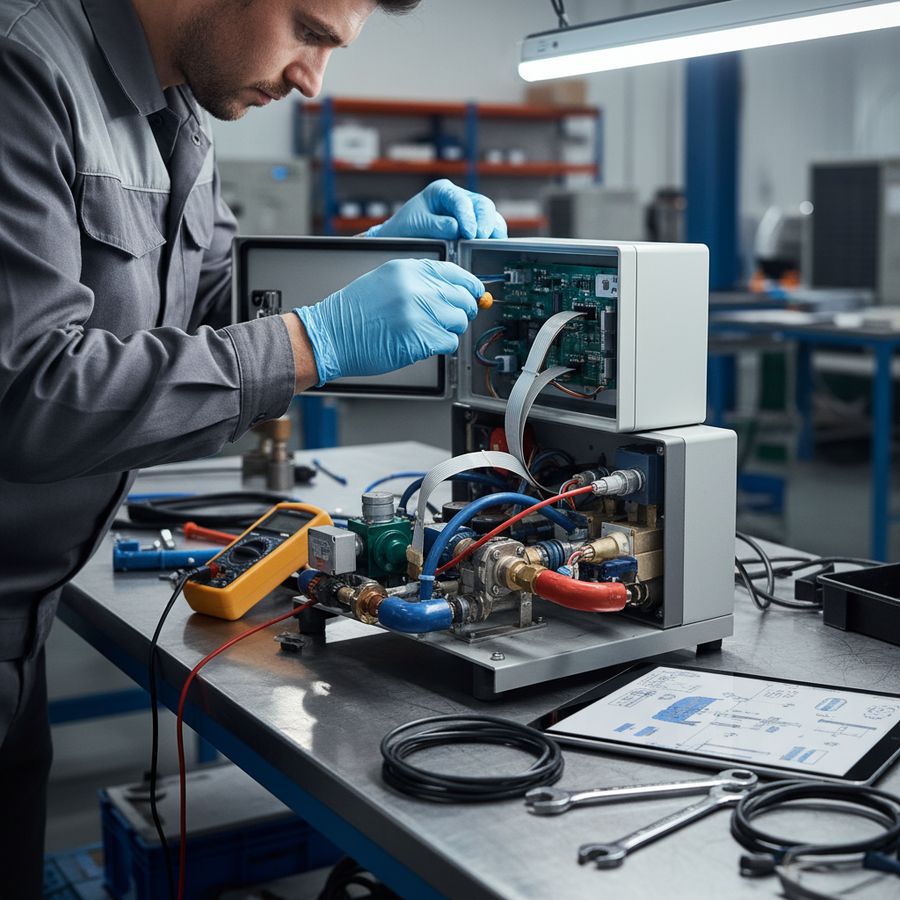
Conclusion
The integration of microchillers in machine tool cooling systems is a transformative step towards achieving unparalleled precision temperature control and operational efficiency. By addressing the unique thermal challenges of machining, microchillers safeguard dimensional accuracy, extend equipment lifespan, and optimize energy use.
Success in machine tool cooling hinges on proper chiller sizing, effective filtration, flow control, and proactive alarm management. These elements work synergistically to maintain stable coolant temperature, enabling manufacturers to meet the stringent demands of modern production.
As the industrial refrigeration sector advances, companies like Frimec exemplify innovation and reliability in delivering tailored microchiller solutions that support cutting-edge manufacturing processes worldwide.
“Microchillers are not just cooling units—they are vital components that empower precision and productivity in machine tool operations.”
