


Understanding the Fundamentals of Industrial Thermoregulation
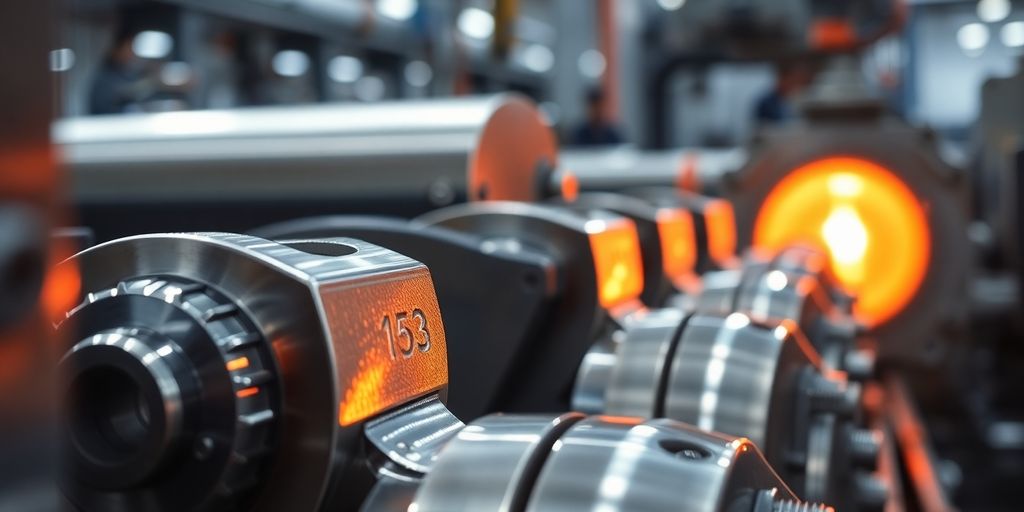
Let’s get down to the basics of keeping things at the right temperature in a factory setting. It’s not just about making it comfortable for people; it’s about making sure the machines and the products themselves are happy. Getting the temperature right is a big deal for how well things run. Think about it: some processes need things to be really hot, others need them cold, and many need a very steady temperature, no ups or downs. This whole idea of controlling temperature is what we call industrial thermoregulation. It involves a few key parts working together. You’ve got your sensors that measure the temperature, controllers that decide what to do based on those readings, and then actuators, like heaters or coolers, that actually make the temperature change. These systems are super important because temperature affects pretty much everything in manufacturing. It can change how fast reactions happen, how materials behave, and even how long equipment lasts. So, understanding these core ideas is the first step to making your production line run smoother and better.
Implementing Advanced Temperature Control Strategies
Moving beyond basic temperature control means looking at more sophisticated ways to manage your production environment. Precision in temperature management is key to consistent output. We’ll explore how to get there.
Utilizing PID Controllers for Precision
Think of a PID controller as a really smart thermostat. It doesn’t just turn heating or cooling on and off. Instead, it constantly looks at the difference between your target temperature and the actual temperature. It then calculates how much heating or cooling is needed, considering the past errors and how quickly the temperature is changing. This way, it can make small, continuous adjustments to keep things right on the money, avoiding those big swings that can mess up your product. It’s all about smooth, accurate control.
Leveraging IoT for Real-time Monitoring
With the rise of the Internet of Things (IoT), you can now get temperature data from all over your facility, right to your phone or computer. Sensors can be placed in critical areas, sending live updates. This means you can see what’s happening now, not just when someone checks a gauge. If something starts to go off track, you get an alert immediately, allowing you to step in before a small problem becomes a big one. It gives you a much clearer picture of your entire operation.
Integrating Predictive Analytics for Proactive Adjustments
This is where things get really interesting. By looking at the historical temperature data you’ve collected, you can start to predict future temperature behavior. For example, you might notice that on hot afternoons, a certain area tends to creep up in temperature. Predictive analytics can flag this trend and suggest making a small adjustment to the cooling system before it actually gets too warm. It’s about anticipating issues and fixing them before they even happen, which saves a lot of headaches and potential product loss.
Enhancing Energy Efficiency Through Smart Thermoregulation
When we talk about making your production line run smoother and cheaper, we really need to look at how you’re managing temperature. It’s not just about keeping things from overheating; it’s a big part of your energy bill. Smart thermoregulation is all about using technology to cut down on wasted power. Think about it: if your heating or cooling systems are running more than they need to, that’s just money going out the window. We can get into minimizing energy consumption by looking at how you set your temperatures. Sometimes, just tweaking a few degrees can make a noticeable difference over time. Then there’s waste heat recovery. A lot of heat gets generated in manufacturing processes that just goes into the air. Capturing some of that heat and reusing it for other tasks, like pre-heating materials or warming up spaces, is a smart move. It’s like getting free energy. And don’t forget about insulation. Good insulation keeps the heat where you want it, whether that’s inside a process vessel or within a building. It stops heat from escaping or unwanted heat from getting in, which means your systems don’t have to work as hard. It’s a pretty straightforward idea, but its impact on your energy use can be quite significant.
Ensuring Product Quality with Consistent Temperature Management
When you’re making stuff, keeping the temperature just right is a big deal for the final product. Getting the temperature wrong can really mess things up. For instance, some materials can break down or change their properties if they get too hot for too long; this is called thermal degradation. You want to avoid that. Then there’s the whole process of curing or drying things, like paints, adhesives, or even certain food items. Each of these needs a specific temperature range to set properly and achieve the desired strength or texture. If the temperature swings too much, you might end up with a product that’s weak, brittle, or just doesn’t perform as it should. It’s not just about hitting a target temperature, either. It’s also about making sure the temperature is the same everywhere in the oven, vat, or drying tunnel. Uneven heating or cooling can lead to hot spots or cold spots, which, you guessed it, causes inconsistent results across your batch. So, paying attention to temperature consistency really matters for making sure every item you produce meets your quality standards.
Troubleshooting Common Thermoregulation Challenges
Even with the best systems, things can go sideways. Temperature fluctuations are a common headache. You might notice your process temperature drifting, or maybe it’s swinging wildly. Often, the culprit isn’t a complex system failure, but a simple issue that’s been overlooked. Sometimes, it’s just a matter of recalibrating your setpoints or checking for external influences that are messing with your controlled environment. Don’t forget to look at things like drafts from doors or windows, or even changes in ambient temperature if your system isn’t fully enclosed. When it comes to sensors, a faulty one can send your whole operation into a tailspin. If you’re seeing readings that just don’t make sense, or if the temperature seems stuck, a sensor malfunction is a prime suspect. It might be dirty, damaged, or simply out of calibration. Replacing or cleaning it could be the fix you need. Then there are actuators, like valves or heaters. If your system is telling them to change the temperature, but nothing is happening, the actuator itself might be the problem. It could be stuck, clogged, or not receiving the correct signal. Checking the physical operation of these components is key to getting your thermoregulation back on track.
Selecting the Right Thermoregulation Equipment for Your Facility
Picking the right gear for your facility’s temperature control needs can feel like a puzzle, but it doesn’t have to be. Let’s break down what you should be looking for. First up, we have the heating and cooling systems themselves. Think about the scale of your operation and the specific temperature ranges you need to maintain. Are you dealing with large spaces that need consistent, even heating, or smaller, more precise zones that require rapid cooling? The type of process you’re running will really dictate this. For instance, a chemical reaction might need very tight control, while simply keeping a warehouse at a certain temperature might have a wider acceptable band. Then there are the sensors. These are the eyes and ears of your system, so accuracy is key. You’ll want to consider how sensitive they need to be and how they’ll hold up in your specific industrial environment – think dust, moisture, or extreme vibrations. Getting reliable sensor data is the bedrock of good temperature management. Finally, let’s talk about control panels. This is where you’ll be interacting with your system. It should be user-friendly, allowing for easy adjustments and clear readouts of what’s happening. Think about the level of automation you need and how easily the control system can integrate with other parts of your plant’s operations. Making the right choices here means fewer headaches down the road and a more stable production environment.
Choosing the right temperature control gear for your building is super important. We’ve got a great guide to help you figure out what you need. Want to learn more about keeping your facility at the perfect temperature? Check out our website for all the details!
Wrapping It Up
So, that’s the lowdown on keeping your factory temps just right. It’s not rocket science, but getting it wrong can really mess with your output and cost you a lot. Think about it – better temperature control means fewer mistakes, less wasted energy, and happier machines. It’s really about making things run smoother day-to-day. If you haven’t looked at your thermoregulation setup in a while, maybe now’s the time. A few tweaks could make a big difference in how much you get done and how much you save. It’s a pretty straightforward way to boost your production game.
