


Understanding the importance of industrial refrigeration
The role of refrigeration in various industries
Okay, so industrial refrigeration? It’s way bigger than just keeping your drinks cold. Think about it: food processing, pharmaceuticals, chemical plants… they all rely on keeping things at specific temperatures. Without it, a lot of industries would just grind to a halt. It’s not just about comfort; it’s about safety, quality, and, well, keeping things from spoiling.
How refrigeration impacts product quality
Ever wonder why that ice cream melts into a weird, grainy mess if you leave it out too long and then refreeze it? Temperature control is everything. In industries like food and medicine, even slight temperature fluctuations can ruin entire batches of product. We’re talking about millions of dollars in losses, not to mention potential health risks. Consistent, reliable refrigeration keeps things stable, preserving the texture, taste, and effectiveness of whatever’s being stored. It’s a big deal for quality.
Energy efficiency and cost savings
Alright, let’s be real: running industrial refrigerators costs money. A lot of money. But here’s the thing: newer, more efficient systems can actually save you a ton in the long run. We’re talking about lower energy bills, reduced waste (because less product spoils), and potentially even government rebates or incentives for going green. It’s an investment, sure, but it’s one that can pay off big time. Plus, you know, it’s better for the planet, which is always a good thing.
Choosing the right industrial refrigerator for your needs
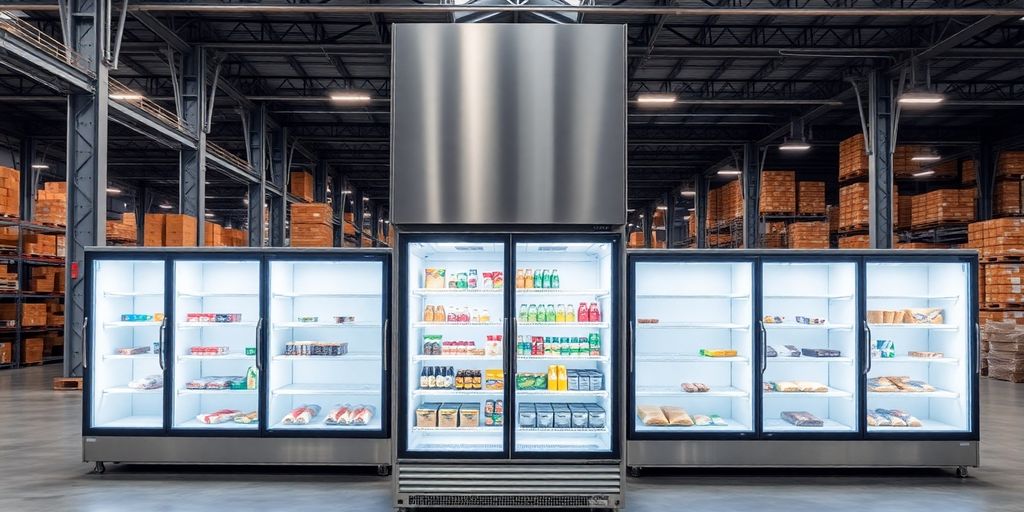
Alright, so you’re in the market for an industrial refrigerator. It’s a big decision, no doubt. You can’t just grab any old unit and hope for the best. You need to think about what exactly you need. Let’s break it down, shall we?
Assessing your storage requirements
First things first, how much stuff are we talking about? Really think about the volume you need to store now, but also consider future growth. Don’t just think about today; think about where you want to be in a year, five years, or even ten. Measure your current storage space, and then add some buffer. It’s always better to have a little extra room than to be crammed and disorganized. Think about the types of products you’ll be storing, too. Are they bulky? Do they need special racking? All of this plays a role in determining the right size and configuration.
Evaluating temperature control options
Temperature control is where things get really important. What temperature range do you need to maintain? Is it consistent, or do you need to adjust it based on the product? Some refrigerators offer very basic temperature settings, while others have advanced controls with alarms and data logging. Consider what level of precision you need. A slight fluctuation in temperature can ruin an entire batch of product, so don’t skimp on this. Also, think about recovery time. How quickly can the refrigerator return to the set temperature after the door has been opened? This is crucial for maintaining product quality.
Understanding different types of industrial refrigerators
There’s a whole world of industrial refrigerators out there. Walk-in coolers, reach-in refrigerators, blast chillers, and more. Each type has its own strengths and weaknesses. Walk-in coolers are great for large volumes, while reach-ins are better for quick access. Blast chillers are designed to rapidly cool products, which is essential for certain applications. Do some research and figure out which type best suits your needs. Don’t be afraid to ask for advice from a refrigeration specialist. They can help you navigate the options and find the perfect fit for your business.
Key features to look for in an industrial refrigerator
Energy efficiency ratings
Okay, so when you’re checking out industrial refrigerators, energy efficiency is a big deal. It’s not just about being green, although that’s cool too. It’s about saving money. Look for the Energy Star rating or similar certifications. These ratings give you an idea of how much electricity the unit will use, which can seriously impact your operational costs over time. Basically, a higher rating means lower bills. And who doesn’t want that?
Temperature range and control
Temperature control is super important. You need a refrigerator that can maintain the right temperature for whatever you’re storing. Some things need to be kept really cold, while others are more sensitive to freezing. Make sure the refrigerator has a wide enough temperature range to meet your needs, and that it has precise controls. You don’t want your stuff getting ruined because the temperature is all over the place. A stable temperature is key for product preservation.
Durability and maintenance considerations
Industrial refrigerators take a beating, so you want something that’s built to last. Look for sturdy construction, quality materials, and a design that can withstand heavy use. Also, think about maintenance. How easy is it to clean? Are the parts readily available if something breaks? A durable, easy-to-maintain refrigerator will save you headaches and money in the long run. Trust me, you don’t want to be dealing with constant repairs and downtime.
The benefits of upgrading your refrigeration system
Improved energy efficiency
Okay, so picture this: you’re running an older refrigeration system. It’s probably costing you a fortune in energy bills, right? Upgrading to a newer, more efficient model can seriously cut those costs. Newer systems use way less energy to keep things cool, which means more money in your pocket. Plus, it’s better for the environment, so you can feel good about that too. It’s a win-win.
Enhanced product preservation
Think about what you’re storing. If it’s food, medicine, or anything else that needs to stay at a specific temperature, an old fridge might not cut it. Upgrading your refrigeration system means better temperature control and consistency. This is key for keeping your products fresh, safe, and in top condition. No more worrying about spoilage or wasted inventory. That’s a big deal.
Increased operational reliability
Old equipment breaks down. It’s just a fact. And when your refrigeration system goes down, it can cause major headaches and cost you a lot of money. Upgrading to a new system means less downtime and more reliable operation. You can count on it to do its job without constant repairs or maintenance. That peace of mind is worth a lot, especially when you’re running a business.
Integrating your industrial refrigerator with existing systems
Compatibility with current equipment
Okay, so you’ve got a shiny new industrial refrigerator. Awesome! But how does it play with the rest of your setup? You’ve got to think about compatibility. Will it physically fit? Does it need special electrical hookups that your building doesn’t have? Making sure your new fridge works with your current equipment is super important to avoid headaches later on. It’s like trying to fit a square peg in a round hole – not fun.
Automation and monitoring solutions
Let’s talk tech. These days, it’s all about automation and monitoring. Can your new refrigerator connect to your existing systems? Think about things like temperature sensors that send alerts to your phone if something goes wrong. Or maybe an automated system that adjusts the temperature based on the time of day. Automation can save you time and money in the long run. It’s like having a robot assistant for your fridge.
Streamlining your supply chain
Your industrial refrigerator isn’t just a box that keeps things cold; it’s a part of your whole supply chain. How does it affect the flow of goods in and out of your facility? Can it be integrated with your inventory management system? A well-integrated refrigerator can help you reduce waste, improve efficiency, and keep your customers happy. It’s all about making things run smoother from start to finish.
Maximizing the lifespan of your industrial refrigerator
Let’s be real, industrial refrigerators are a big investment. You want to make sure you’re getting your money’s worth, right? That means keeping it running smoothly for as long as possible. It’s not rocket science, but a little TLC can go a long way. Think of it like your car – regular check-ups and a bit of care will keep it on the road longer.
Regular maintenance practices
Okay, so what does "TLC" actually look like for a refrigerator? First off, cleaning. Dust and grime are the enemy. Keep those coils clean so the unit can breathe. Check the seals around the doors – are they tight? Leaky seals mean wasted energy and a struggling refrigerator. And don’t forget about the fans; make sure they’re spinning freely. A little preventative maintenance can save you from major headaches down the road.
Signs of wear and when to replace
Even with the best care, things eventually wear out. Keep an eye out for warning signs. Is the temperature fluctuating more than usual? Are you hearing strange noises? Is your energy bill suddenly through the roof? These could be signs that something’s not right. Don’t ignore them! Sometimes it’s a simple fix, but other times it might be time to consider a replacement. Ignoring the signs can lead to bigger, more expensive problems.
Best practices for usage
How you use your refrigerator matters too. Don’t overload it! Overpacking restricts airflow and makes the unit work harder. Make sure hot items cool down before you put them in. And try to minimize how often you open the doors – every time you do, you’re letting cold air out and warm air in. Simple stuff, but it makes a difference.
Case studies of successful refrigeration transformations
Real-world examples of businesses
Let’s talk about some real-world wins, right? I mean, it’s cool to discuss theory, but seeing how this stuff plays out in actual businesses is where it gets interesting. I’ve seen a few companies, especially in food processing, completely turn things around with better refrigeration. One company was struggling with spoilage, losing a ton of product. They upgraded their system, and boom, massive reduction in waste. It’s not just about keeping things cold; it’s about keeping the business healthy.
Quantifiable benefits observed
Okay, so what does "healthy" actually mean? Numbers, baby! We’re talking serious savings. I saw one place cut their energy bill by like 30% just by switching to a more efficient system. And the reduction in product loss? Huge. One company I know saw a 40% drop in spoiled goods, which translated directly into more profit. Plus, less downtime because the new systems are way more reliable. It’s all about the bottom line, and good refrigeration can seriously boost it.
Lessons learned from implementation
So, what did we learn from all this? First, don’t cheap out. A good system is an investment, not an expense. Second, get the sizing right. Too small, and you’re still wasting energy. Too big, and you’re wasting money upfront. Third, maintenance is key. Regular check-ups can prevent major breakdowns and keep things running smoothly. And finally, don’t be afraid to ask for help. There are experts out there who can guide you through the whole process. It’s a bit of a learning curve, but the payoff is totally worth it.
In this section, we explore real-life examples of how businesses have successfully upgraded their refrigeration systems. These stories show how smart changes can lead to better efficiency and savings. If you want to learn more about these transformations and how they can help your business, visit our website for detailed insights and tips!
Final Thoughts on Upgrading Your Industrial Refrigerator
In conclusion, investing in the right industrial refrigerator can really change the game for your business. It’s not just about keeping things cold; it’s about efficiency, safety, and keeping your products in top shape. Whether you’re in food service, pharmaceuticals, or any other industry that relies on temperature control, the right unit can save you time and money. So, take a moment to assess your current setup. If it’s not cutting it, don’t hesitate to explore your options. Upgrading could be the best decision you make this year.
