


Understanding the Core Principles of Industrial Thermoregulation
Defining Industrial Thermoregulation
So, what’s industrial thermoregulation all about? Basically, it’s the science and practice of controlling temperature in industrial processes. Think of it as keeping things at just the right temperature, whether that means cooling something down or heating it up. It’s not just about comfort; it’s about making sure everything runs as it should. This involves a whole range of techniques and equipment to maintain the desired temperature levels.
The Importance of Temperature Control in Manufacturing
Why sweat the small stuff when it comes to temperature? Well, in manufacturing, temperature control is a big deal. If things get too hot or too cold, it can mess with product quality, damage equipment, and even slow down production. Imagine trying to bake a cake in an oven that’s either way too hot or not hot enough – you’d end up with a disaster. It’s the same in industrial settings; precise temperature control is needed for consistent and reliable results.
Key Components of a Thermoregulation System
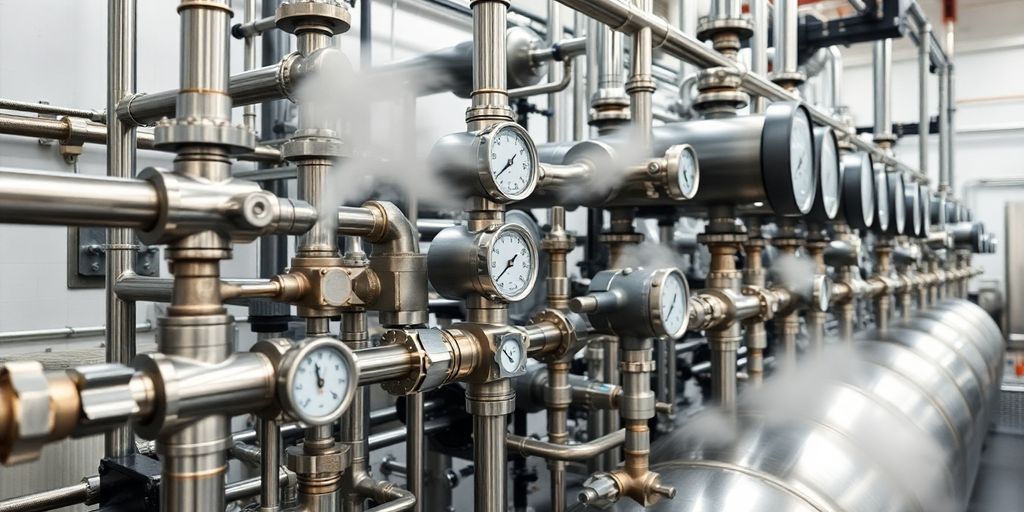
Okay, so what goes into making a thermoregulation system work? You’ve got your chillers, which are like industrial-strength refrigerators. Then there are heat exchangers, which transfer heat from one place to another. And of course, you need pumps, valves, and piping to move fluids around. All these parts work together to keep things at the right temperature. It’s like a well-coordinated team, each player doing their part to achieve a common goal.
How Does an Industrial Thermoregulation System Work?
Heat Transfer Mechanisms in Industrial Settings
Okay, so how does all this thermoregulation stuff actually work? Well, it’s all about moving heat from one place to another. Conduction, convection, and radiation are the main ways heat gets transferred. Conduction is when heat moves through a solid, like when a hot plate heats a metal pan. Convection involves heat transfer through fluids (liquids or gases), like how a boiler heats water. Radiation is heat transfer through electromagnetic waves, like how the sun warms the earth. Industrial systems often use a combination of these methods to efficiently manage temperature.
Cooling and Heating Cycles Explained
Think of it like this: cooling and heating cycles are like the inhale and exhale of an industrial process. Cooling cycles remove heat, typically using refrigerants that absorb heat as they evaporate. This vapor is then compressed and condensed, releasing the heat elsewhere. Heating cycles, on the other hand, add heat, often using steam or hot oil. These cycles are carefully controlled to maintain the desired temperature. It’s a constant balancing act, really.
Control Systems and Automation
Now, all this heat transfer and cycling needs to be managed, right? That’s where control systems come in. These systems use sensors to monitor temperature and adjust heating or cooling as needed. Automation plays a big role here, with programmable logic controllers (PLCs) and other devices making real-time adjustments to keep everything running smoothly. Without these controls, things could get out of hand pretty quickly. It’s like having a smart thermostat for an entire factory.
Essential Components of an Industrial Thermoregulation System
Industrial Chillers and Their Functionality
Industrial chillers are the workhorses of many thermoregulation systems. They’re basically what you use to cool down fluids, which then go on to cool down equipment or processes. Think of them like giant refrigerators, but instead of keeping your soda cold, they’re keeping entire factories from overheating. They come in different types, like vapor compression and absorption chillers, each with its own pros and cons depending on the application.
Heat Exchangers and Their Role
Heat exchangers are where the actual heat transfer happens. They’re designed to efficiently move heat from one fluid to another without the fluids mixing. A common setup involves using a heat exchanger to transfer heat from a process fluid to a cooling fluid, which is then cooled by a chiller. There are shell and tube, plate, and other types, and the choice depends on factors like temperature, pressure, and the fluids involved. It’s all about maximizing surface area for heat transfer.
Pumps, Valves, and Piping Networks
These are the unsung heroes that keep everything flowing. Pumps circulate the fluids through the system, valves control the flow rate and direction, and the piping network connects all the components. Without a properly designed and maintained network of pumps, valves, and pipes, even the best chillers and heat exchangers won’t be able to do their job effectively. It’s like the circulatory system of the thermoregulation setup, making sure everything gets where it needs to go.
Why Is Industrial Thermoregulation Essential for Modern Industries?
Ensuring Product Quality and Consistency
Think about it: many manufacturing processes are super sensitive to temperature changes. Industrial thermoregulation keeps things stable, so you get consistent results. Quality goes up, and waste goes down. It’s all about keeping things just right, every single time.
Protecting Equipment and Extending Lifespan
Overheating? Yeah, that’s bad news for machines. It can cause breakdowns and shorten their lifespan. Thermoregulation systems prevent this by keeping equipment at the right temperature. This means less downtime, fewer repairs, and your machines last longer. Basically, it’s like giving your equipment a long and healthy life.
Optimizing Energy Efficiency and Reducing Costs
Efficient thermoregulation can seriously cut down on energy use. By keeping temperatures stable and preventing overheating, these systems help reduce the amount of energy needed to run things. Less energy used means lower utility bills and a smaller carbon footprint. It’s a win-win for your wallet and the environment.
Applications of Industrial Thermoregulation Across Sectors
Thermoregulation in Food and Beverage Processing
Okay, so think about your favorite soda. Industrial thermoregulation is super important in making sure it tastes the same every single time. It’s used to control temperatures during mixing, cooking, and even packaging. Consistency is key, and that’s what thermoregulation brings to the table. Without it, you might get a weird batch of something, and nobody wants that.
Critical Role in Pharmaceutical Manufacturing
Pharmaceuticals are another big one. You know how important it is that your medicine is safe and effective? Well, thermoregulation helps make that happen. It’s used in all sorts of processes, from creating the drugs to storing them. Precise temperature control ensures the integrity of the medications. If things get too hot or too cold, the drugs could become unstable or even dangerous. It’s a serious business.
Applications in Chemical Production and Data Centers
Chemical plants and data centers? They both need a lot of cooling. Chemical reactions can create a ton of heat, and if you don’t manage it, things can get out of control fast. Data centers are packed with computers that generate heat, and if they overheat, they can crash. Thermoregulation keeps everything running smoothly and prevents disasters. It’s like the unsung hero of these industries, working behind the scenes to keep things cool, literally.
Selecting the Right Industrial Thermoregulation System
Assessing Cooling and Heating Requirements
Okay, so you’re in the market for a thermoregulation system. First thing’s first: what do you actually need? It’s easy to over or underestimate, but getting this right is key. Think about the specific processes that require temperature control. What are the temperature ranges you’re working with? What are the tolerances? Knowing your exact cooling and heating needs will prevent a lot of headaches down the road. It’s like trying to bake a cake without knowing the oven temperature – disaster is pretty much guaranteed.
Considering System Capacity and Scalability
Capacity is a big deal. You don’t want a system that’s constantly running at its limit, or one that’s way too powerful for your current needs. But here’s the thing: think about the future. Is your operation likely to expand? Will you need to handle more processes or larger volumes? A system with good scalability can save you from having to replace everything in a few years. It’s like buying a car – do you get the tiny one that fits your current parking spot, or the slightly bigger one that’ll work when you inevitably move to a place with more space?
Evaluating Energy Efficiency and Environmental Impact
Let’s be real, energy costs are a pain. An efficient thermoregulation system can seriously cut down on those bills. Look for systems with good energy ratings and features like variable speed drives. Also, think about the environmental impact. Are you using refrigerants with high global warming potential? Are there more sustainable options available? Going green isn’t just good for the planet; it can also be good for your bottom line in the long run. It’s like switching to LED bulbs – a bit more upfront, but way better in the long run.
Advanced Technologies in Industrial Thermoregulation
The Benefits of Adiabatic Cooling Systems
So, adiabatic cooling systems are becoming a big deal. Basically, they cool stuff down by evaporating water, which uses way less energy than traditional methods. This is especially useful in hot, dry climates where regular cooling systems struggle. Plus, you end up saving a ton on water bills, which is always a win. It’s a pretty neat technology that’s catching on fast.
Smart Controls and Predictive Maintenance
Okay, so imagine your thermoregulation system could tell you when something’s about to break. That’s what smart controls and predictive maintenance are all about. Using sensors and data analysis, these systems can monitor performance in real-time and predict when maintenance is needed. This means fewer unexpected breakdowns and more efficient operation. It’s like having a crystal ball for your equipment, which is pretty cool.
Sustainable Refrigerants and Eco-Friendly Solutions
Let’s be real, traditional refrigerants aren’t great for the environment. That’s why there’s a big push for sustainable alternatives. These new refrigerants have a much lower impact on the ozone layer and global warming. Plus, companies are coming up with all sorts of eco-friendly cooling solutions, like using natural refrigerants and optimizing system designs to reduce energy consumption. It’s all about keeping things cool without heating up the planet.
Want to learn more about how new tech is making industrial temperature control better? We’ve got all the details on our website. Come check out our solutions for keeping things just right.
Wrapping Things Up
So, we’ve gone over how industrial thermoregulation systems work. It’s pretty clear these systems are a big deal for lots of different industries. Keeping temperatures just right helps things run smoothly, makes products better, and keeps costs down. Thinking about the right system for your needs means looking at what you do, how much space you have, and what kind of energy you use. Getting this stuff right can really make a difference for a business.
