


Automated Controls Improve Load Matching Accuracy
In industrial refrigeration, efficiency often depends on how closely cooling output matches the real process load. Manual adjustments and fixed operating points can leave systems overcooling during low demand and struggling during sudden peaks. Industrial refrigeration automation helps close that gap by continuously aligning compressors, fans, pumps, and valves with actual operating conditions.
With automated temperature control, the system can react to changes in ambient conditions, product throughput, and heat rejection requirements in real time. That matters in facilities handling plastics, food processing, electroplating, and other temperature-sensitive production environments. Instead of relying on delayed operator response, control logic uses live inputs to modulate output more precisely, improving stability while reducing unnecessary energy consumption.
For example, automated strategies can stage equipment based on return temperatures, pressure trends, or tank demand rather than running assets at the same level all day. In cooling tower applications, airflow and water circulation can also be coordinated to prevent waste while maintaining target performance.
Automation pays when cooling capacity follows the process instead of forcing the process to adapt to the equipment
For manufacturers seeking dependable, environmentally conscious performance, this approach supports both operating economy and product quality. It is especially valuable in tailor-made systems, where a supplier such as Frimec can integrate controls into broader temperature control technology designed for demanding industrial duty.
What Processes Benefit Most From Automation?
Not every refrigeration application gains value in exactly the same way, but some processes benefit especially fast from automation. Operations with variable loads, narrow temperature tolerances, or high downtime costs are usually the strongest candidates. In these environments, sensor-based cooling and automated control can improve repeatability while reducing the burden on operators.
Industries such as plastics, food processing, and electroplating often see immediate advantages because thermal conditions influence product quality, cycle times, and equipment reliability. A plastic molding line, for instance, may require fast reaction to changing production rates. A food process may need tighter control to protect safety and consistency. Electroplating applications can also depend on stable fluid temperatures to maintain process integrity.
-
Batch processes with fluctuating heat loads
-
Continuous production lines that run across multiple shifts
-
Facilities with several cooling assets that must work together
-
Installations exposed to changing outdoor conditions
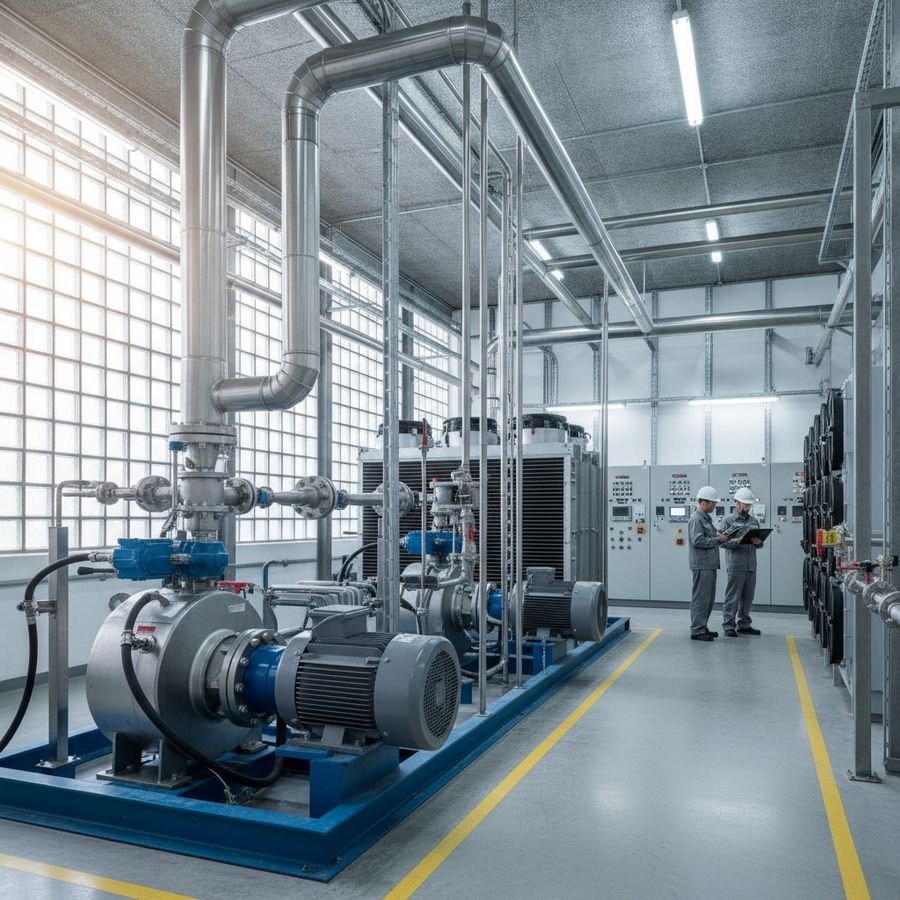
Automation is also valuable where systems include evaporative towers, chillers, pumps, and condenser equipment operating as one network. Coordinated logic helps each component respond as part of the whole instead of as isolated machines.
The more complex the process, the greater the potential payoff from industrial refrigeration automation. That is why engineered solutions are often preferred over one-size-fits-all controls in large industrial production facilities.
How Can Predictive Analytics Reduce Downtime?
Traditional maintenance often follows one of two patterns: fixed schedules or reactive repairs. Both can be expensive. Fixed schedules may replace parts too early, while reactive repairs can stop production at the worst possible moment. Predictive analytics offers a better path by identifying abnormal trends before they become failures.
In industrial refrigeration systems, predictive models can evaluate temperature drift, pressure deviations, motor current, fan performance, pump behavior, and cycling frequency. When these signals are monitored over time, the control platform can flag conditions that suggest fouling, airflow restrictions, valve wear, or declining heat exchange efficiency. That gives maintenance teams more time to act in a planned way.
The benefit is not only fewer breakdowns. Predictive analytics can also reduce secondary damage by catching small issues early. A fan running outside its normal pattern or a pump showing unstable performance may seem minor at first, but in a tightly integrated system those issues can affect temperature control across the plant.
Better maintenance decisions begin with trend visibility, not guesswork
For operators, the real value is practical: fewer emergency shutdowns, more reliable scheduling, and stronger asset life-cycle management. When paired with automated temperature control, predictive tools turn raw operating data into maintenance priorities that protect both uptime and energy performance.
Sensor Data Supports Faster Performance Decisions
Good automation depends on good data. Without accurate sensing, even advanced control logic cannot make the right decisions. That is why sensor-based cooling is central to modern refrigeration performance. Temperature, pressure, flow, humidity, fan status, and water conditions all provide signals that help a system respond with greater speed and confidence.
In practice, sensor data reduces the delay between a process change and a corrective action. If return temperatures rise, if ambient conditions shift, or if a pump begins underperforming, the system can respond immediately instead of waiting for an operator to notice a problem. This is especially important in multi-equipment installations where chillers, towers, pumps, and controls interact continuously.
Well-placed sensors also improve decision quality for the people overseeing the plant. Instead of relying on isolated readings, operators can view trends and compare performance across equipment sections. That makes it easier to identify whether a problem is local, system-wide, or tied to a production change.
-
Faster response to temperature deviations
-
Clearer insight into equipment efficiency
-
Improved alarm accuracy
-
Better documentation for maintenance planning
Industrial refrigeration automation works best when sensor coverage supports both control and diagnosis. The result is a more stable system, quicker interventions, and more informed operational choices throughout the production cycle.
Capacity Control Dampers Enhance Response Flexibility
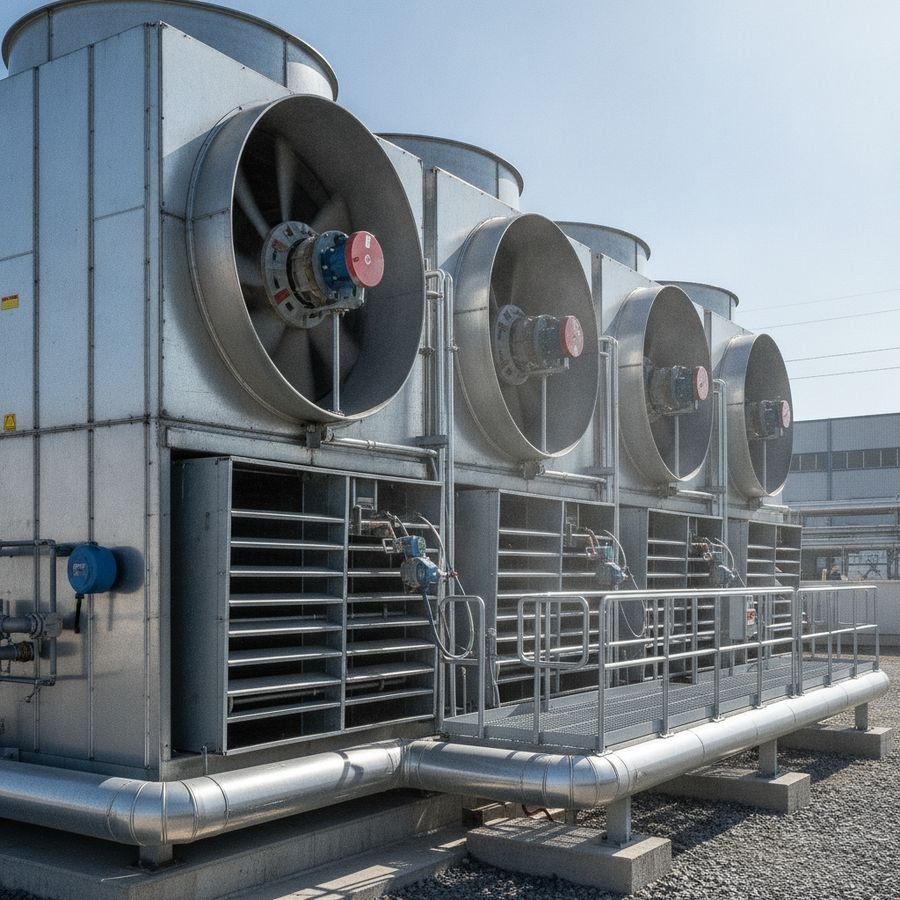
Response flexibility is essential in refrigeration systems that face changing loads and varying installation conditions. One useful example is the use of capacity control dampers in cooling tower configurations with centrifugal fans. Based on the available site information, these dampers can be installed on the mouth of each fan, with a common drive shaft for each fan section, helping regulate airflow more precisely.
This added control becomes valuable when a plant needs to fine-tune heat rejection rather than simply switch fans on or off. By adjusting airflow, capacity control dampers can help the system respond more smoothly to part-load conditions, seasonal changes, or process swings. That can support better temperature stability and reduce abrupt cycling that places stress on mechanical components.
In indoor installations, where ducting and air management may be more demanding, this flexibility can be even more important. A system with controlled airflow can adapt more effectively to space constraints and changing ventilation requirements while maintaining reliable cooling performance.
Flexible airflow control creates a wider operating window for stable, efficient heat rejection
For businesses evaluating automation upgrades, capacity control dampers are not just accessories; they can be part of a broader control strategy. Combined with sensors, fan logic, and coordinated pump operation, they help tailor cooling output to real process needs while supporting efficient, durable operation.
Automation Projects Need Clear Operator Protocols
Even the best automation system will underperform if plant personnel do not know how to work with it. Successful projects require more than just hardware and software; they need clear operator protocols that define how the system is monitored, when manual intervention is appropriate, and how alarms should be handled. This is particularly important in complex refrigeration environments where multiple assets interact.
Protocols should detail normal operating ranges, escalation paths, restart procedures, seasonal settings, and maintenance responsibilities. They must also clarify which adjustments are automated and which require human approval. Without this structure, teams may override optimized sequences, ignore early warnings, or create inconsistencies between shifts.
-
Set clear alarm response priorities
-
Document manual override procedures
-
Train operators on trend interpretation
-
Review control changes after maintenance activity
Good protocols also foster trust. When operators understand why automation makes certain decisions, they are more likely to use the system correctly and less likely to bypass it. This enhances the value of predictive analytics, improves the reliability of automated temperature control, and ensures sensor-driven strategies align with production goals.
Industrial refrigeration automation delivers the greatest return when technology and people are aligned. Clear procedures transform control systems into reliable operational tools rather than black boxes that only specialists can manage.
FAQs
What is industrial refrigeration automation?
Industrial refrigeration automation uses sensors, control logic, and connected equipment to adjust compressors, fans, pumps, valves, and related components in real time. The goal is to match cooling output to actual process demand instead of relying on fixed settings or manual intervention.
Which industrial processes benefit most from refrigeration automation?
Processes with variable heat loads, tight temperature tolerances, multiple cooling assets, or high downtime costs often benefit the most. Examples include plastics processing, food production, electroplating, and other operations where thermal stability affects quality, safety, and uptime.
How does predictive analytics reduce downtime in refrigeration systems?
Predictive analytics tracks operating trends such as temperature drift, pressure changes, motor current, pump behavior, and cycling frequency. By identifying abnormal patterns early, maintenance teams can address issues before they become failures that interrupt production.
Why is sensor-based cooling important for automated temperature control?
Sensor-based cooling provides the real-time data needed for fast, accurate control decisions. Measurements such as temperature, pressure, flow, humidity, and equipment status help the system respond quickly to changing conditions and improve both diagnostics and operating stability.
What role do capacity control dampers play in cooling tower automation?
Capacity control dampers help regulate airflow more precisely in cooling tower systems, especially those using centrifugal fans. This allows smoother part-load operation, better temperature stability, and less abrupt cycling than simple on-off fan control.
