


Process Temperature Demands Differ by Production Line
Choosing cooling systems starts with a simple truth: plastics and food processing lines do not remove heat in the same way. An injection molding press may need tightly controlled water temperature to keep cycle times repeatable, while a food line may need rapid pull-down, sanitary design, and dependable operation through washdown and seasonal changes. Even when two plants have similar production volumes, their thermal profiles can be completely different.
In plastics, process stability often depends on keeping molds, hydraulic circuits, and auxiliary equipment within a narrow range. In food facilities, operators often focus on product safety, ingredient consistency, and separation between utility systems and hygienic zones. That means the best answer is rarely one standard package.
Reliable cooling is not only about reaching a target temperature; it is about holding that temperature under real operating conditions
Manufacturers that serve multiple sectors, such as Frimec, typically emphasize tailor-made industrial refrigeration and temperature control because production realities vary by line, by shift, and by plant layout. Before selecting air chillers or cooling towers, engineers should define entering water temperature, required leaving temperature, ambient conditions, load swings, and uptime expectations. That front-end analysis prevents underperforming systems and supports better energy use over the long term.
Which Cooling Loads Are Typical in Plastics?
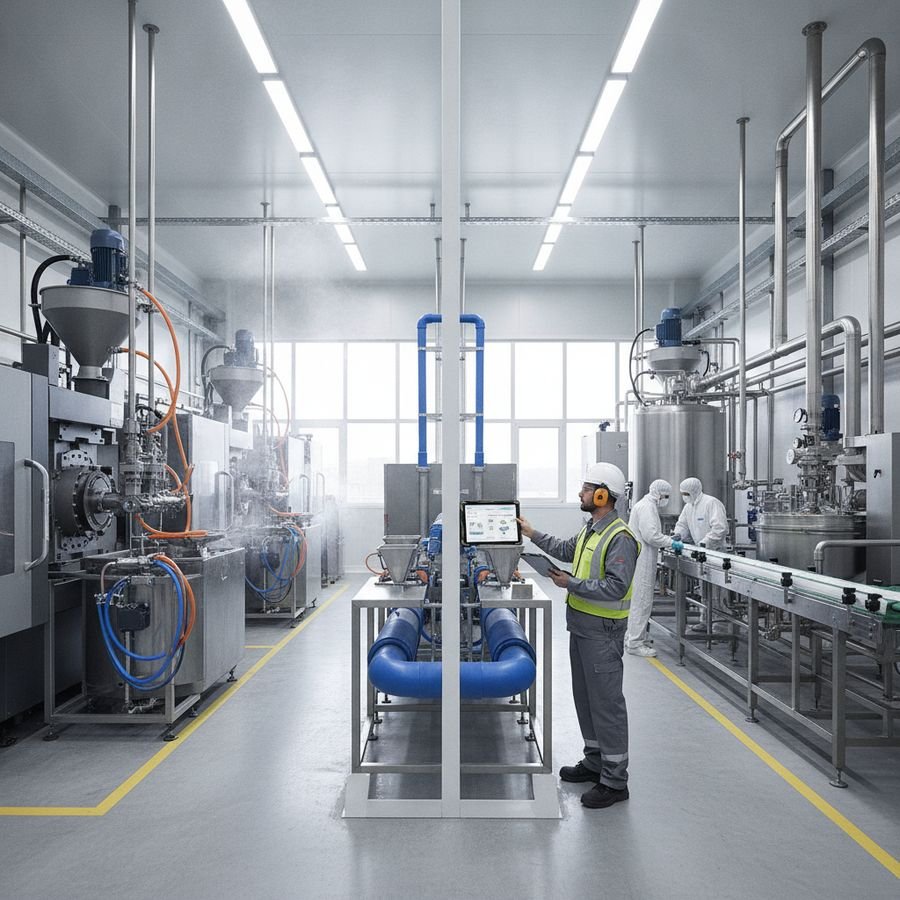
In plastics cooling, the main load usually comes from removing heat from molds, extruders, oil circuits, and downstream handling equipment. Injection molding cells often have sharp, repeating peaks because every cycle adds heat that must be rejected quickly. Extrusion lines can look steadier, but they may still require multiple temperature zones with different flow rates and setpoints.
A practical review should look beyond the machine nameplate. Resin type, mold complexity, cycle speed, ambient heat, and plant expansion plans all affect the true cooling duty. A system sized only for nominal output may struggle once production ramps up or when summer temperatures rise.
-
Mold cooling circuits with tight temperature tolerances
-
Extruder barrel and oil cooling needs
-
Auxiliary equipment such as dryers, granulators, and compressors
-
Future capacity for added presses or higher throughput
Air chillers are often a strong fit when plants want compact installation and responsive control for independent process loops. For larger centralized applications, cooling towers may support economical heat rejection when paired with the right refrigeration or thermoregulation arrangement. The key is matching the load profile to the technology, not forcing the process to adapt to a generic cooling package.
How Do Food Plants Prioritize Hygiene Requirements?
In food processing, cooling decisions must support both thermal performance and hygienic risk control. Plants often separate utilities by zone, limit contamination pathways, and select equipment layouts that make inspection and maintenance easier. Cooling water that serves indirect heat exchange may be acceptable in one area, while another area requires stricter material choices, drain management, and protection from airborne carryover.
This is why food manufacturers usually evaluate more than capacity and energy use. They also review access for cleaning, corrosion resistance, water treatment strategy, and the placement of outdoor versus indoor components. A poorly positioned system can increase maintenance burden or create unnecessary operational risk.
In food production, temperature control and hygiene planning should be designed together, not treated as separate decisions
When assessing cooling towers for food-related facilities, decision-makers should pay attention to construction durability, weather protection, and installation flexibility. Frimec describes evaporative tower designs with vertical air discharge to reduce sensitivity to wind direction and optional configurations for indoor premises using high-head centrifugal fans and ducted air management. Features such as watertight motor assemblies, control options, circulation pumps, and winter defrosting support can also help food plants maintain stable operation while respecting site-specific hygiene and maintenance priorities.
Air Chillers Suit Many Fast-cycle Applications
Air chillers are frequently selected for fast-cycle processes because they offer direct, responsive cooling without the added water-management demands of evaporative equipment. In plastics operations, that can be especially useful for molding cells where quick temperature recovery supports short cycle times and consistent part quality. In compact food applications, air-cooled systems can also simplify installation where water availability or treatment infrastructure is limited.
Another advantage is modularity. Plants can deploy dedicated units for individual lines, reducing the risk that one process upset affects the entire facility. This can be valuable for manufacturers running several products with different temperature needs or staggered production schedules.
However, choosing cooling systems based on convenience alone is risky. Air-cooled performance depends heavily on ambient temperature, airflow, condenser cleanliness, and installation spacing. If the system is placed in a hot yard with poor ventilation, actual capacity may drop precisely when demand is highest.
-
Strong fit for localized process loads
-
Useful where water use must be minimized
-
Good option for staged capacity growth
-
Requires careful review of peak ambient conditions
For many manufacturers, the best result comes from pairing air chillers with good hydraulic design, buffer capacity where needed, and controls that keep process temperature steady during rapid load changes.
Cooling Towers Support Larger Heat Rejection Needs
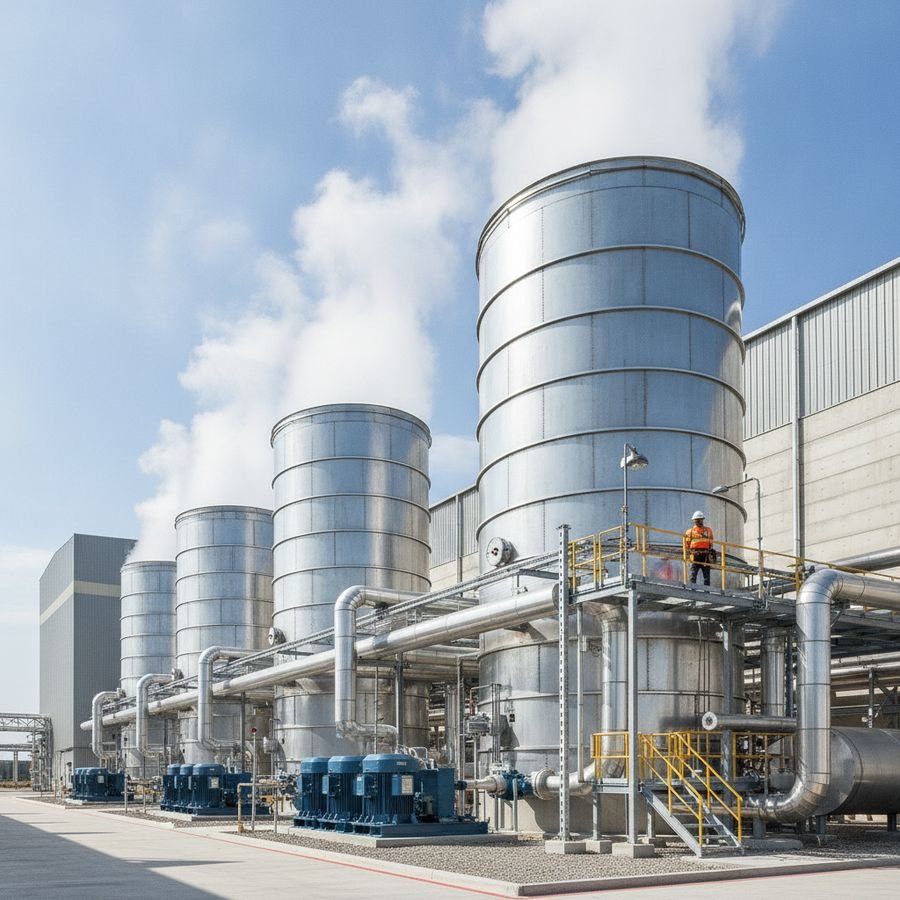
When facilities need to reject substantial amounts of heat, cooling towers often become an efficient part of the solution. Large plastics plants, multi-line food processing sites, and mixed-use industrial facilities may benefit from centralized tower-based systems that handle significant thermal loads while supporting stable utility temperatures across several production areas.
Evaporative towers are particularly attractive where continuous operation and scale matter. They can complement refrigeration units, thermoregulation equipment, or water-cooled systems by moving heat out of the plant efficiently. For organizations planning long operating hours or future line additions, towers can offer practical flexibility.
Equipment design details matter here. Frimec notes that its TRA series evaporative towers are built for positioning flexibility, with vertical air discharge that helps operation remain independent of wind direction and intensity. For indoor industrial premises, versions with high-head centrifugal fans can allow supply or recovery air ducting. Hot-dip galvanized construction, protective coatings, watertight motors, optional capacity control dampers, pumps, electrical control panels, and winter defrost heaters all point to a system designed for demanding outdoor and industrial service.
The right tower is not only a heat-rejection device; it is part of the plant’s reliability strategy
That makes towers especially relevant when load size, durability, and expansion planning outweigh the simplicity of smaller standalone units.
What Sizing Errors Create Unstable Temperatures?
The most common temperature problems begin with poor load assumptions. Some systems are sized only for average conditions, even though real processes see startup surges, recipe changes, hot weather, fouling, and simultaneous equipment demand. Others are oversized without proper control logic, causing short cycling, unstable leaving water temperature, and unnecessary energy use.
In plastics cooling, a small sizing error can show up immediately as warped parts, longer cycle times, or inconsistent mold performance. In food processing, the same mistake may affect product uniformity, line speed, or sanitation windows because temperatures drift outside the intended range.
-
Ignoring peak ambient temperatures
-
Failing to include pump heat and distribution losses
-
Underestimating future production expansion
-
Combining incompatible loads on one loop
-
Skipping buffer volume and control response analysis
Choosing cooling systems correctly requires more than matching a catalog number to a machine list. Engineers should validate process temperatures, flow rates, approach temperatures, redundancy goals, and maintenance conditions. They should also review whether air chillers or cooling towers will perform better during the site’s hottest and busiest operating periods.
Stable temperatures usually come from careful calculations, realistic safety margins, and controls tuned to how the plant actually runs.
Tailored System Layouts Improve Uptime and Quality
A cooling system operates most effectively when its design is aligned with the daily functions of the factory. Customized configurations often yield better uptime than standard solutions. A facility may require unique loops for molding, oil cooling, and areas sensitive to comfort, or it might benefit from a centralized system with distributed control points and backup capabilities.
Smart layout choices not only improve maintenance access but also minimize pressure drops, simplify seasonal operations, isolate essential lines during servicing, and uphold product quality during sudden demand spikes. This is especially advantageous in the plastics and food industries, resulting in fewer disruptions and more consistent output.
Frimec positions itself as a long-term partner in industrial refrigeration and temperature control, making it well-suited for these projects. With a diverse array of products ranging from air chillers and thermochillers to refrigeration units and cooling towers, the focus is on tailoring technologies to meet customer production goals rather than applying a one-size-fits-all approach.
Custom cooling solutions can greatly enhance a system’s quality, efficiency, and uptime.
For companies evaluating their options, an effective strategy generally includes a thorough assessment of process loads, hygiene standards, ambient conditions, maintenance capabilities, and future growth plans. This groundwork leads to smarter, more resilient decisions in cooling systems.
FAQs
How do cooling needs differ between plastics and food processing plants?
Plastics lines usually prioritize tight temperature control for molds, extruders, oil circuits, and repeatable cycle times. Food plants must balance thermal performance with hygiene, washdown conditions, corrosion resistance, and utility separation between hygienic and non-hygienic zones.
When are air chillers the better choice?
Air chillers are often a strong fit for fast-cycle or localized process loads, especially when a plant wants compact installation, modular expansion, and less dependence on water treatment infrastructure. Their performance should still be checked against peak ambient temperatures, airflow, and installation spacing.
When do cooling towers make more sense than air chillers?
Cooling towers are typically more suitable for larger centralized heat-rejection duties, multi-line facilities, and operations planning for long hours or future expansion. They can support efficient plant-wide utility temperatures when paired with the right refrigeration, thermoregulation, or water-cooled systems.
What sizing mistakes cause unstable process temperatures?
Common errors include sizing only for average conditions, ignoring peak summer ambient temperatures, omitting pump heat and distribution losses, combining incompatible loads on one loop, and skipping buffer volume or control-response analysis. These mistakes can lead to short cycling, drifting leaving-water temperatures, and reduced product quality.
Why is a tailored cooling layout important?
A tailored layout can separate critical loads, reduce pressure drop, simplify maintenance, improve seasonal operation, and protect uptime during service events or production swings. In both plastics and food environments, customized loops and controls often perform better than one standard package.
