


Overview
Evaporative cooling towers are a proven solution for removing heat from recirculating water in demanding industrial plants. They support efficient process cooling by transferring unwanted heat to the atmosphere through the combined action of water distribution, airflow, and evaporation. In sectors where machinery runs continuously, this approach helps stabilize temperatures, protect equipment, and maintain reliable production conditions.
Modern industrial cooling towers are valued not only for cooling performance, but also for installation flexibility and durability. Systems with vertical air discharge, for example, are less affected by wind direction and intensity, which improves consistency in real operating environments. For manufacturers seeking dependable thermal control, evaporative technology remains a practical choice because it balances energy efficiency, robust construction, and adaptability across a wide range of industrial duties.
For many industrial plants, steady heat rejection is not optional; it is essential to process continuity and product quality.
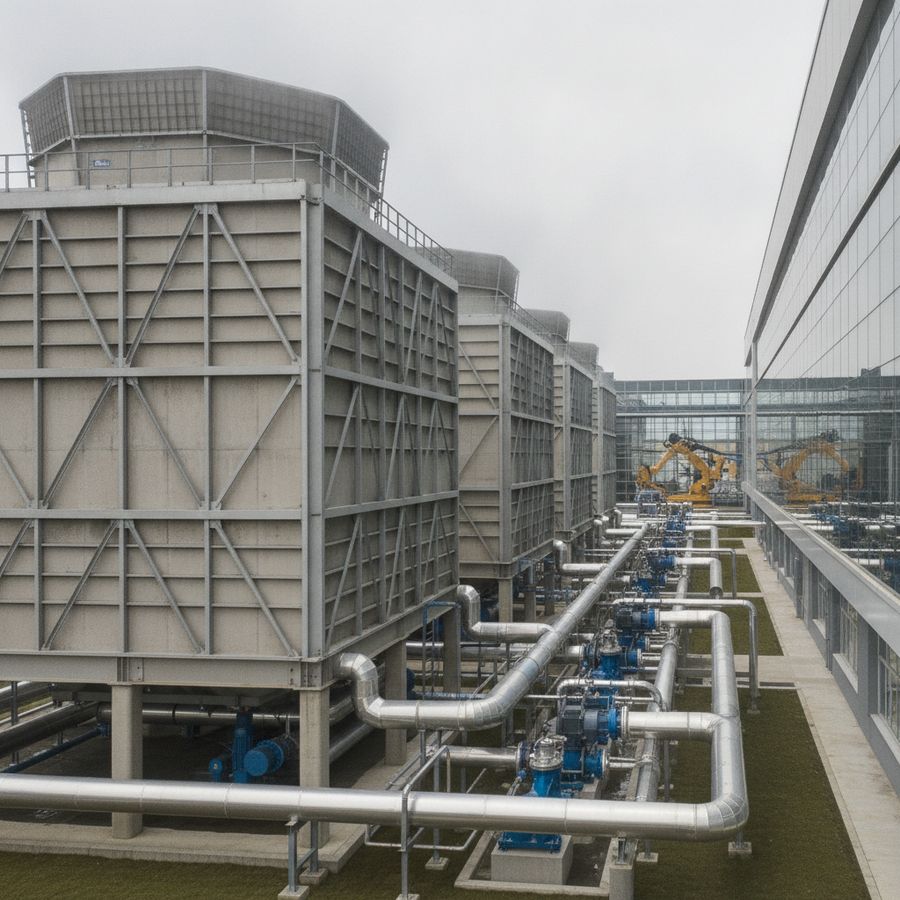
How Evaporative Cooling Towers Remove Process Heat
In evaporative cooling towers, warm process water returns from equipment such as molds, heat exchangers, plating lines, or food processing systems and is distributed over heat transfer surfaces. At the same time, air is moved through the tower by fans. A small portion of the water evaporates, and that phase change removes a significant amount of heat from the remaining water.
The cooled water then collects in the basin and is pumped back into the process loop for reuse. This continuous cycle makes evaporative systems highly effective for process cooling in industrial plants with persistent thermal loads. Because the cooling effect depends on evaporation rather than sensible heat exchange alone, these systems can achieve lower water temperatures than many dry-air alternatives under comparable conditions.
Industrial cooling towers are especially useful where stable outlet water temperature supports productivity, dimensional accuracy, and equipment longevity across multi-shift operations.
Key Cooling Tower Components and Operating Principles
Reliable performance starts with the right combination of components. A typical tower includes a casing, water distribution system, fill or exchange media, drift elimination features, fans, motors, and a cold-water basin. Each element contributes to overall thermal efficiency, airflow control, and safe operation in demanding industrial settings.
Fan configuration plays a major role in how air moves through the unit. Vertical air discharge designs help make operation less dependent on surrounding wind conditions, while watertight motors and protected fan supports improve long-term suitability for outdoor use. In specialized applications, towers may also include circulation pumps, electrical command panels, capacity control dampers, and winter defrosting heaters.
- Water distribution increases contact between water and air.
- Fans maintain the airflow required for evaporation.
- Protective construction supports durability in harsh environments.
Together, these features allow evaporative cooling towers to deliver steady process cooling with predictable operating behavior.
Benefits for Plastics, Food, and Electroplating
Different sectors depend on cooling for different reasons, yet the objective is the same: remove excess heat without interrupting production. In plastics manufacturing, consistent cooling water helps control mold temperatures, shorten cycle times, and improve part quality. In food operations, dependable thermal regulation supports hygienic processing conditions and protects sensitive production steps from overheating.
Electroplating lines also benefit from stable cooling because bath temperatures influence coating quality, process repeatability, and chemical control. Across all three sectors, industrial cooling towers help reduce thermal stress on machinery while supporting continuous operation at industrial scale.
When cooling is stable, production is more stable — and that has direct value in quality, uptime, and operating efficiency.
For industrial plants serving plastics, food, and electroplating, evaporative cooling towers offer an efficient and adaptable way to manage heat loads that fluctuate with throughput, seasonal conditions, and production scheduling.
Indoor Installation with Centrifugal Fan Configurations
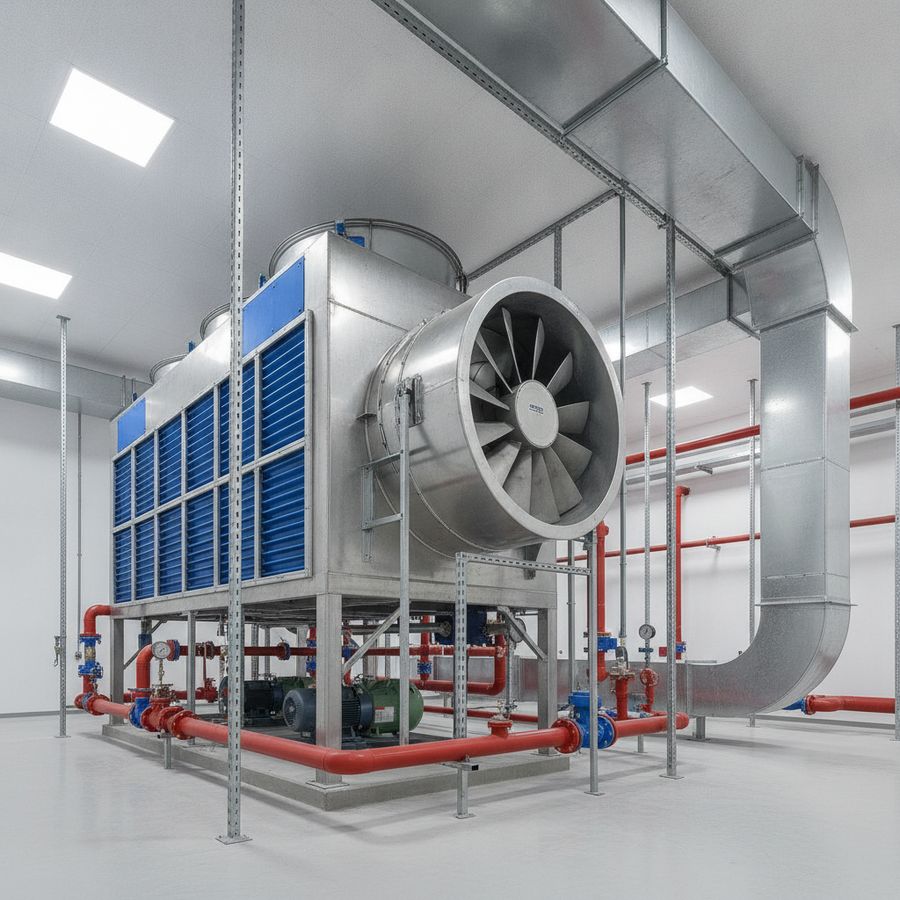
Some industrial plants need tower installation inside production premises because of layout constraints, weather exposure concerns, or site-specific engineering requirements. In these cases, configurations with high head centrifugal fans offer a practical solution. They allow air to be ducted for supply or recovery, making indoor placement more manageable without sacrificing the basic advantages of evaporative heat rejection.
This setup is especially useful when airflow must be directed through building systems or around process areas with limited open-air access. Compared with standard open discharge arrangements, centrifugal fan versions provide greater control over air handling, which can help integrate the tower into complex plant layouts.
Where tighter output management is required, capacity control dampers can be added to fan sections to support more responsive operation. For facilities balancing space, ventilation, and process cooling demands, this design flexibility is a significant advantage of modern evaporative cooling towers.
Weather Protection and Outdoor Durability Features
Outdoor equipment in heavy-duty manufacturing must withstand rain, humidity, temperature changes, and airborne contaminants. That is why material selection matters so much in industrial cooling towers. Towers built in high-thickness hot-dip galvanized sheet and further protected with suitable paints offer stronger resistance to atmospheric agents and long-term corrosion risks.
Equally important are the details that preserve performance over time. Watertight electric motors and specially executed fan supports improve reliability when the tower is exposed to harsh environmental conditions. These features help reduce the likelihood of premature wear, unplanned shutdowns, and weather-related performance loss.
For facilities that cannot afford weak points in outdoor infrastructure, durable construction is more than a specification line; it is a protection strategy. Well-designed evaporative cooling towers combine thermal efficiency with structural resilience, allowing industrial plants to maintain dependable process cooling across changing seasons and operating conditions.
Cooling Tower Maintenance Priorities for Steady Output
Cooling tower maintenance is essential for preserving heat transfer efficiency, water quality, and mechanical reliability. Even a well-built tower can lose performance if scale, debris, biological growth, or worn moving parts are ignored. Routine inspection keeps the system aligned with design conditions and helps prevent gradual efficiency loss that often goes unnoticed until production is affected.
Maintenance priorities typically include:
- Checking fans, motors, and supports for smooth operation
- Inspecting water distribution for even flow
- Cleaning basins and internal surfaces to reduce fouling
- Monitoring corrosion protection and coating condition
- Verifying pumps, controls, and seasonal accessories
In colder climates or winter operation, defrosting provisions may also require attention. Consistent cooling tower maintenance supports steady output, better energy use, and longer equipment life. For industrial plants, preventive care is usually far less costly than emergency downtime caused by thermal instability or mechanical failure.
Conclusion
Evaporative cooling towers remain a highly effective answer for industrial heat rejection because they combine strong thermal performance with installation flexibility and long service life. From plastics and food processing to electroplating and other heavy-duty applications, they support the stable process cooling that modern production depends on every day.
Features such as vertical air discharge, indoor-ready centrifugal fan configurations, corrosion-resistant construction, watertight motor protection, and optional controls make today’s industrial cooling towers adaptable to a wide range of plant conditions. When paired with disciplined cooling tower maintenance, they can deliver reliable output year after year.
The best cooling solution is not simply the one that removes heat; it is the one that keeps the entire plant operating with confidence.
For industrial plants seeking dependable, efficient, and durable thermal management, evaporative towers continue to be a practical and strategically valuable investment.
