


What Free Cooling Means in Industrial Refrigeration
Free cooling in industrial refrigeration refers to using naturally low outdoor temperatures to remove heat from process water or glycol without relying fully on mechanical compressor operation. In cold plants, this approach can sharply reduce electrical demand because the system takes advantage of ambient conditions instead of producing all cooling through conventional refrigeration cycles. The result is improved energy efficiency, lower operating costs, and reduced wear on major components.
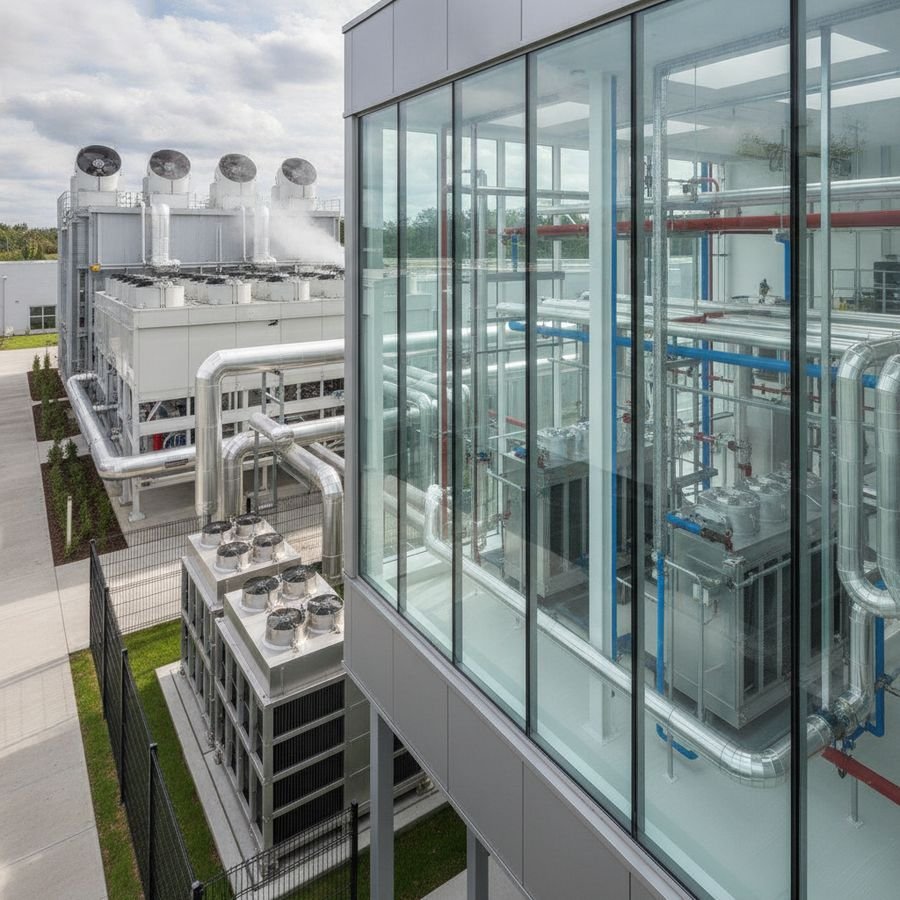
In practice, free cooling is usually integrated through a dry cooler, fluid cooler, cooling tower, or a dedicated heat exchanger section within packaged systems such as air chillers and process cooling plants. When outdoor air is cold enough, the cooling medium rejects heat directly to the environment. When conditions are only partly favorable, the system can run in a mixed mode, with free cooling covering part of the load and the compressor handling the balance.
Free cooling does not mean zero equipment use; it means shifting cooling duty away from compressors whenever outdoor conditions make that possible.
For manufacturers operating year-round, the value comes from cumulative annual savings rather than a single season. Well-designed systems also support more stable process temperatures and a smaller carbon footprint. In sectors such as food processing, plastics, electroplating, and other continuous industrial applications, free cooling is especially attractive because cold plants often operate for long hours and carry predictable thermal loads.
Best Climates for Free Cooling Performance
The strongest free cooling results are typically achieved in regions with long cool seasons, low average ambient temperatures, and substantial nighttime temperature drops. In these climates, cold plants can operate for many hours each year with reduced compressor activity, allowing energy efficiency gains to accumulate month after month. Northern and inland locations often outperform hot, humid regions because the available temperature difference between the process fluid and outdoor air is greater.
That said, climate suitability is not simply a question of whether a site feels cold. Engineers evaluate the temperature profile across the year, the required supply water temperature, local humidity, and the number of hours below the system changeover threshold. A plant that needs relatively high chilled-water temperatures may benefit from free cooling even in moderate climates, while a process requiring very low temperatures may only gain meaningful savings in colder zones.
Several climate factors influence performance most:
-
Average winter and shoulder-season ambient temperature
-
Hours per year below the fluid return temperature
-
Daily temperature swing between day and night
-
Humidity, which affects some heat rejection methods
-
Wind exposure and installation layout
Cold plants in variable climates can still perform well if controls are designed for partial free cooling. Even when full compressor shutdown is not possible, reducing compressor lift for part of the year can still produce significant annual savings and extend equipment life.
Load Profiles That Maximize Annual Savings
Not every facility captures the same value from free cooling. The best candidates are plants with steady or predictable cooling demand during the months when outdoor temperatures fall below the process return temperature. A cold plant serving 24/7 industrial production is usually a stronger fit than a batch process with highly irregular operation. The more hours the load overlaps with favorable ambient conditions, the more attractive the savings profile becomes.
Base load matters more than peak load. A system with a consistent year-round requirement can benefit from a free cooling section sized to cover a meaningful share of that minimum demand. If the plant only experiences short spikes in cooling need, the payback may be less compelling because the free cooling equipment stays underused for much of the year.
Annual savings are driven by operating hours, load stability, and climate together — not by design day conditions alone.
Typical high-value load profiles include:
-
Continuous process cooling in plastics and food production
-
Recirculating water loops with stable return temperatures
-
Facilities with significant night or winter operation
-
Applications where supply temperatures can tolerate seasonal reset
Load analysis should also include production schedules, maintenance shutdowns, and future expansion. In many industrial refrigeration applications, the most successful projects are those where the free cooling capacity is aligned with the plant’s recurring thermal baseline rather than sized only for maximum output.
Control Strategies for Smooth Seasonal Changeover
The technical promise of free cooling depends heavily on control logic. Without a smart changeover strategy, a plant can experience unstable temperatures, unnecessary compressor cycling, or poor use of available ambient capacity. The goal is to move smoothly between full mechanical cooling, mixed mode, and full free cooling while maintaining process reliability at all times.
Effective control strategies typically monitor outdoor air temperature, fluid return temperature, supply setpoint, valve position, and compressor staging. Instead of switching abruptly at one temperature threshold, the best systems use staged logic or proportional control. This avoids hunting and ensures the cold plant responds gradually as weather conditions shift throughout the day or season.
Key control features often include:
-
Automatic seasonal enable and disable settings
-
Three-way or modulating valves for load sharing
-
Variable-speed fans and pumps for finer adjustment
-
Compressor lockout rules when free cooling capacity is sufficient
-
Freeze protection and low-ambient safety routines
Air chillers and hybrid systems benefit especially from integrated controls because they may alternate between different heat rejection paths. Operators also need clear alarms, trend data, and manual override options for commissioning and service. In colder climates, winter protection is critical, especially where exposed pipework, outdoor heat exchangers, or tower-related equipment must continue operating safely under low ambient conditions.
Good controls turn free cooling from a seasonal feature into a dependable operating strategy.
Pairing Free Cooling with Air Chillers
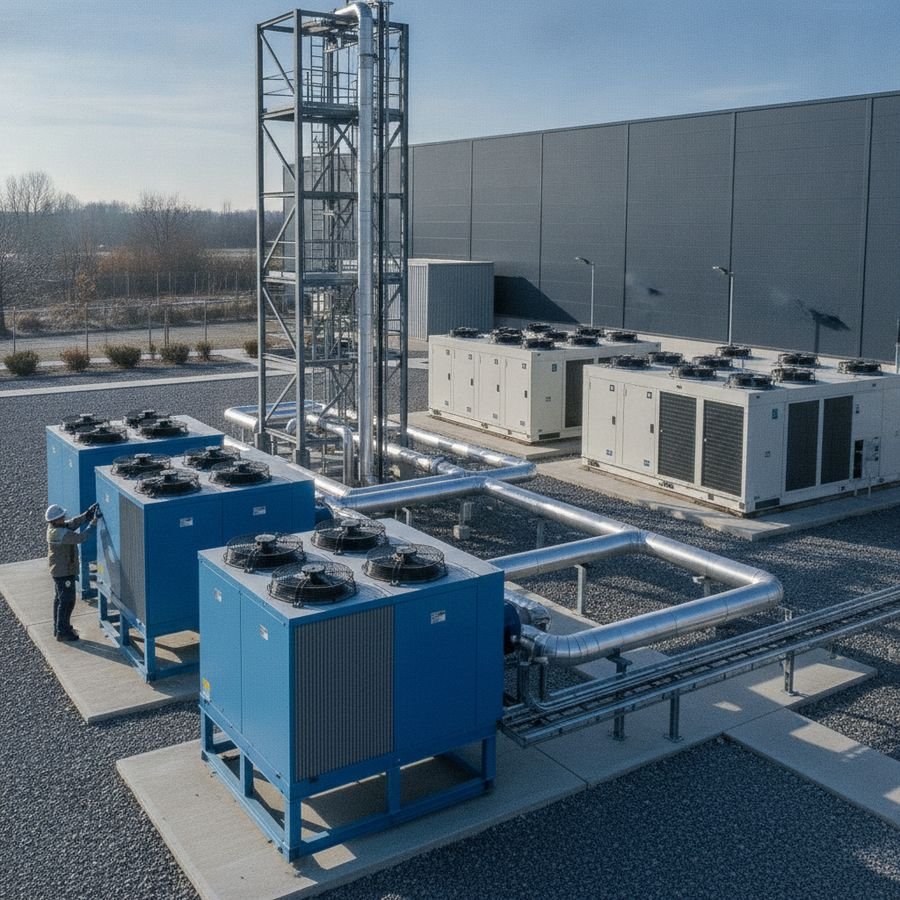
Combining free cooling with air chillers is a practical way to improve plant-wide energy efficiency without sacrificing temperature control. In this arrangement, the air chiller provides dependable mechanical cooling when ambient conditions are too warm, while the free cooling section reduces or replaces compressor duty when outdoor air becomes favorable. This hybrid approach is well suited to industrial sites that need flexible performance across changing seasons.
The pairing works particularly well in facilities where the target fluid temperature is above the coldest ambient levels available during autumn, winter, and spring. During these periods, the system can use an external dry cooler or integrated free cooling coil to handle all or part of the thermal load. Compressors then either unload, cycle less often, or shut down entirely, depending on the process requirement.
Key advantages of pairing the two technologies include:
-
Lower annual power consumption
-
Reduced compressor runtime and maintenance stress
-
Improved resilience through dual operating modes
-
Better part-load performance across seasons
-
Potentially lower total cost of ownership
For modern cold plants, this configuration also supports phased capacity control. Instead of treating free cooling as a separate add-on, the most efficient designs integrate it into the chiller package, piping concept, and control platform from the start. That is especially important for industrial environments where uptime, process consistency, and serviceability are as important as pure energy savings.
KPIs to Track After System Commissioning
Once a free cooling system is commissioned, performance tracking is essential. Without post-startup measurement, even a well-designed cold plant may underdeliver due to incorrect setpoints, poor valve sequencing, fouled heat exchangers, or control drift. Clear KPIs help operators confirm whether the expected energy efficiency gains are being achieved and where optimization is still possible.
The most useful indicators combine energy, runtime, and thermal performance. Compressor power should be tracked alongside the hours spent in full free cooling and mixed mode. Fluid temperatures on both supply and return sides also reveal whether the system is fully utilizing ambient conditions. Over time, these data points create a realistic picture of seasonal behavior instead of relying on assumptions made during design.
Important KPIs include:
-
Total kWh consumed per unit of cooling delivered
-
Compressor runtime reduction versus baseline operation
-
Hours per year in full free cooling mode
-
Approach temperature across the heat rejection section
-
Supply temperature stability at the process
-
Fan and pump energy under part-load conditions
What gets measured gets optimized, especially in industrial refrigeration systems with seasonal operating modes.
Reviewing these KPIs monthly and seasonally allows plant managers to fine-tune changeover thresholds, verify savings, and plan maintenance proactively. For industrial refrigeration assets expected to run for many years, this discipline protects both performance and return on investment. To learn more about optimizing your system, visit Frimec.
