


Where Efficiency, Controls, and Regulation Are Converging
Industrial refrigeration trends for 2027 are being shaped by a three-way convergence: higher efficiency expectations, smarter digital controls, and tighter environmental regulation. For manufacturers, cold storage operators, and process plants, this means equipment decisions are no longer based on capacity alone. Energy performance, refrigerant strategy, controllability, and lifecycle resilience now carry equal weight.
Companies are also looking for systems that can adapt to real operating conditions rather than run at fixed output. That is why advanced control panels, variable-speed components, and integrated monitoring are gaining importance across industrial refrigeration and thermoregulation projects. Suppliers with tailor-made engineering are especially well positioned because every plant has different thermal loads, layouts, and compliance pressures.
In 2027, the most competitive refrigeration systems will be those that balance performance, automation, and environmental responsibility from the start
This shift is pushing buyers toward durable, configurable solutions, including cooling towers, air chillers, and free cooling systems that support both efficiency goals and operational flexibility.
What Innovations Are Emerging in Cooling Technology?
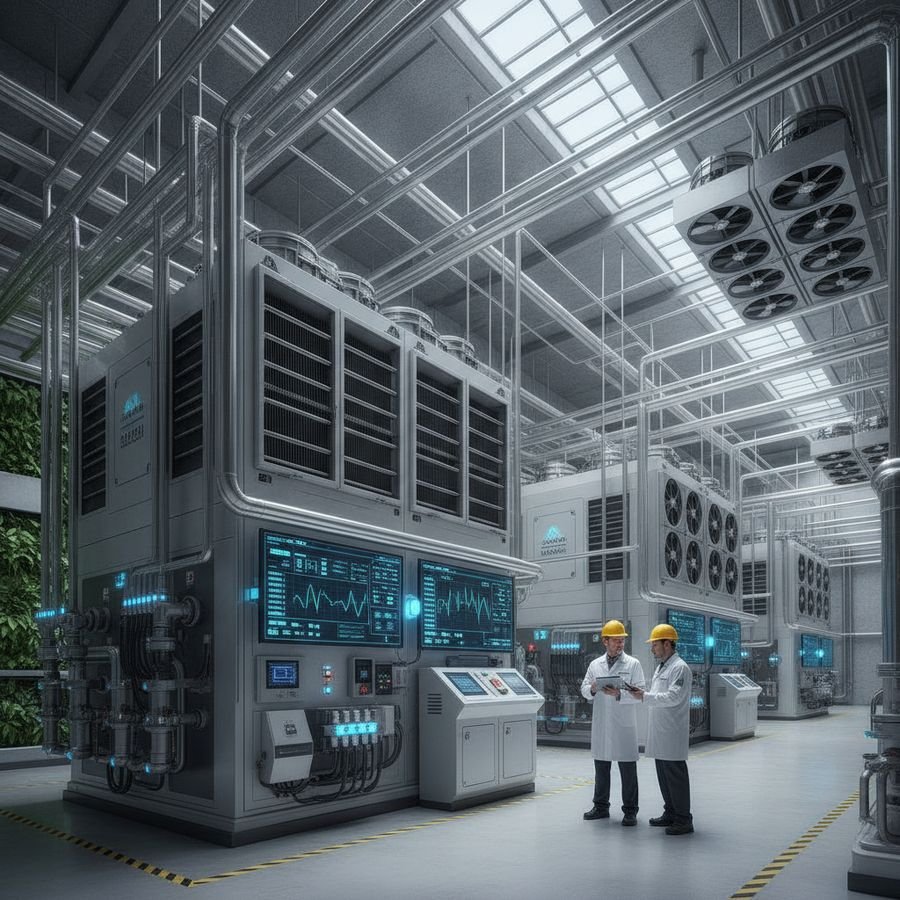
The next wave of cooling technology innovations is focused on making industrial systems more adaptive, compact, and energy aware. Hybrid cooling approaches, high-efficiency heat exchangers, variable-speed fans, and improved water management are helping plants reduce waste while maintaining stable process temperatures. In sectors such as plastics, electroplating, and food processing, these gains directly support uptime and product consistency.
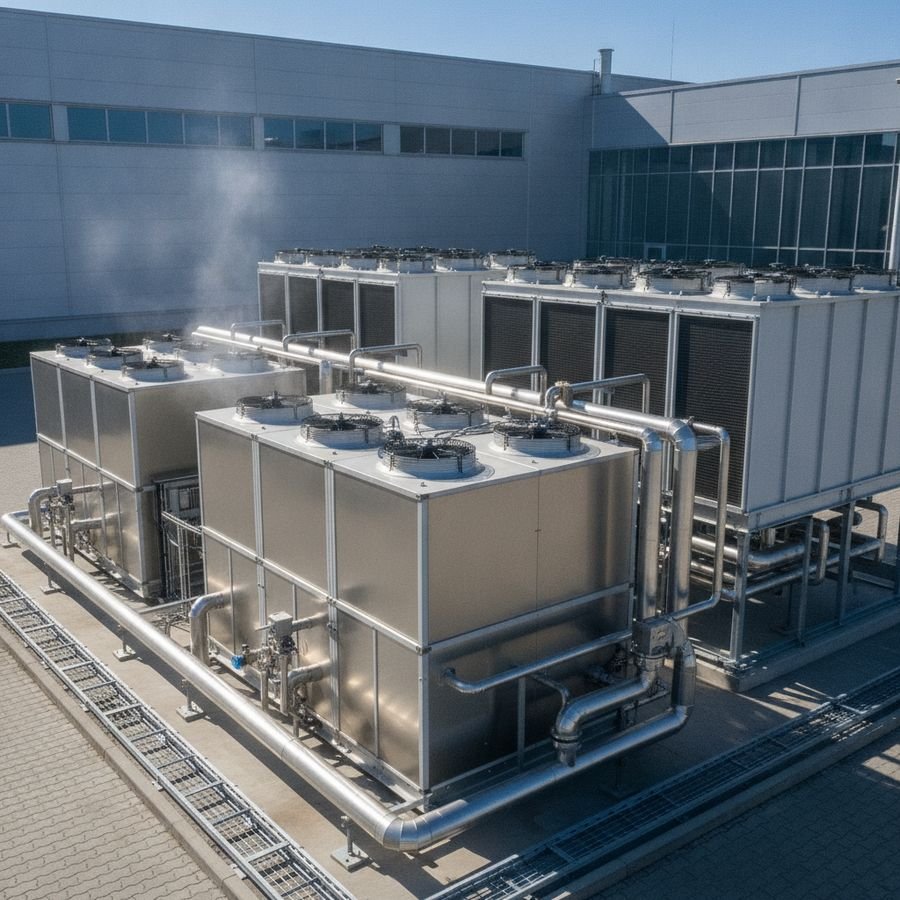
Evaporative towers also continue to evolve. Designs with vertical air discharge, weather-resistant construction, and options for ducted air handling offer greater installation flexibility in demanding industrial environments. Features such as capacity control dampers, electric circulation pumps, and integrated control panels show how traditional equipment is becoming smarter and easier to manage.
-
More precise load matching
-
Lower operating energy use
-
Improved placement flexibility indoors or outdoors
-
Better resistance to harsh atmospheric conditions
These advances are turning refrigeration hardware into a more strategic part of plant performance rather than a background utility.
Why Is Predictive Analytics Becoming Standard?
Predictive analytics is becoming standard because plant managers need fewer surprises and better control over maintenance costs. Instead of waiting for a compressor, fan motor, or pump to fail, connected systems can analyze temperature drift, pressure changes, vibration patterns, and energy consumption to identify problems early. That reduces emergency shutdowns and improves maintenance planning.
For industrial refrigeration, the value is practical and immediate. Process interruptions can damage product quality, slow production, and increase utility costs. Predictive models help teams act before small inefficiencies become major failures. They also support better spare-parts planning and clearer service schedules.
Data is no longer just for reporting; it is becoming a daily operating tool for protecting uptime
As digital controls mature, predictive analytics will increasingly connect with alarms, remote supervision, and automated optimization routines. This makes refrigeration systems more transparent and helps operators move from reactive service toward a more disciplined, cost-effective reliability strategy.
Free Cooling, Automation, and Modular Design Shifts
Among the most important industrial refrigeration trends for 2027 are greater adoption of free cooling, broader automation, and stronger demand for modular cooling design. Free cooling systems are especially attractive because they take advantage of favorable ambient conditions to reduce compressor runtime, cutting energy use without sacrificing process stability.
Automation strengthens that benefit by continuously switching operating modes, adjusting fan speed, and balancing thermal loads across the system. Instead of relying on manual intervention, plants can respond to changing weather, production intensity, or seasonal demand in real time. This creates measurable savings and a more stable operating profile.
At the same time, modular cooling design gives facilities more flexibility to expand or reconfigure capacity as production evolves. This approach is particularly useful for growing plants that want phased investment rather than a single oversized installation.
-
Scalable capacity additions
-
Faster installation and commissioning
-
Improved redundancy for critical processes
Together, these shifts are redefining how industrial cooling systems are specified and upgraded.
Environmental Targets Influencing Equipment Decisions
Environmental targets are now a direct influence on refrigeration equipment selection. Energy intensity, water use, refrigerant impact, and long-term compliance risk all affect capital planning. Buyers are asking whether a system can support current standards while remaining viable as regulations tighten through 2027 and beyond.
This is changing how companies evaluate chillers, cooling towers, and thermoregulation units. Efficiency ratings matter, but so do corrosion resistance, component longevity, and control accuracy, because durable equipment often delivers better sustainability outcomes over its full lifecycle. Environmentally friendly positioning is no longer just a branding message; it is part of procurement logic.
Plants that align equipment choices with environmental targets early can avoid costly retrofits later
For many facilities, the best answer is a customized configuration that combines process reliability with lower operating impact. That may include free cooling capability, smarter controls, optimized heat rejection, or equipment designed for outdoor service and long-term performance in demanding conditions.
What Should Plant Managers Budget for Next?
Plant managers planning for 2027 should budget beyond the base cost of hardware. The next generation of industrial refrigeration investments includes digital controls, sensor packages, commissioning, training, and service support alongside core equipment. Investing strategically upfront can often prevent larger operating losses down the line.
A realistic budget should account for both immediate and lifecycle priorities:
-
High-efficiency equipment sized for actual loads
-
Predictive analytics and remote monitoring tools
-
Modular cooling design for future expansion
-
Water and energy optimization features
-
Cold-weather and outdoor protection where required
Managers should also consider compliance-related upgrades tied to environmental targets and reporting expectations. Often, the most cost-effective approach is a tailored package rather than standard off-the-shelf machinery.
By budgeting for adaptability, reliability, and controls now, facilities can respond more confidently to future demand, regulation, and efficiency pressures. For more insights into optimizing your refrigeration strategy, explore our resources.
FAQs
What are the main industrial refrigeration trends for 2027?
The main trends are higher energy efficiency, digital controls, predictive analytics, free cooling adoption, modular system design, and stronger focus on environmental compliance. Buyers are evaluating systems based on lifecycle performance, controllability, and refrigerant strategy, not just cooling capacity.
Why is predictive analytics becoming important in industrial refrigeration?
Predictive analytics helps plants detect issues such as temperature drift, pressure changes, vibration, and unusual energy consumption before they become failures. This reduces unplanned downtime, improves maintenance scheduling, and supports more reliable production.
How does free cooling improve refrigeration efficiency?
Free cooling uses favorable ambient conditions to reduce compressor runtime while maintaining process temperatures. When paired with automation and controls, it can lower energy consumption and help stabilize operation across changing weather and production loads.
What does modular cooling design offer plant managers?
Modular cooling design allows facilities to add or reconfigure capacity in phases instead of oversizing from the start. It can support faster installation, easier expansion, and better redundancy for critical processes.
What should plants include in a 2027 refrigeration budget?
A realistic budget should include efficient core equipment, digital controls, sensors, predictive monitoring, commissioning, training, service support, and compliance-related upgrades. Planning for lifecycle costs and adaptability can reduce future retrofit and downtime expenses.
