


Natural Refrigerants Reduce Environmental Impact Significantly
For operators of industrial cooling plants, the move toward natural refrigerants is no longer only a sustainability discussion. It is also a practical response to stricter environmental expectations, rising energy costs, and long-term asset planning. Natural options such as ammonia, carbon dioxide, and hydrocarbons typically have very low global warming potential compared with many synthetic refrigerants, which makes them attractive for companies aiming to reduce direct emissions and improve their environmental profile.
Beyond refrigerant selection itself, the broader system approach matters. In industrial refrigeration and temperature control, plant efficiency is shaped by heat rejection design, compressor selection, controls, and operating conditions. Well-engineered equipment, including evaporative cooling towers and integrated temperature-control solutions, can support lower energy use while helping facilities align performance with sustainability goals. That is where the environmental benefits become measurable in day-to-day operation.
Choosing a refrigerant with lower climate impact delivers the greatest value when the entire cooling system is designed for dependable, efficient operation.
Natural refrigerants also support a more future-ready compliance strategy. As refrigerant rules tighten across global markets, businesses that invest in low-impact alternatives can reduce exposure to phase-down pressure and retrofit disruption. For many manufacturers, food processors, and process industries, this creates a compelling path toward energy efficiency, stronger refrigerant compliance, and lower environmental risk over the life of the plant.
What Are Natural Refrigerants in Industrial Use?
Natural refrigerants are substances that occur in nature and can be used in refrigeration cycles without relying on heavily fluorinated synthetic compounds. In industrial cooling plants, the most common examples are ammonia (R717), carbon dioxide (R744), and certain hydrocarbons such as propane (R290). Each option has different thermodynamic properties, operating pressures, and safety requirements, so selection depends on the application rather than a one-size-fits-all rule.
Ammonia is widely used in larger industrial refrigeration systems because it offers excellent heat-transfer performance and strong energy efficiency. Carbon dioxide is increasingly adopted in cascade and transcritical systems, especially where compact design and reduced environmental impact are priorities. Hydrocarbons can be highly efficient as well, although charge size and flammability considerations must be managed carefully.
In practice, industrial users evaluate natural refrigerants based on several factors:
-
Cooling capacity and temperature range
-
Plant layout and available machinery space
-
Operator training and maintenance capability
-
Local codes, standards, and refrigerant compliance obligations
-
Lifecycle cost and expected operating profile
For a company focused on tailored industrial refrigeration and thermoregulation, the refrigerant choice is part of a larger engineering decision. The best outcome comes from matching the refrigerant to the process, the equipment design, and the facility’s long-term sustainability objectives.
Which Applications Suit Natural Refrigerants Best?
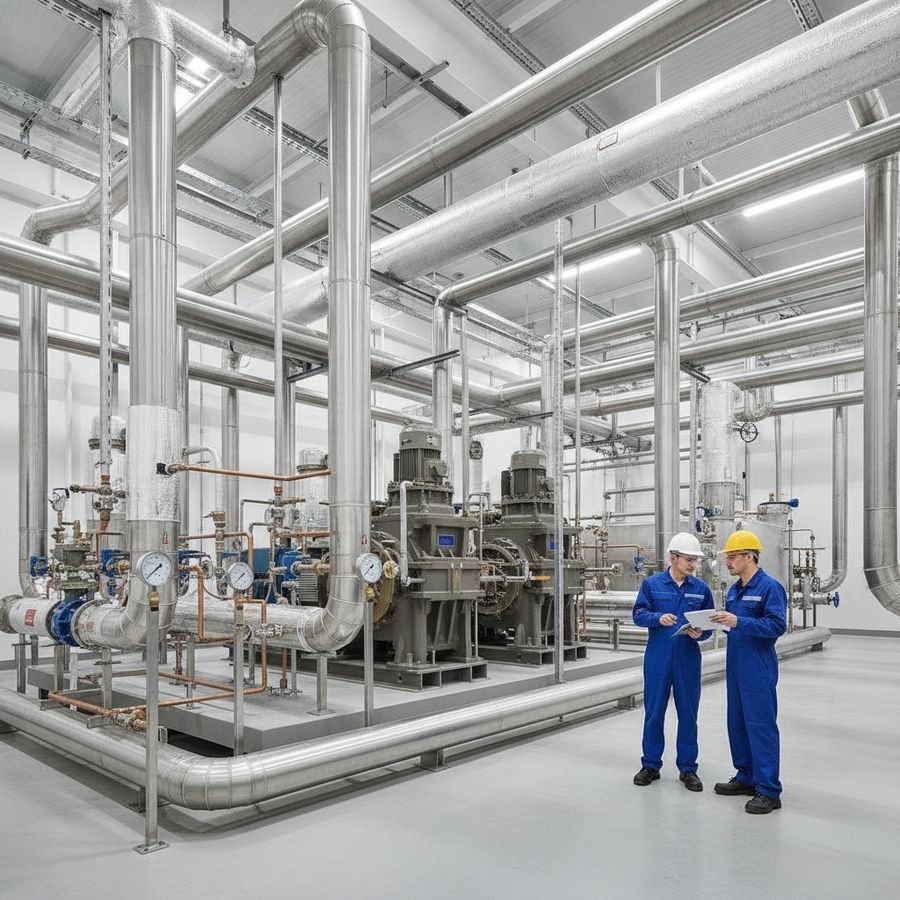
Natural refrigerants perform especially well in applications where cooling demand is continuous, loads are significant, and efficiency gains can be captured over many operating hours. That makes them a strong fit for sectors such as food processing, cold storage, plastics, chemical production, electroplating, and other process industries that depend on stable thermal control. In these environments, the combination of low environmental impact and high performance can justify investment more easily than in smaller, intermittent systems.
Ammonia is often favored in large centralized plants that require robust capacity and excellent thermodynamic performance. Carbon dioxide is particularly attractive in low-temperature applications, heat recovery strategies, and systems where a compact footprint is valuable. Hydrocarbons can be suitable for certain packaged or specialized units where charge management is carefully controlled.
The best applications for natural refrigerants are usually those where process reliability, high utilization, and long-term efficiency matter more than lowest first cost alone.
When assessing suitability, plant managers should look at more than refrigeration tonnage. They should also consider ambient conditions, heat rejection method, maintenance access, and how closely the cooling process must be controlled. In many industrial settings, the refrigerant becomes one component of a broader thermal strategy that may include chillers, water-condensed units, free cooling solutions, or cooling towers. Matching those elements correctly helps transform environmental benefits into dependable operational performance.
System Design Affects Efficiency and Compliance
Even the best refrigerant choice can underperform if the system design is weak. In industrial cooling plants, layout, component sizing, controls, and heat rejection all influence real-world efficiency. Oversized equipment may cycle inefficiently, while undersized components can force compressors to work harder and raise operating costs. That is why natural refrigerant projects must be engineered as complete systems, not treated as simple refrigerant substitutions.
Design details have direct consequences for both energy efficiency and refrigerant compliance. Proper pipe sizing, leak-tight construction, ventilation, pressure management, and control logic help reduce losses and keep operating conditions stable. Heat exchangers, condensers, and evaporative cooling towers must also be matched to the process load and site conditions. For many facilities, flexible positioning, weather resistance, and dependable outdoor performance are important practical considerations in thermal system design.
Key design priorities typically include:
-
Minimizing refrigerant charge where possible
-
Improving part-load efficiency with better controls
-
Selecting heat rejection equipment suited to local climate
-
Supporting safe maintenance access and monitoring
-
Designing for code compliance from the start, not as an afterthought
A tailored approach is especially valuable for industrial operators with demanding production schedules. When system design aligns refrigerant properties with process needs, companies gain more than compliance. They achieve steadier temperatures, lower energy consumption, and equipment performance that supports long-term production reliability.
How Do Natural Refrigerants Compare on Cost?
Cost comparisons for natural refrigerants should always go beyond the initial equipment quote. While some systems may require higher upfront investment because of specialized components, pressure ratings, ventilation measures, or safety controls, the overall financial picture often improves when lifecycle performance is considered. In high-demand industrial environments, operating efficiency and system longevity can have a larger effect on total cost than installation price alone.
Ammonia systems, for example, may involve more specialized design and safety planning, but they are often valued for strong efficiency in large-scale applications. Carbon dioxide systems can vary in cost depending on operating conditions and configuration, especially in warmer climates, yet they may deliver strategic value through low environmental impact and future-oriented compliance positioning. Hydrocarbon-based solutions may be efficient and compact, though safety-related design requirements influence economics.
The real question is not whether a natural refrigerant costs more on day one, but whether it reduces cost and risk over the full operating life of the plant.
When evaluating cost, decision-makers should compare:
-
Capital expenditure for equipment and installation
-
Expected energy consumption across annual operating hours
-
Maintenance complexity and spare parts strategy
-
Compliance risk associated with regulated synthetic refrigerants
-
Potential retrofit or replacement costs in future years
For many industrial users, the strongest business case comes from combining environmental benefits with durable energy efficiency and lower exposure to refrigerant transition costs.
Safety Planning Is Essential for Plant Upgrades
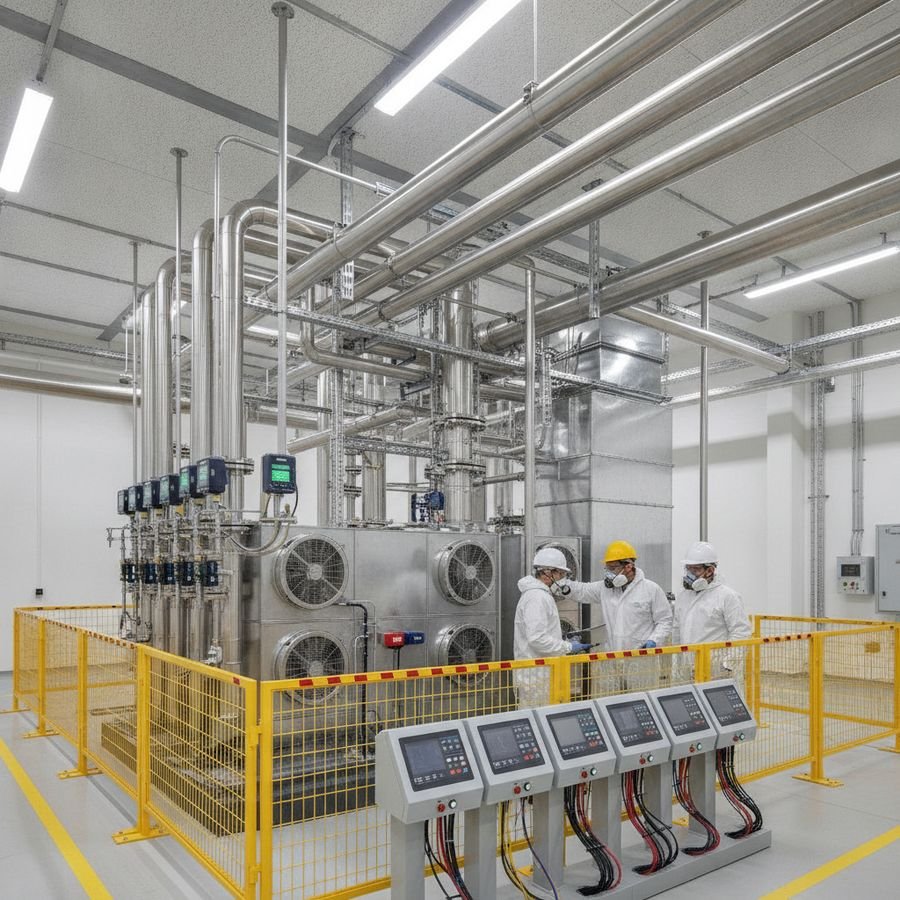
Upgrading an industrial refrigeration system to use natural refrigerants requires careful safety planning from the earliest project stage. Each refrigerant brings its own considerations: ammonia is toxic, carbon dioxide operates at high pressure, and hydrocarbons are flammable. These characteristics do not prevent successful adoption, but they do require disciplined engineering, clear procedures, and trained personnel.
For existing industrial cooling plants, retrofit feasibility depends on more than mechanical compatibility. Teams must assess machinery-room layout, gas detection, ventilation, emergency response, electrical classification, and maintenance workflows. In many cases, the safest and most efficient path is a broader redesign that integrates new controls, monitoring, and heat rejection equipment rather than attempting a minimal modification.
Effective upgrade planning usually includes:
-
Hazard analysis and code review before design begins
-
Selection of valves, piping, and vessels appropriate to the refrigerant
-
Gas detection, alarms, and ventilation design
-
Operator training for normal operation and emergency procedures
-
Commissioning protocols and documented maintenance practices
Refrigerant compliance is closely linked to safety, as poorly designed systems can lead to both regulatory and operational risks. A well-planned upgrade not only safeguards individuals but also ensures production continuity and maximizes the benefits of natural refrigerants. For manufacturers aiming for reliable temperature control, safety transcends being just a final checklist item; it is essential for developing an efficient, resilient, and future-ready refrigeration strategy. To learn more about enhancing your refrigeration systems, check out Frimec.
FAQs
What are natural refrigerants in industrial cooling plants?
Natural refrigerants are substances found in nature that can be used in refrigeration systems, most commonly ammonia (R717), carbon dioxide (R744), and hydrocarbons such as propane (R290). In industrial cooling plants, they are chosen based on process temperature, plant design, safety requirements, and compliance needs.
Why are natural refrigerants considered better for the environment?
They typically have very low global warming potential compared with many synthetic refrigerants, and they do not rely on heavily fluorinated compounds. This helps reduce direct refrigerant-related climate impact and can support a lower-risk compliance strategy as regulations tighten.
Which industrial applications are best suited to natural refrigerants?
Natural refrigerants are often best suited to facilities with continuous cooling demand, large thermal loads, and long operating hours. Common examples include food processing, cold storage, plastics, chemical production, electroplating, and other process industries where efficiency and reliability strongly affect lifecycle cost.
Do natural refrigerants always lower total cost?
Not always at the initial purchase stage. Some systems need higher upfront investment for specialized components, safety measures, or pressure-rated equipment, but many industrial operators see stronger value when energy use, compliance risk, maintenance, and long-term plant performance are considered together.
What safety issues matter most when upgrading to natural refrigerants?
Safety planning must account for the specific properties of each refrigerant: ammonia is toxic, carbon dioxide operates at high pressure, and hydrocarbons are flammable. Successful upgrades usually require hazard analysis, ventilation, gas detection, proper component selection, operator training, and code-compliant system design from the start.
